
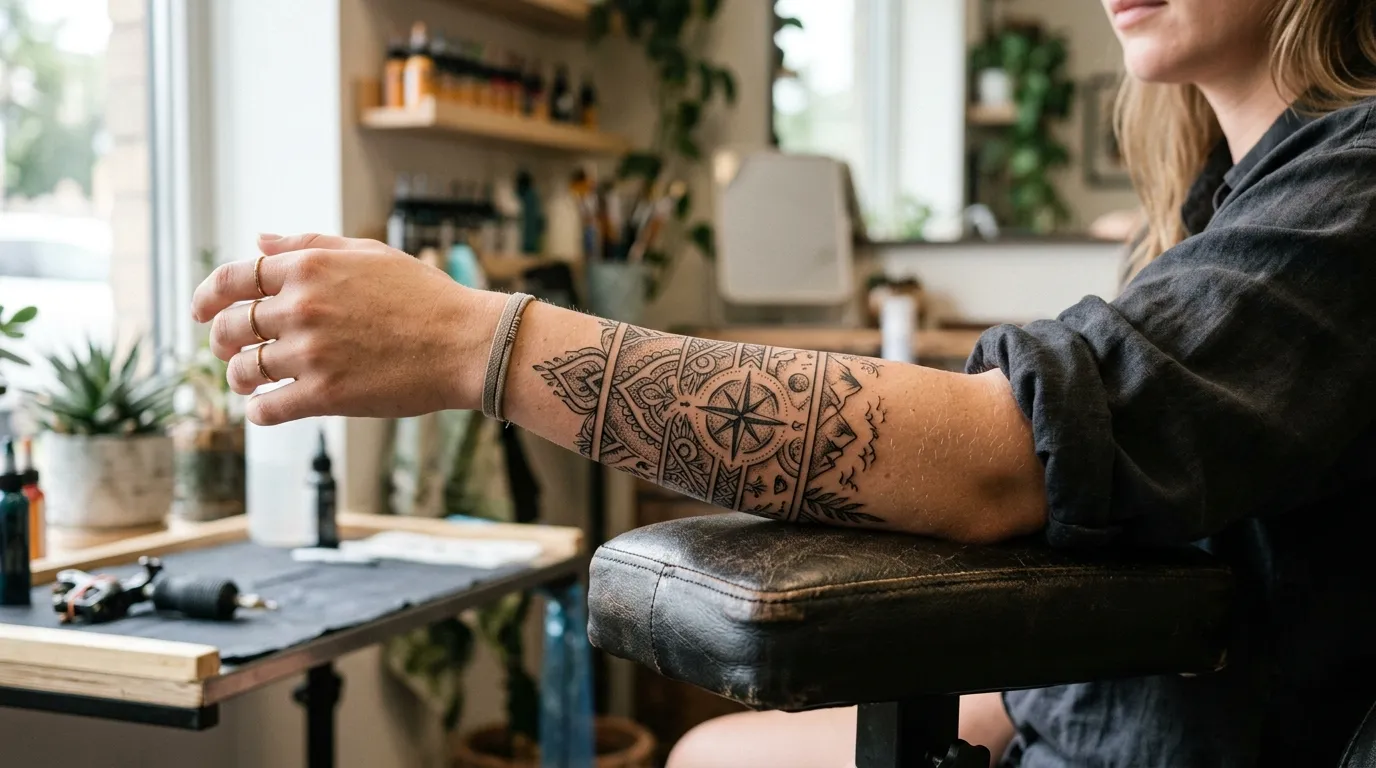

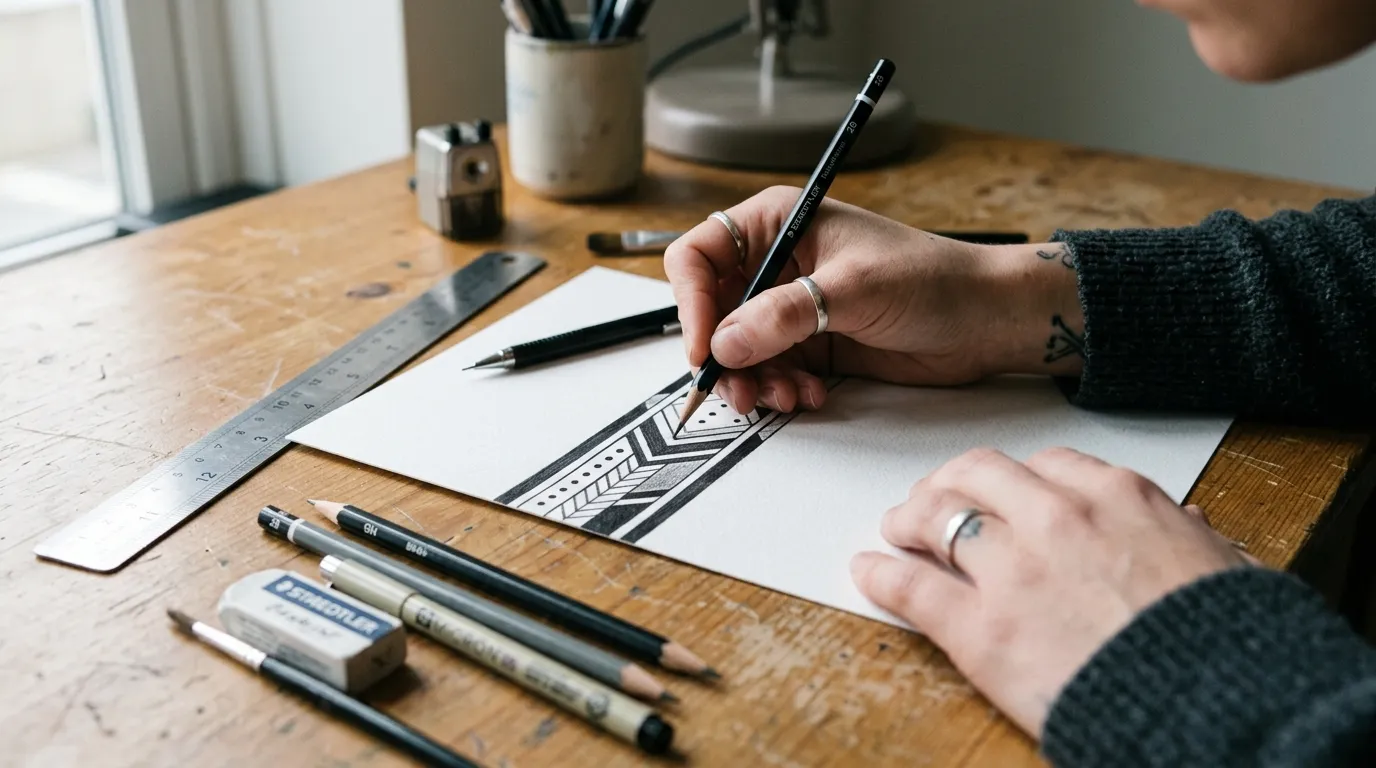
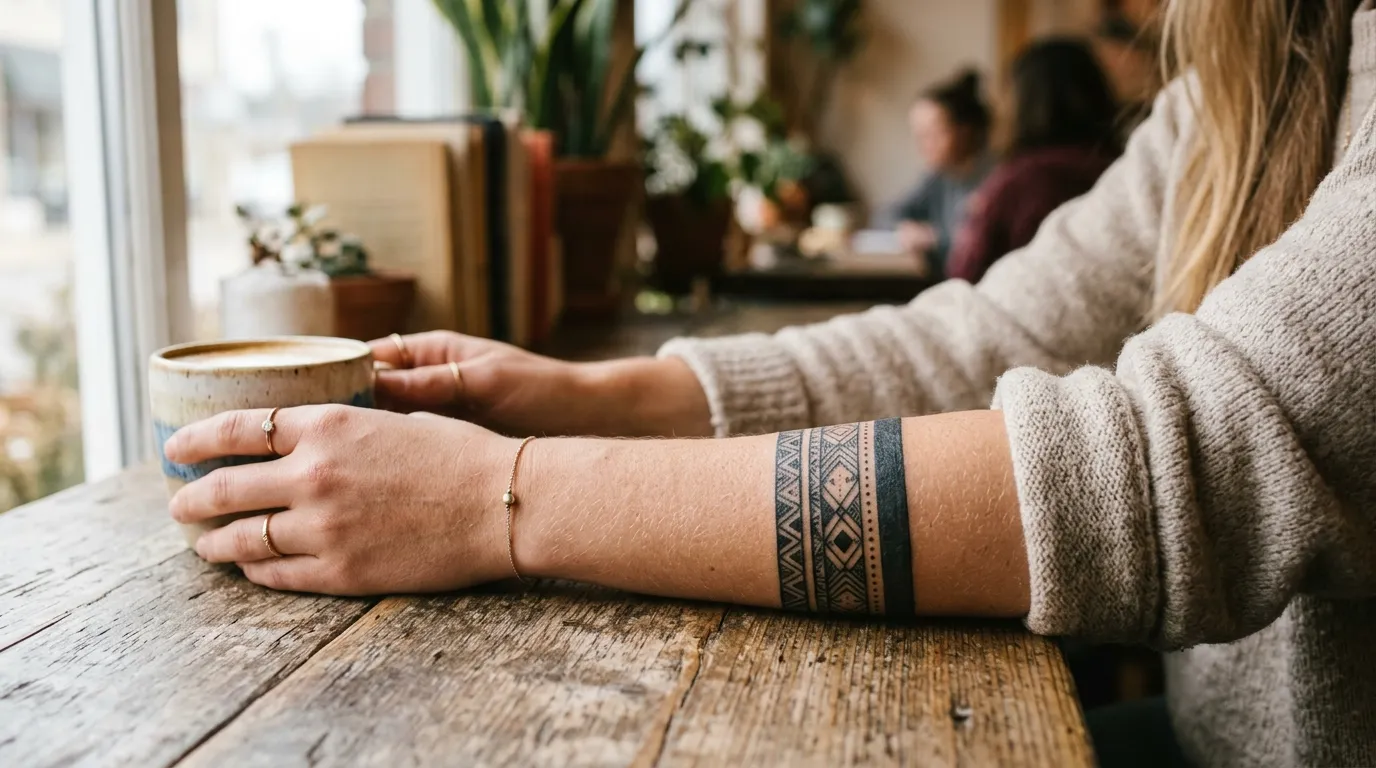
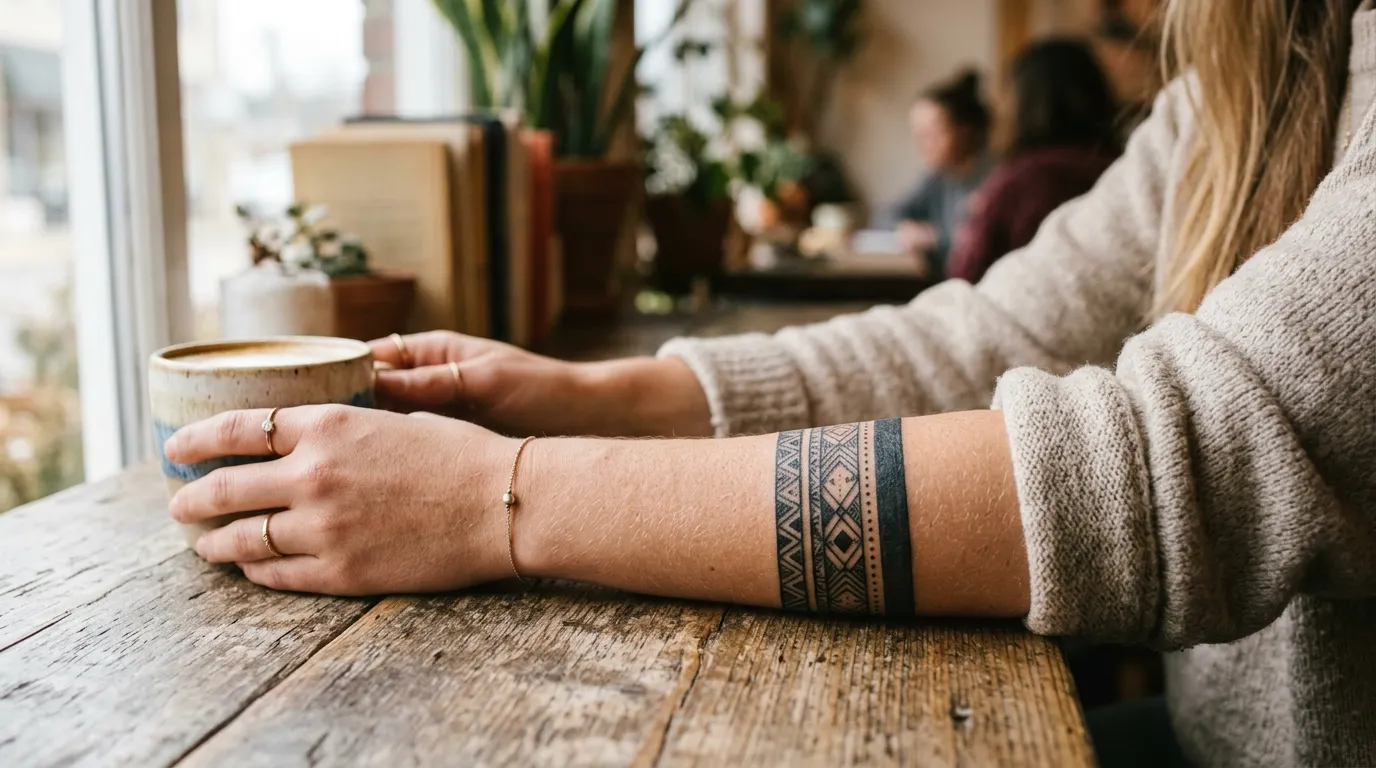
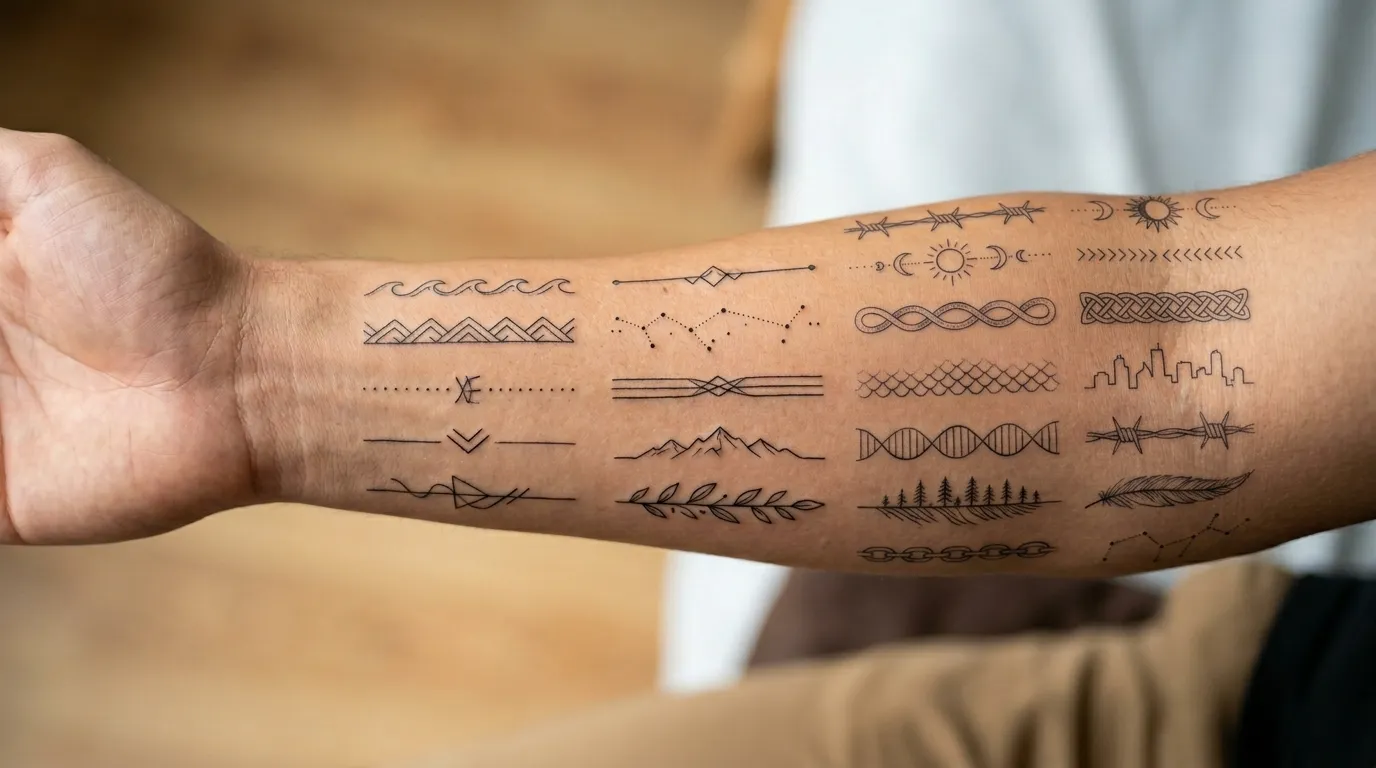
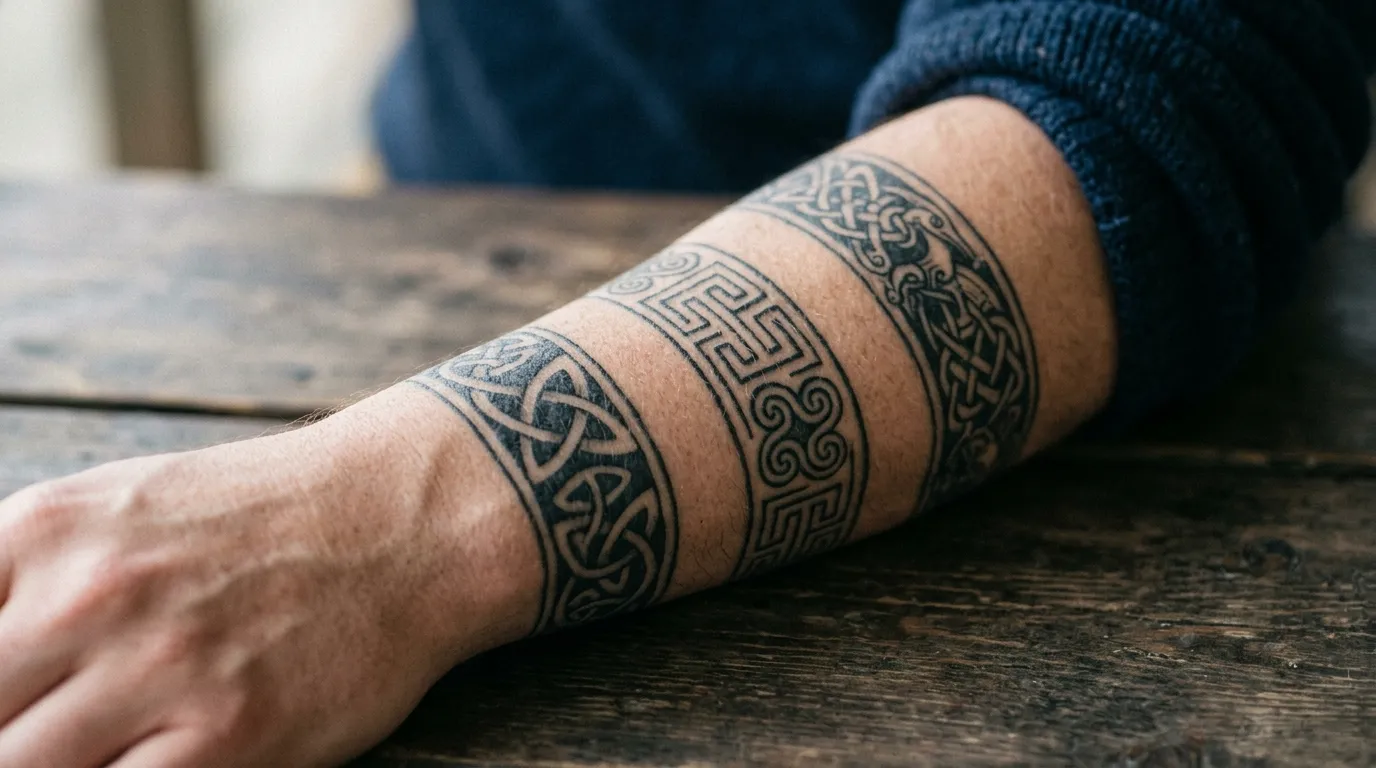
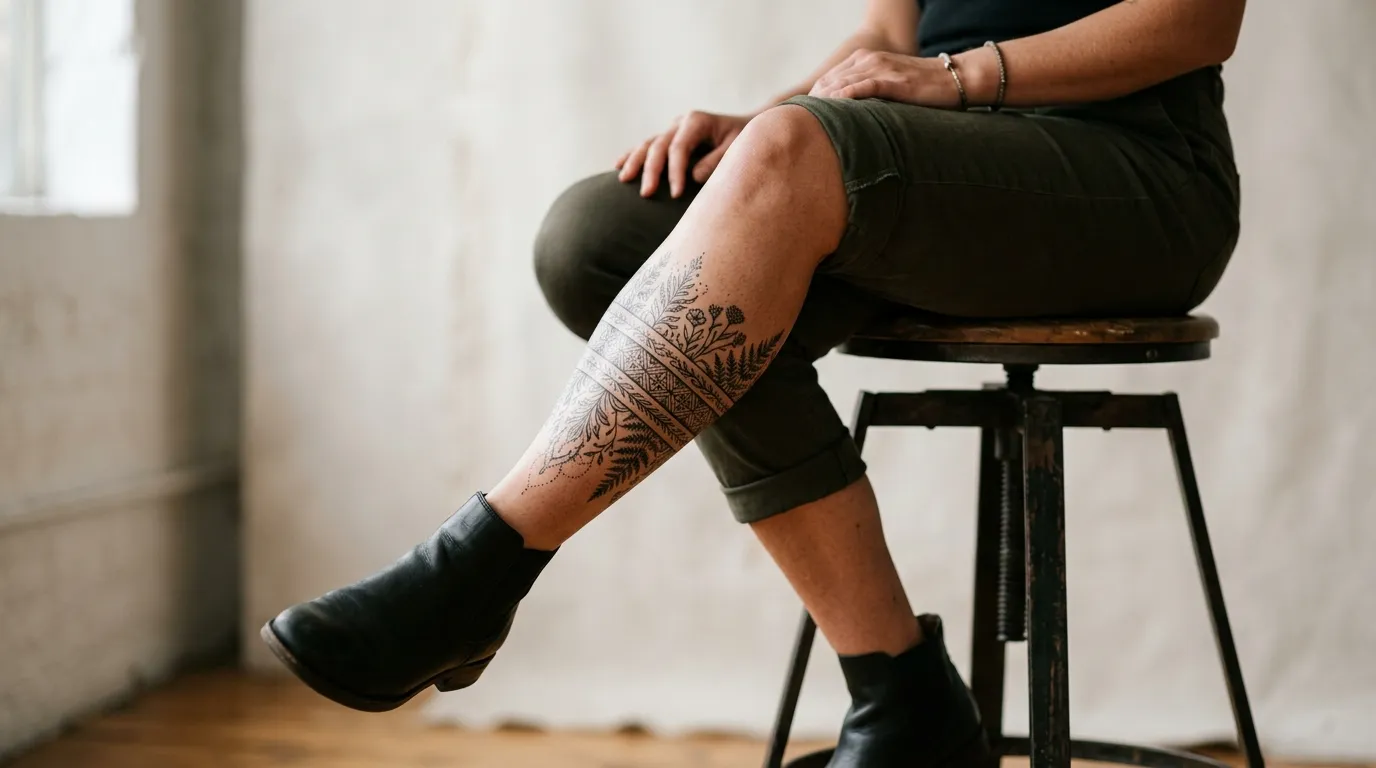
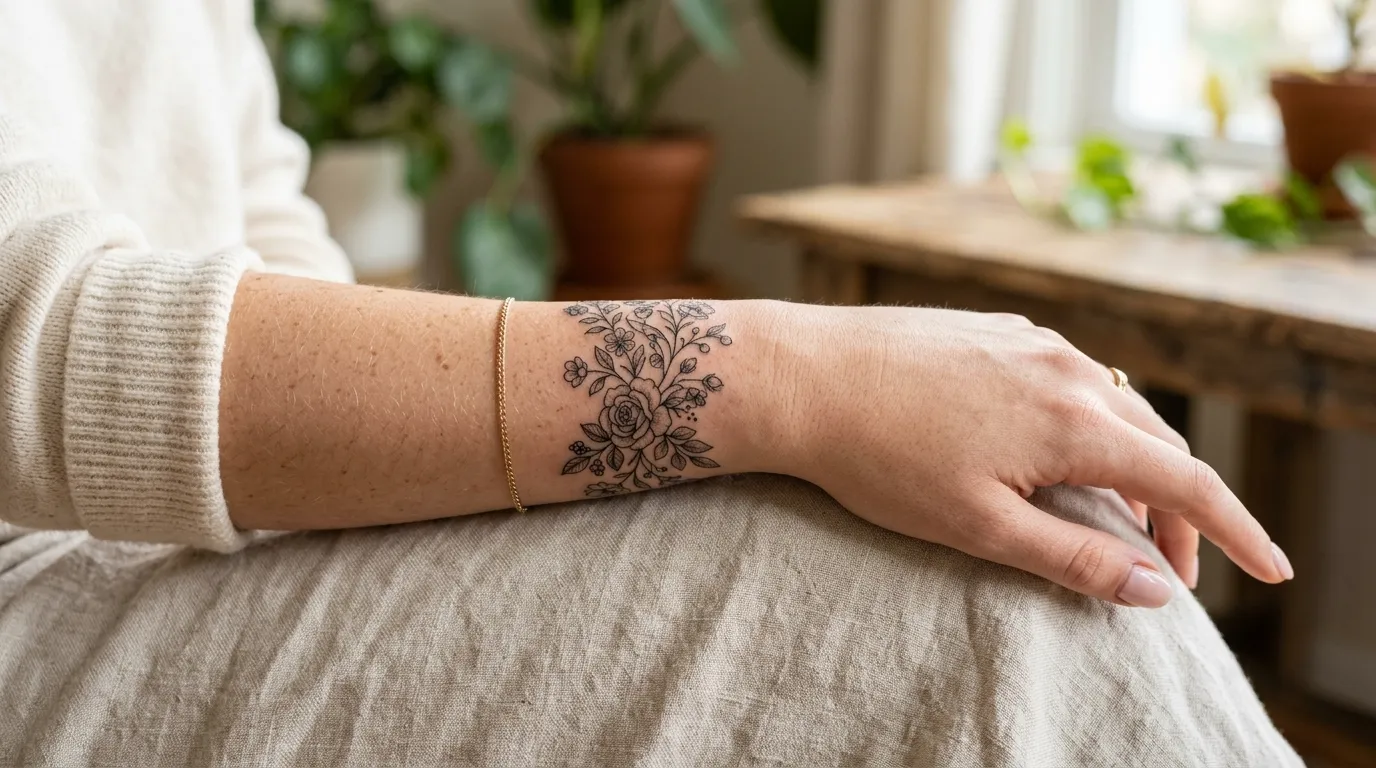


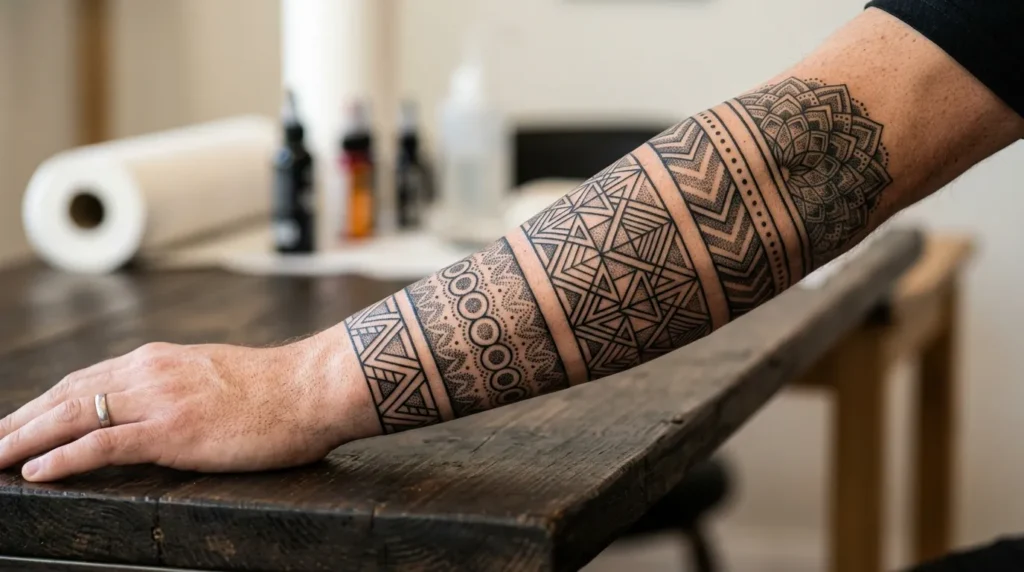
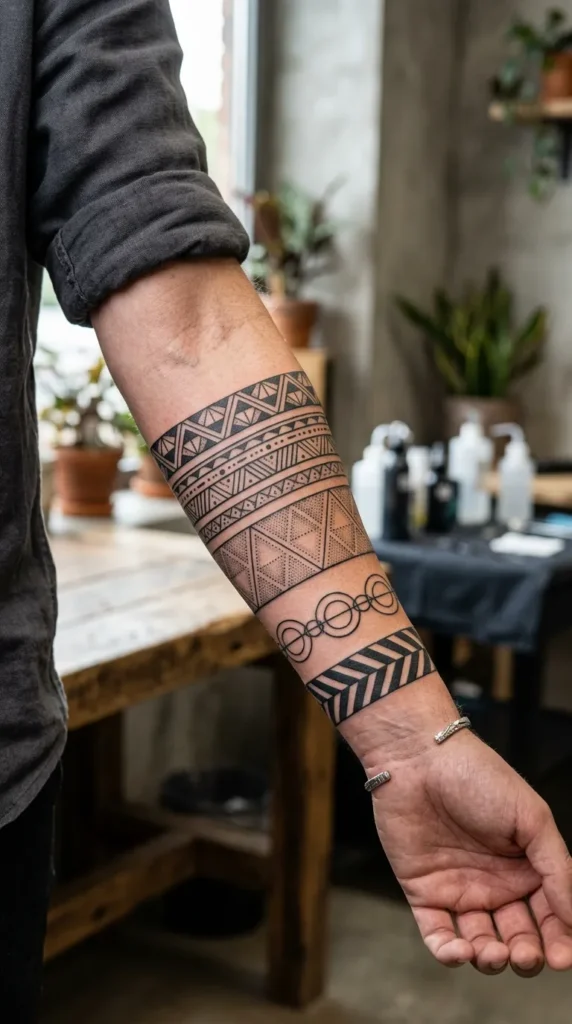
Geometric band tattoos bring structure, rhythm, and visual balance to body art. These designs use clean lines, shapes, and repeating patterns to form striking wraps around arms, wrists, or legs. They suit people who like minimal detail but strong visual identity. From thin line bands to bold patterned wraps, each style offers room for personal meaning without heavy complexity. This list presents 20 ideas that focus on practical inspiration, affordable approaches, and simple design directions you can discuss with a tattoo artist or sketch on your own before committing.
1. Single Line Precision Band
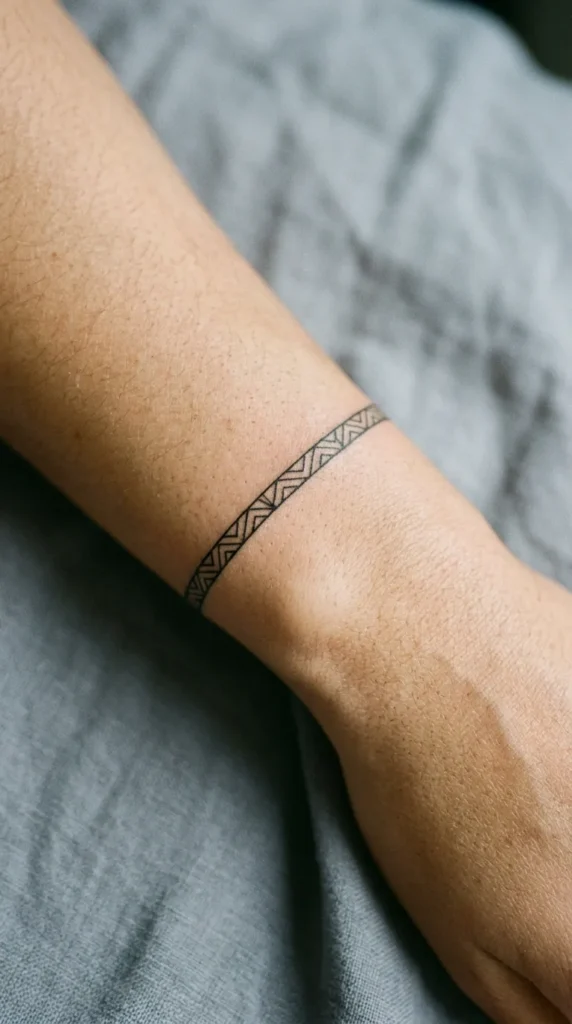
A single line band tattoo uses one continuous line wrapped around the arm or wrist. It creates a clean visual break that feels calm and structured. Many people choose this style for first tattoos because it stays simple and easy to maintain.
You can draw it yourself using a ruler and marker before visiting a tattoo artist. That helps you test placement. A thin design like this often costs less since it takes little time. Some people even start with temporary tattoo pens to test how it looks on skin.
It works well on wrists, ankles, or upper arms. The simplicity gives it a quiet but strong presence without feeling crowded.
2. Double Parallel Line Band
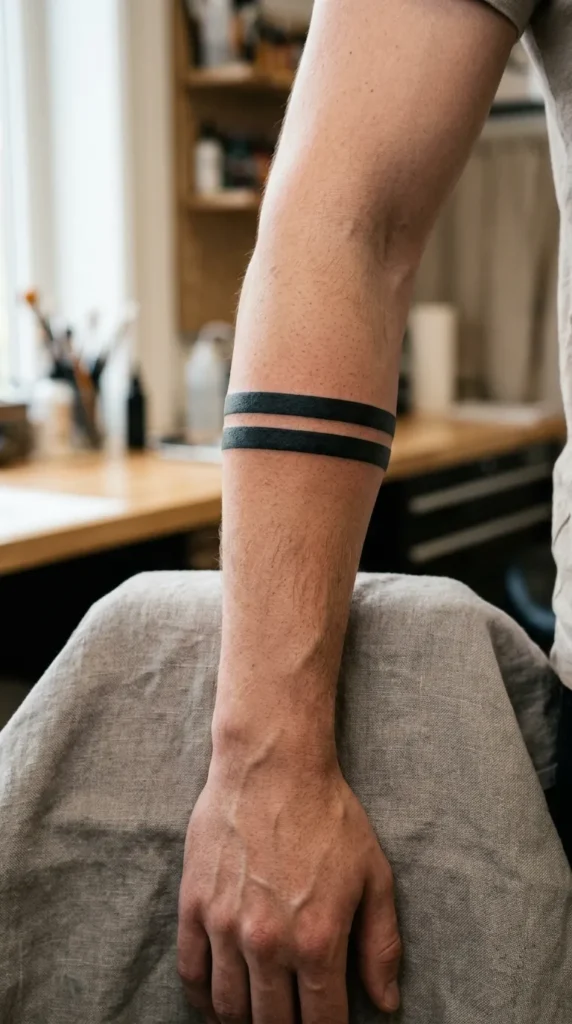
This design uses two straight lines running parallel around the arm. The space between them can be left empty or lightly shaded. It creates structure without heavy detail.
You can measure spacing using a small ruler or even tape strips before deciding. A tattoo artist can adjust the gap for balance.
This style is often budget-friendly since it involves simple linework. It also heals quickly compared to dense designs. People like it because it pairs well with other tattoos later.
It works well as a starter piece or as part of a layered arm composition.
3. Triangle Repeat Band
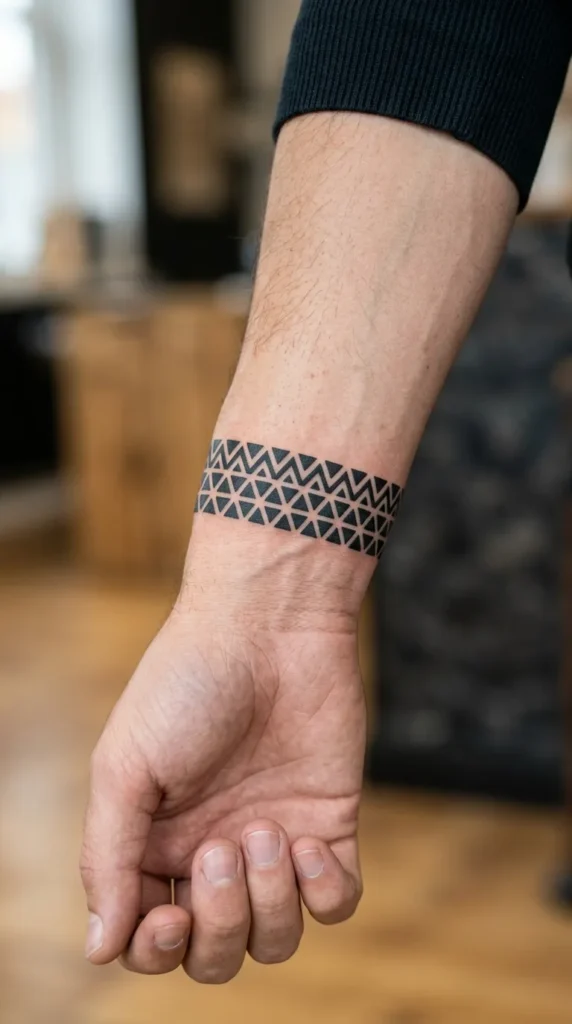
Triangle repeat bands use connected triangles to form a continuous pattern around the arm. The sharp edges create a strong visual rhythm.
You can sketch triangles on paper strips and wrap them around your wrist to test sizing. Keeping shapes uniform helps the design stay clean.
This tattoo style is often affordable because it uses basic shapes. It works well for people who like structured but slightly bold patterns.
It fits wrists and forearms best, but can also wrap around ankles for a balanced look.
4. Dot and Line Fusion Band
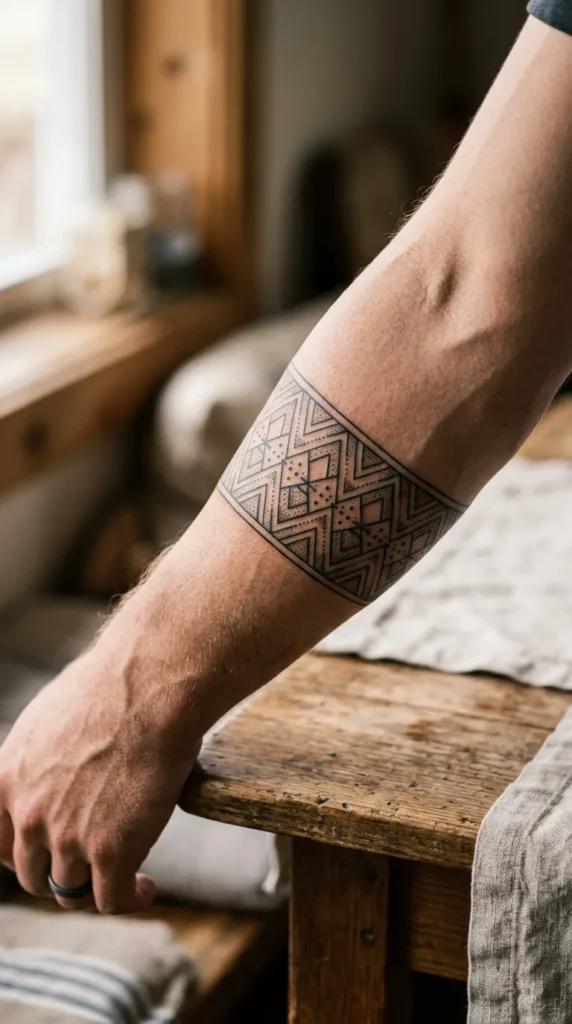
This design mixes dots and straight lines in a repeating pattern. It creates a rhythm that feels balanced and light.
You can test layouts using a fine-tip pen at home. Start with a straight line, then add evenly spaced dots.
Tattoo artists often charge less for simpler repetition patterns like this. It is also easy to expand later if you want more detail.
The design works well for people who prefer subtle body art that still looks structured.
5. Hexagon Chain Band
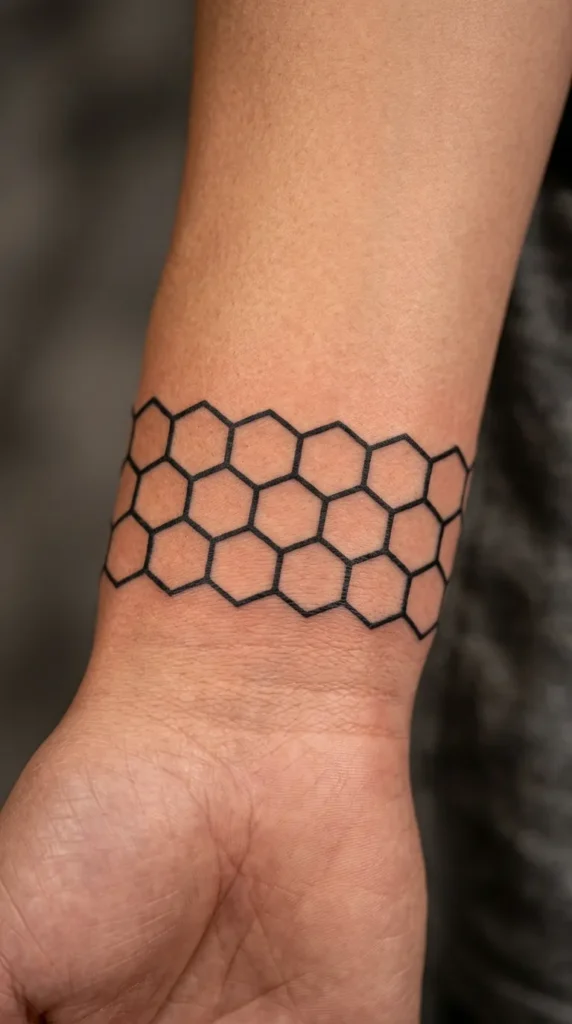
Hexagon chain bands use repeating six-sided shapes connected in a loop. The honeycomb structure gives a strong geometric feel.
You can sketch hexagons using a stencil or simple grid paper. This helps keep angles even.
It may take slightly longer than basic line tattoos, but still stays within a moderate price range due to repeat shapes.
This style suits forearms and upper arms where the pattern can stretch evenly.
6. Broken Line Band
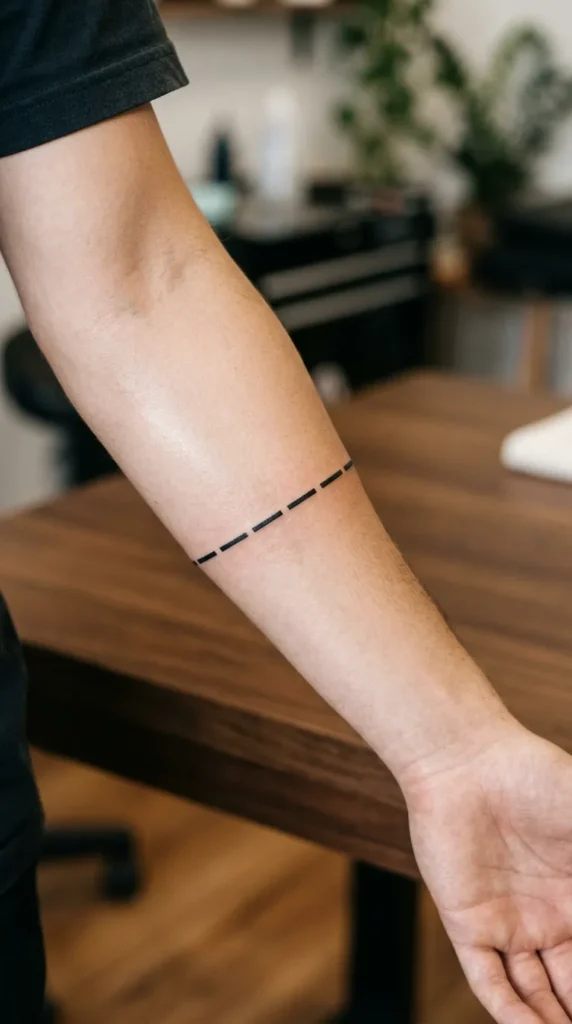
Broken line bands use spaced segments instead of a continuous line. The gaps create a modern structured feel.
You can mark spacing with small dots before tattooing to plan rhythm. Even spacing is key for balance.
This design is simple to apply, making it budget-friendly. It also works well for people testing their first tattoo experience.
The gaps give flexibility if you want to extend the design later.
7. Arrow Point Band
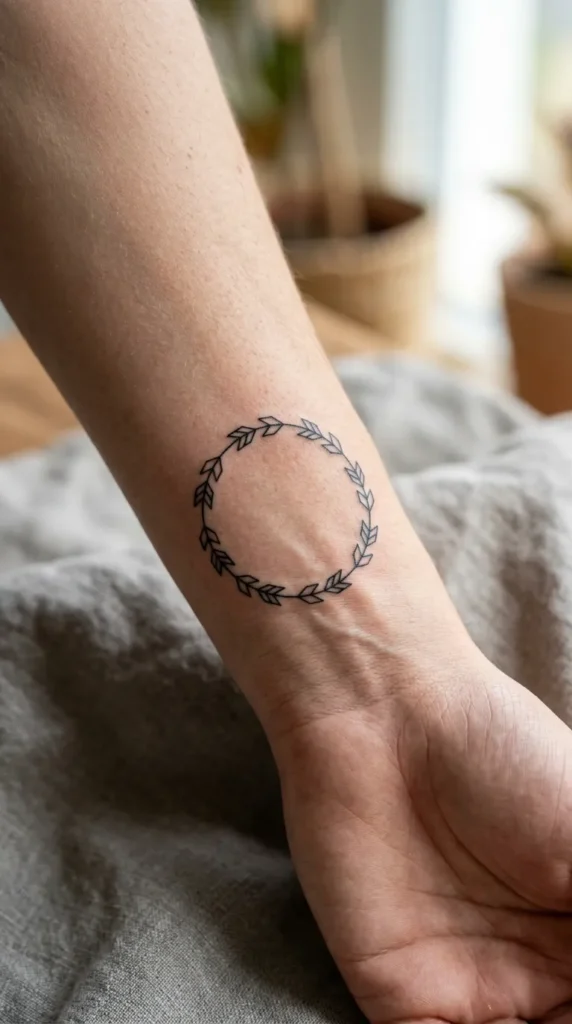
Arrow point bands use repeating arrow-like shapes pointing in one direction. It creates movement around the arm.
You can draw arrows on paper strips to preview flow before committing.
This design is still simple enough for lower-cost tattoo sessions. It adds direction without heavy shading.
It fits well on wrists and forearms where circular flow stands out clearly.
8. Diamond Frame Band
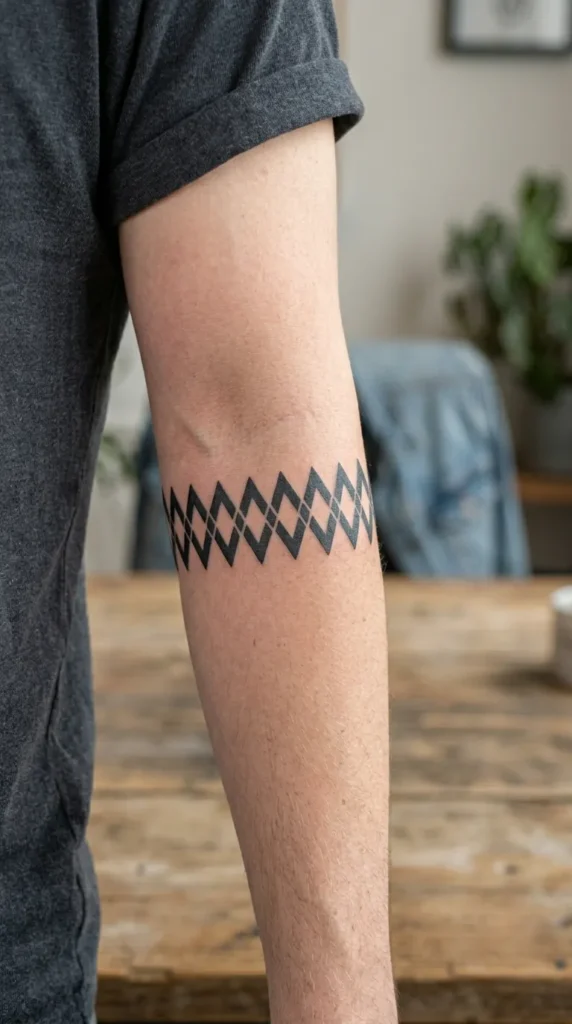
Diamond frame bands use repeated diamond shapes linked together. The structure feels balanced and symmetrical.
You can sketch diamonds using graph paper to test spacing. Keeping angles consistent helps maintain clarity.
This design is mid-range in cost due to slightly more detail than simple lines.
It works well for people who want something structured but still light in appearance.
9. Wave Geometry Band
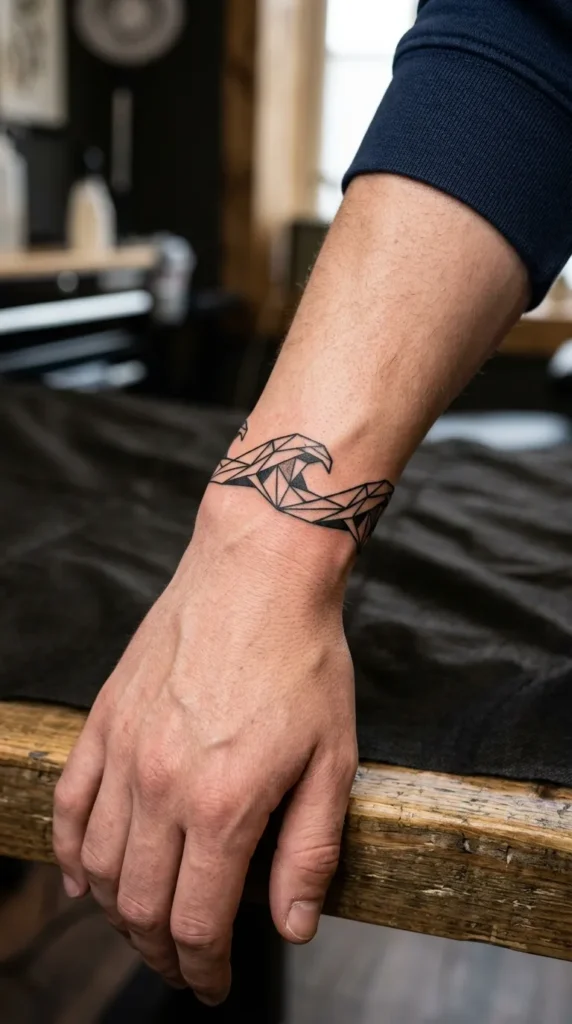
This design uses angled segments arranged in a wave motion. It gives the illusion of movement through sharp geometry.
You can sketch zigzag lines first, then smooth them into repeated patterns.
It remains affordable because it is mostly linework. The main focus is pattern consistency.
It suits forearms and ankles where motion-based designs stand out well.
10. Square Grid Band
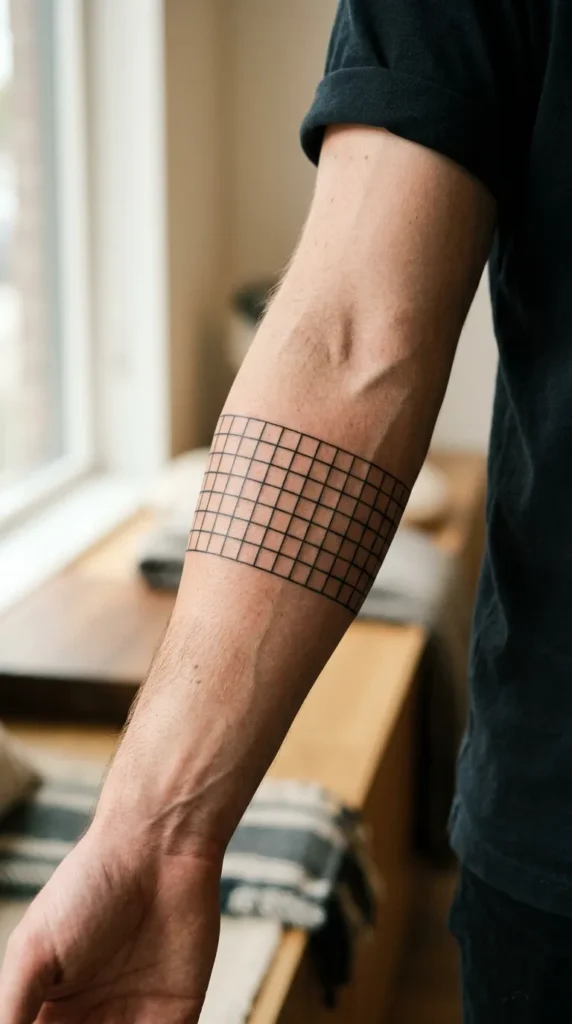
Square grid bands use small squares arranged in rows to form a wrap. It feels structured and steady.
You can draw a grid on paper and wrap it around your arm to test size.
This style may take longer to tattoo but still uses simple shapes. Pricing depends on density.
It works best on forearms where flat surfaces highlight structure.
11. Minimal Chevron Band
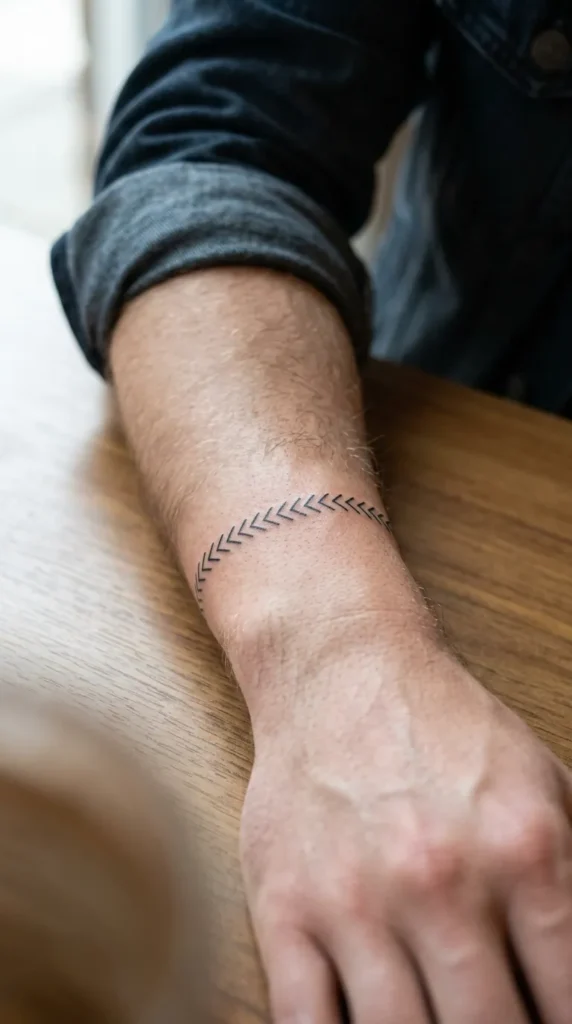
Chevron bands use repeated V-shaped angles. The pattern creates a strong directional flow.
You can draw V shapes on paper strips to plan spacing and rhythm.
This is a low-cost style due to simple line repetition. It is also quick to apply.
It suits wrists and upper arms where sharp angles stand out clearly.
12. Overlapping Triangle Band
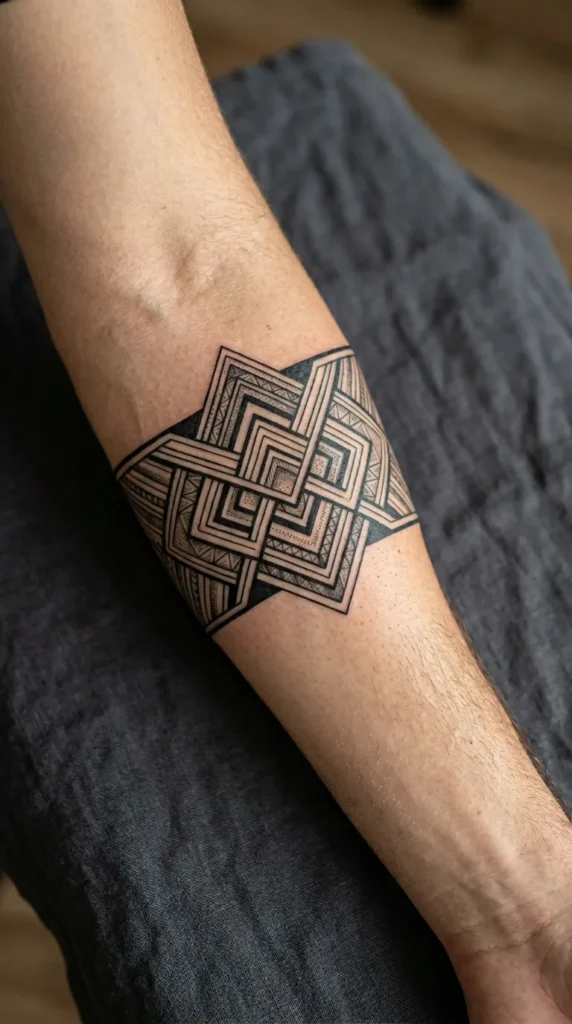
Overlapping triangles create a layered visual effect without heavy shading. The design feels structured but dynamic.
You can sketch overlapping triangles lightly to test balance before tattooing.
Cost remains moderate since it is still line-based work. Complexity depends on density.
This design fits forearms where pattern detail can spread evenly.
13. Minimal Circle Chain Band
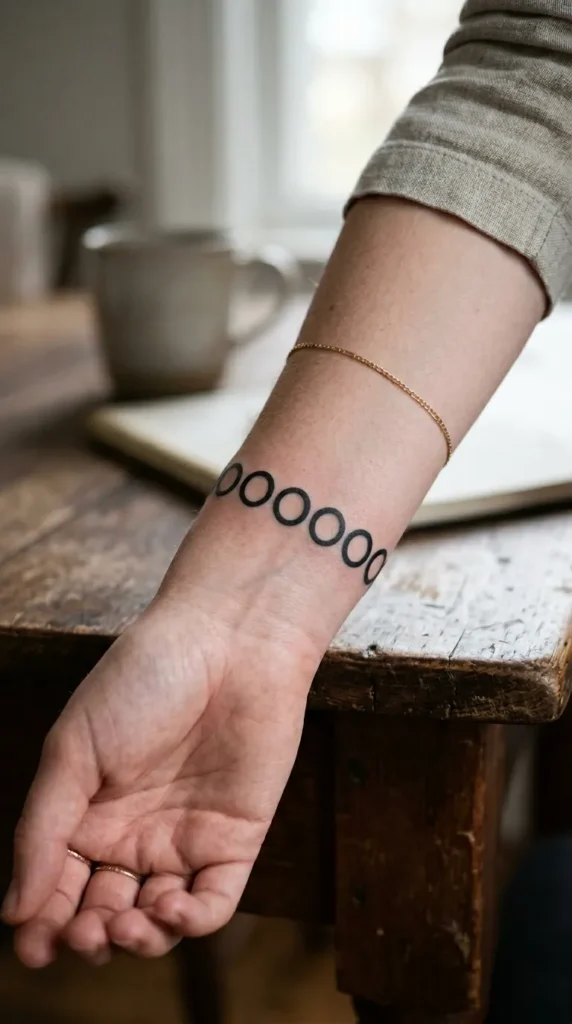
Circle chain bands use repeated circular shapes in a loop. It creates a smooth, calm rhythm.
You can draw circles using bottle caps or round objects at home.
This style is simple and budget-friendly. It heals quickly due to minimal ink density.
It works well for wrists and ankles where soft shapes stand out.
14. Angular Fragment Band
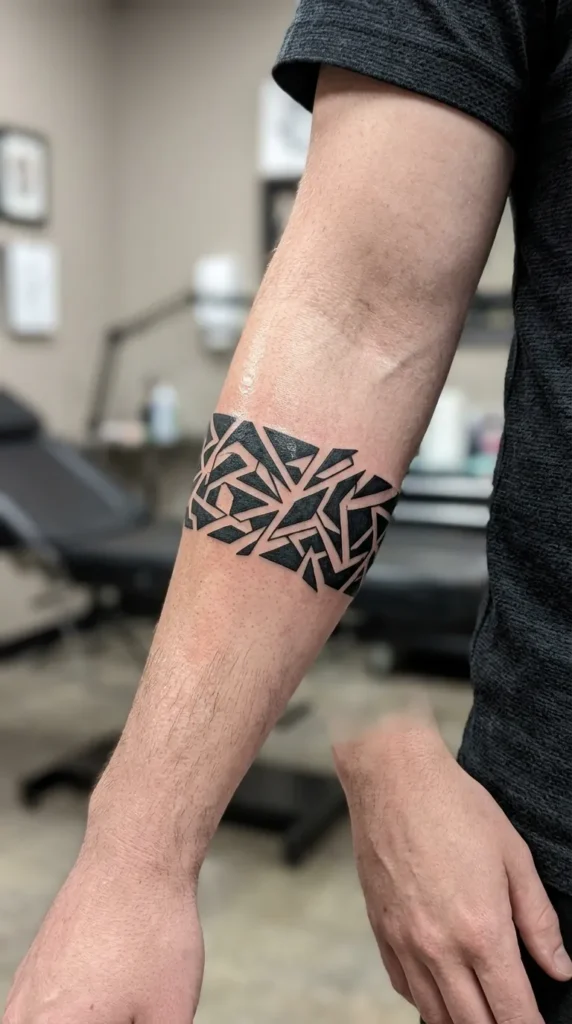
This design uses broken angular pieces arranged into a band. It looks structured but slightly irregular.
You can sketch random triangles and connect them into a wrap layout.
Cost is moderate since it requires careful placement but no shading.
It works well for people who want a raw geometric look.
15. Ladder Line Band
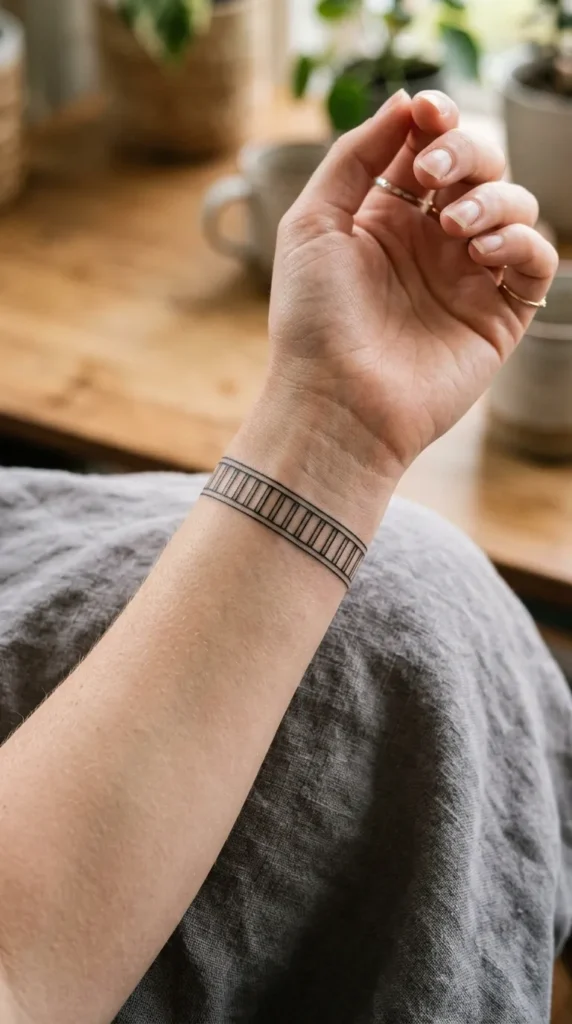
Ladder bands use two long lines connected by small bars. It creates a structured frame around the arm.
You can draw it using two rulers and small marks between them.
It is simple and affordable due to repetitive linework.
It fits forearms and wrists where straight alignment is visible.
16. Spiral Geometry Band
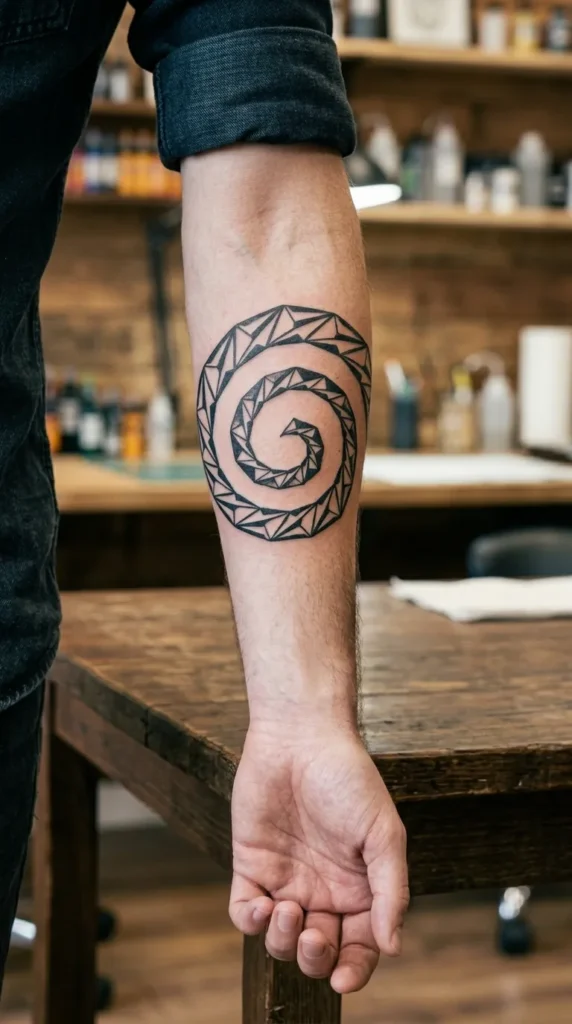
Spiral geometry bands use angled segments arranged in a circular flow. It creates motion without curves.
You can sketch spiral paths first, then build shapes along the line.
Cost varies slightly due to planning but remains moderate.
It suits forearms where movement patterns stand out.
17. Split Line Band
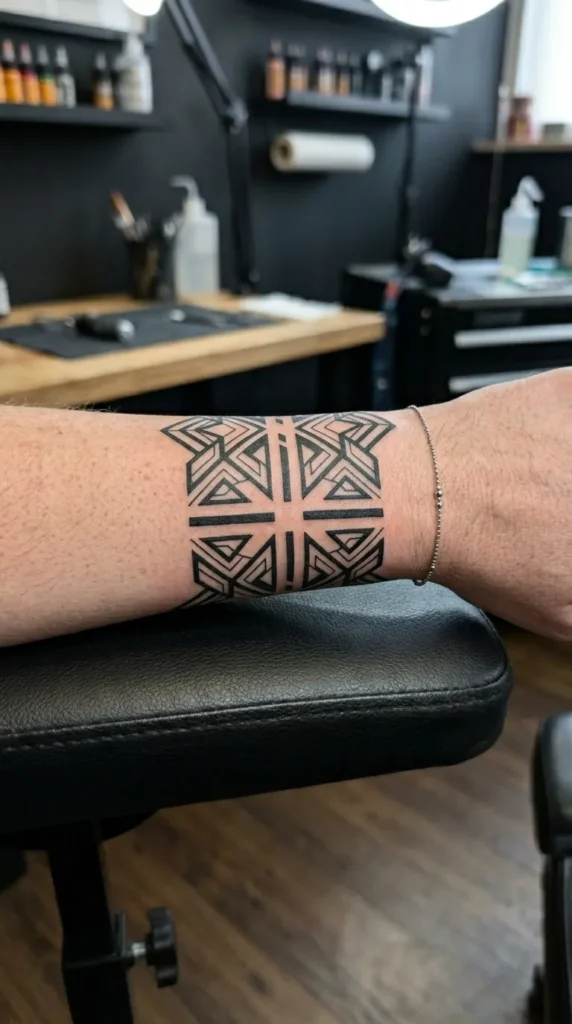
Split line bands feature a central break with mirrored geometry on both sides. It feels balanced and structured.
You can fold paper and draw half the design to test symmetry.
It is affordable due to simple repetition.
It works well for minimal tattoo lovers.
18. Polygon Strip Band
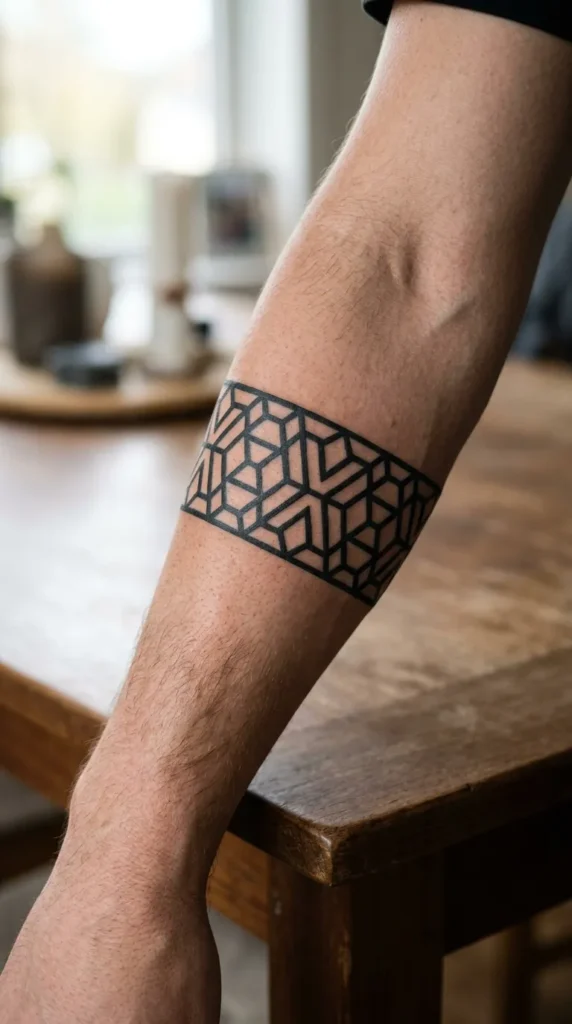
Polygon strips use mixed multi-sided shapes linked together. It creates a structured chain effect.
You can sketch different polygons on paper and connect them in a strip.
Cost depends on number of shapes but stays moderate.
It suits larger forearm placements.
19. Zigzag Grid Band
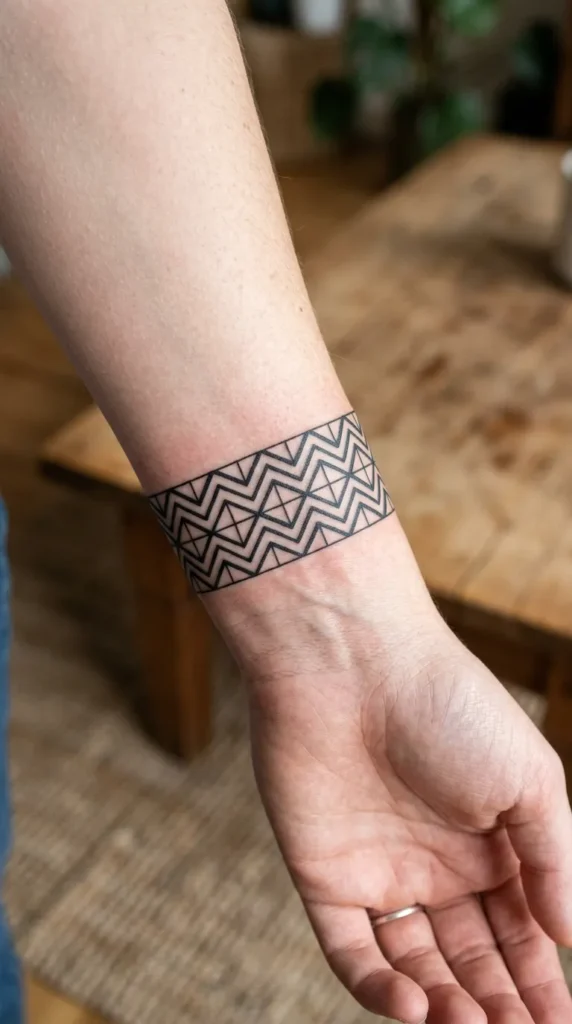
Zigzag grid bands use repeated sharp angles forming a structured wave pattern.
You can draw zigzag lines first, then divide them into sections.
It is budget-friendly and quick to apply.
It fits wrists and ankles for clear visibility.
20. Framed Negative Space Band
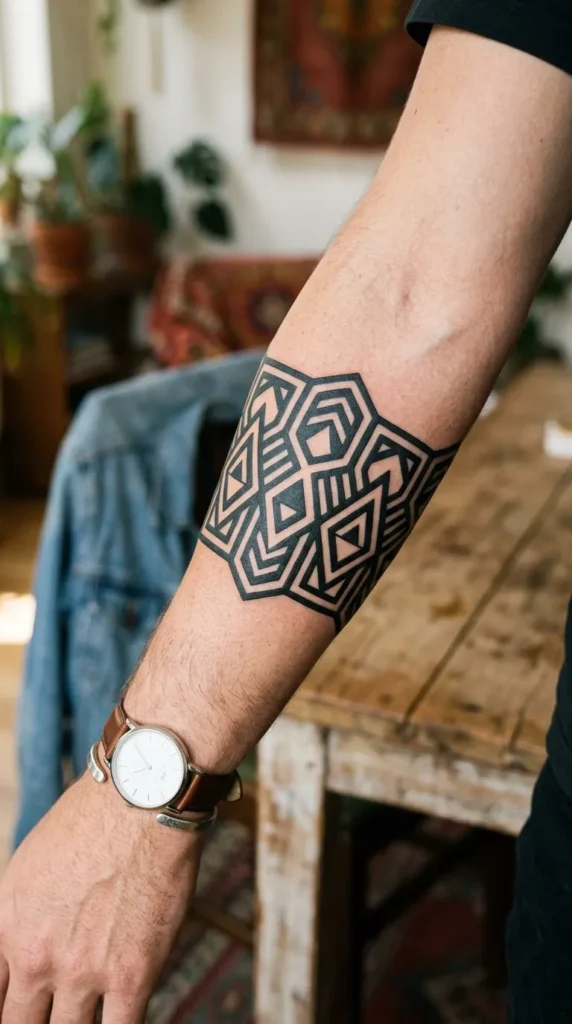
This design uses bold outlines with empty spaces inside the band. The contrast between ink and skin creates strong definition.
You can sketch thick rectangles or frames and leave gaps before tattooing.
Cost stays moderate since it uses solid lines instead of shading.
It works well for people who want bold structure without heavy fill work.
Conclusion
Geometric band tattoos offer structured body art that fits many styles and budgets. From thin line wraps to layered polygon chains, each idea in this list gives a clear direction you can shape with a tattoo artist. Simple tools like paper strips, rulers, and markers help test placement before any ink is added. Choosing a design that matches your comfort with detail helps create a result that feels balanced and personal over time.