

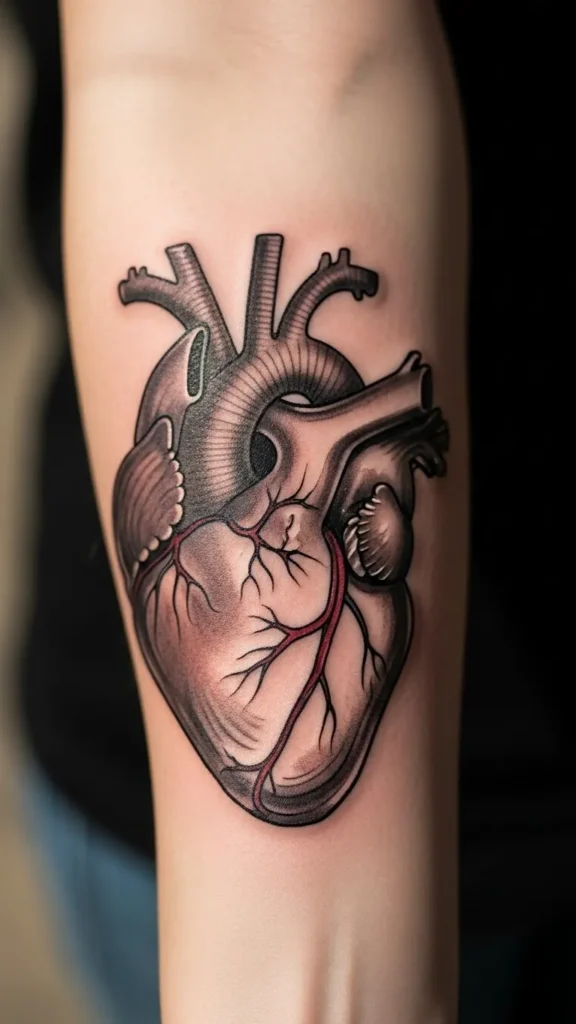
Anatomical heart tattoos speak to people who want meaning that feels real. These designs go beyond simple symbols. They reflect lived emotion, personal history, and honest connection. Many people choose anatomical hearts to mark love, loss, healing, or strength built over time. This guide explores styles that feel expressive without being overwhelming. Each idea includes practical tips so the design stays affordable, wearable, and true to you.
1. Fine Line Anatomical Heart
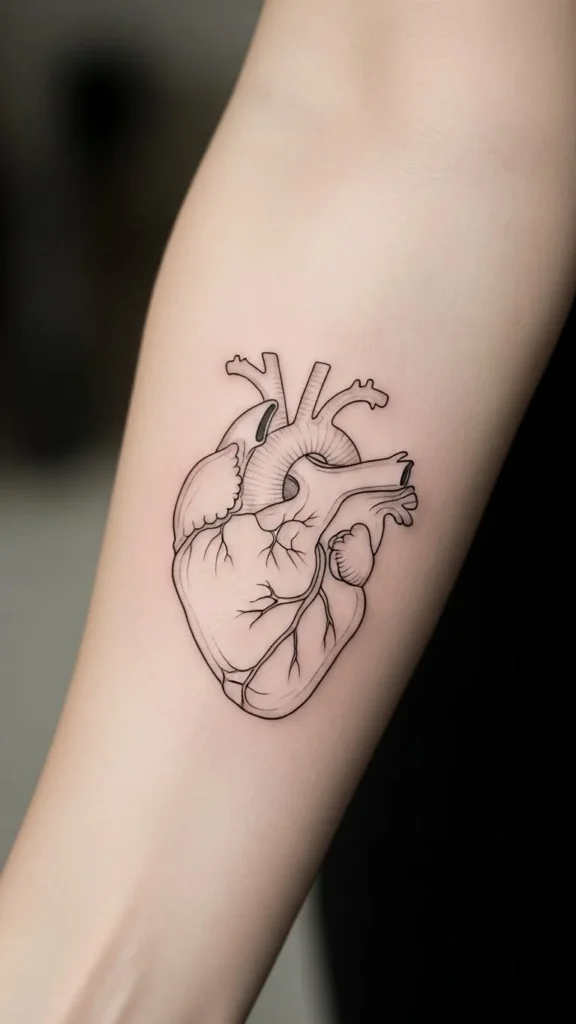
A fine line anatomical heart works well for a subtle first tattoo. Thin lines keep the design light and wearable. The heart still looks detailed, just quieter. This style fits small areas like the forearm, ankle, or rib side. It also heals faster and often costs less because it uses less ink and time.
To keep costs low, ask your artist to skip heavy shading. Focus on clean outlines and simple veins. Reference medical sketches or textbook hearts for structure. Many artists already have similar stencils, which saves drawing time. Black ink ages well and stays sharp.
This design suits people who want emotion without boldness. It feels personal but not loud. Over time, the lines soften in a natural way, matching the meaning behind it.
2. Minimal Black Ink Heart
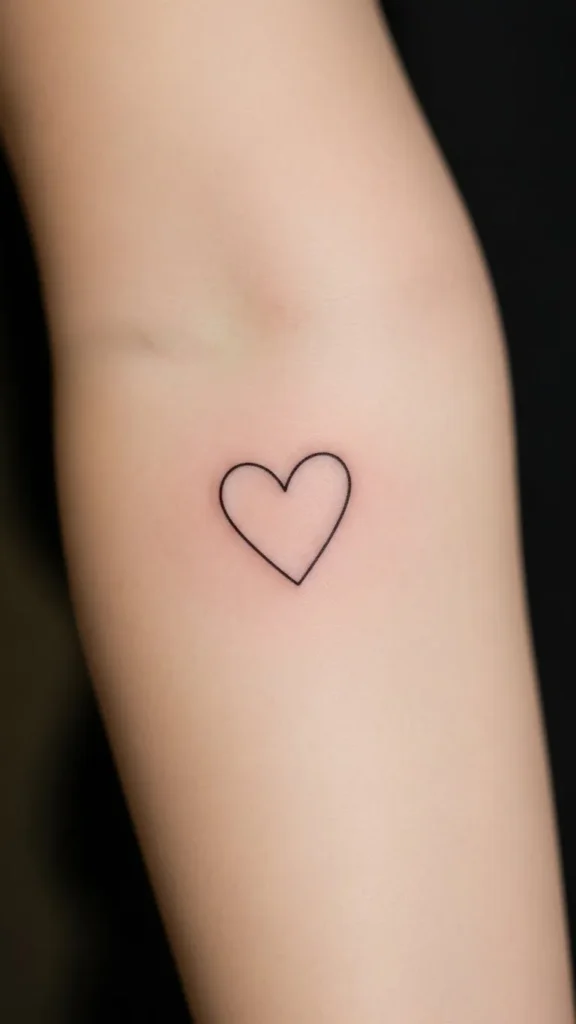
A minimal black ink anatomical heart keeps things direct. No color. No extra elements. Just form and feeling. This style appeals to people who like clarity. The heart becomes a quiet statement that lasts.
Black ink is often more budget-friendly. It takes fewer sessions and holds shape longer. Ask for simple line weight and limited detail. You can still show arteries and chambers without crowding the design.
Placement matters here. A clean area like the upper arm or calf gives the design room to breathe. If you want something smaller, the wrist works with a simplified outline.
This tattoo often represents raw emotion. Nothing hidden. Nothing softened. Just honesty in ink.
3. Realistic Medical Sketch Heart
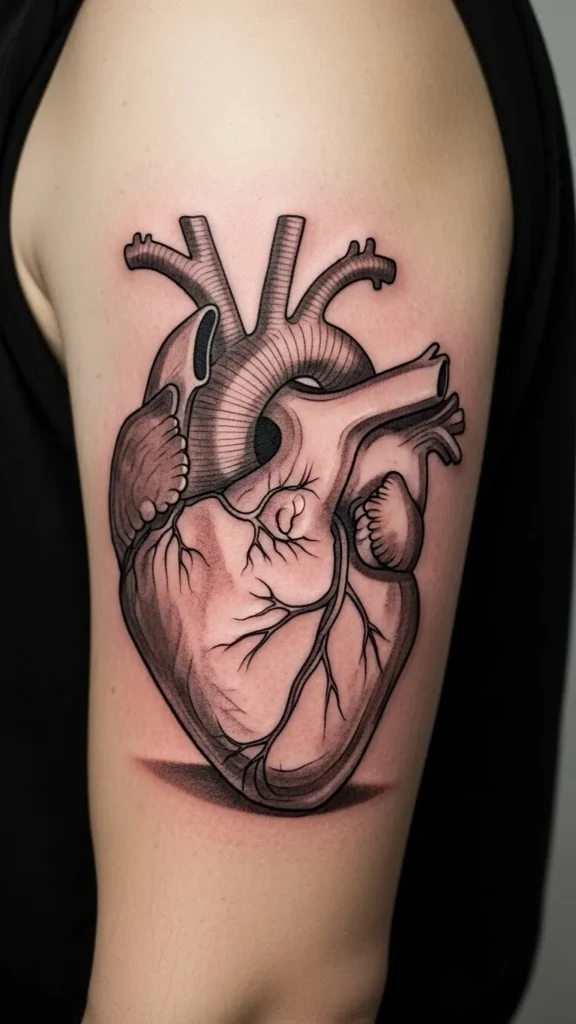
A medical sketch–style heart looks like it came from an anatomy book. Fine crosshatching and measured lines give it a study-like feel. This style works well for people drawn to science or structure.
To stay on budget, request a smaller size with focused detail. You do not need full shading everywhere. Let the artist suggest where lines matter most. Black or dark gray ink keeps it timeless.
This design pairs well with flat areas like the outer forearm or shoulder blade. It sits neatly and stays readable.
Many choose this tattoo to show respect for the body and lived experience. It feels thoughtful and grounded, not decorative.
4. Broken Anatomical Heart
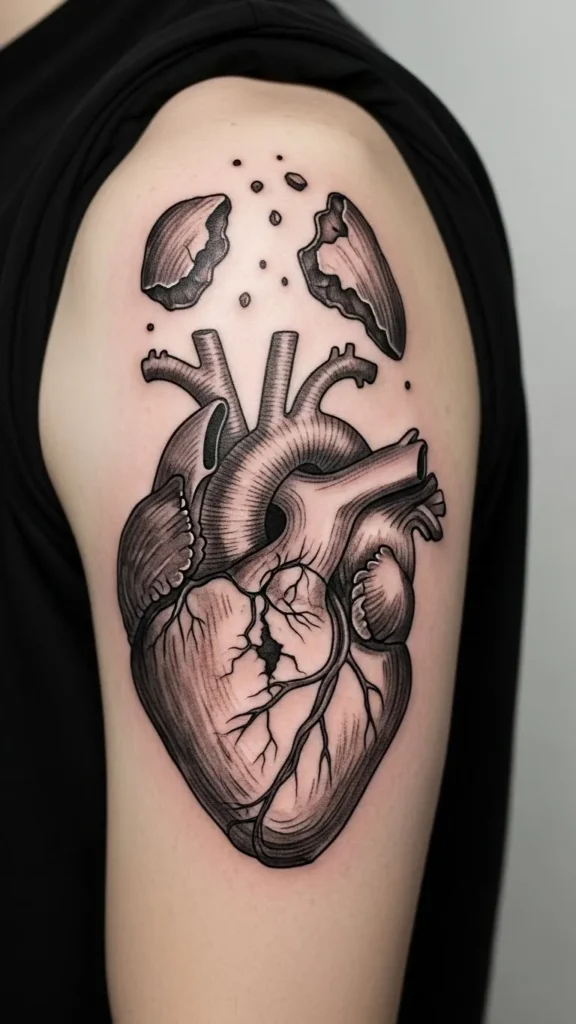
A broken anatomical heart shows damage without exaggeration. Small cracks or separations suggest emotional strain. It works well for people marking growth after pain.
Keep the break subtle. A clean split or faint fracture line says more than heavy distress marks. This keeps the tattoo wearable long term. Simpler breaks also reduce cost.
Ask your artist to place the break along natural heart lines. This helps the design look intentional. Black ink keeps focus on shape and meaning.
This tattoo often reflects healing through honesty. It does not hide what happened. It shows survival in a calm way.
5. Anatomical Heart with Flowers

Flowers softening an anatomical heart create balance. Structure meets care. This style is popular for honoring love or memory.
Choose one flower type to keep costs low. Line-based petals work better than heavy shading. Black ink flowers keep everything unified.
Placement on the thigh or upper arm allows flow between heart and stem. Smaller versions fit the forearm with simplified blooms.
This design often represents growth after emotional weight. It feels gentle without losing strength.
6. Heart with Visible Veins
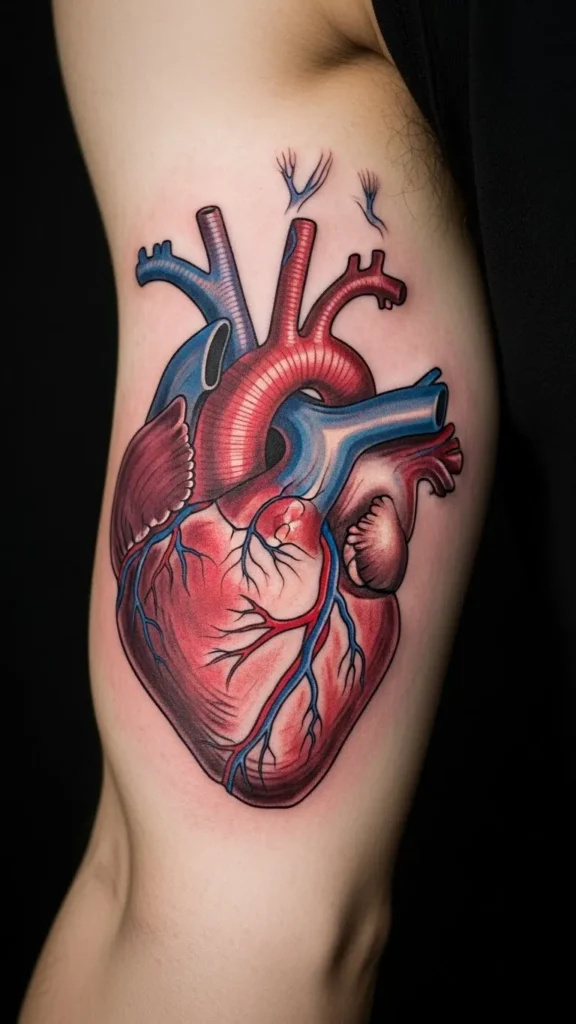
Visible veins add realism. They show life moving through the heart. This style feels honest and grounded.
Ask for thin vein lines instead of shading. This saves time and money. Keep the heart medium-sized so details stay clear.
This design fits areas with flat skin. The outer arm or calf works well.
Many people choose this to show ongoing emotional effort. The heart is active, not static.
7. Single-Line Anatomical Heart
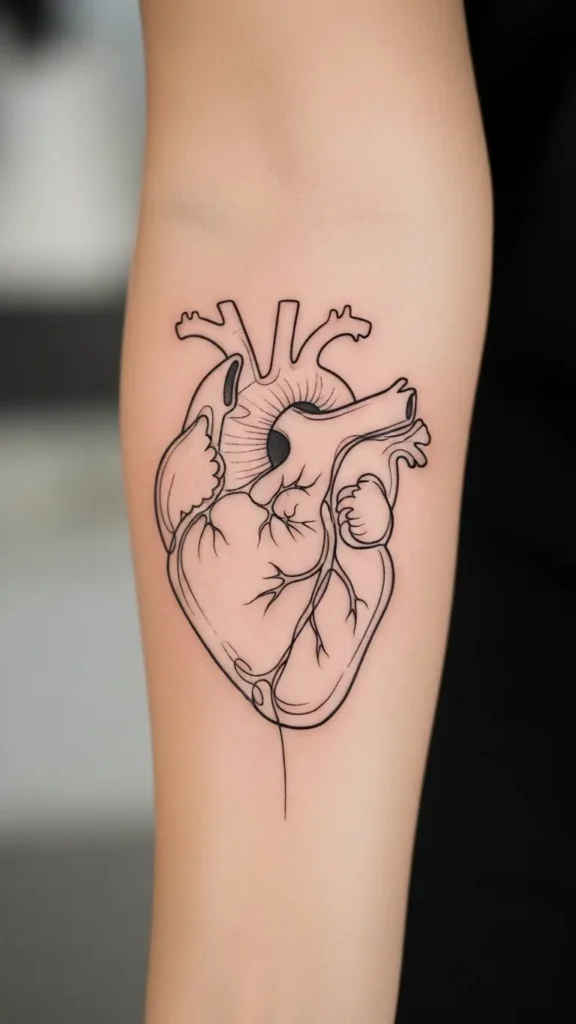
A single-line heart uses one continuous stroke. It feels modern and expressive. This is great for minimalist tastes.
Because it uses fewer lines, it costs less and heals fast. Work with your artist to keep the heart recognizable without overworking it.
This style suits wrists, ankles, or behind the arm. It stays subtle but meaningful.
It often reflects emotional continuity. One line. One story.
8. Small Anatomical Heart Tattoo
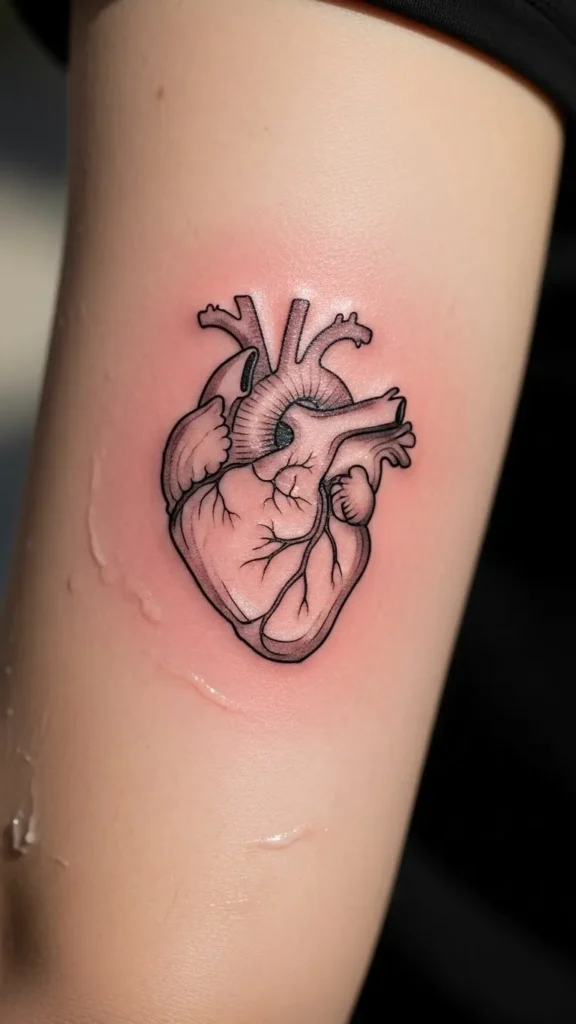
A small heart tattoo keeps things private. It works well for first-timers or low-visibility areas.
Reduce detail to avoid blurring over time. Focus on outline and key shapes. Black ink works best at small scale.
Ankles, wrists, and collarbones are popular spots.
This design represents quiet emotion. It belongs to you first.
9. Anatomical Heart Outline Only
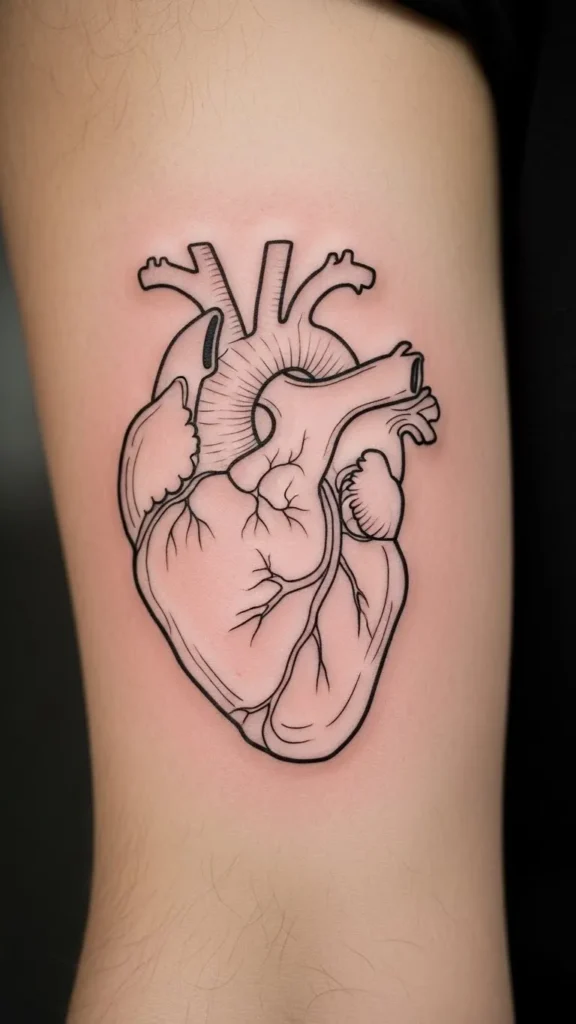
Outline-only hearts remove visual noise. They focus on shape and meaning.
This approach lowers cost and session time. Ask for consistent line weight.
It fits almost any placement and ages well.
This tattoo shows emotion without explanation. Simple. Direct.
10. Heart with Dripping Ink Effect
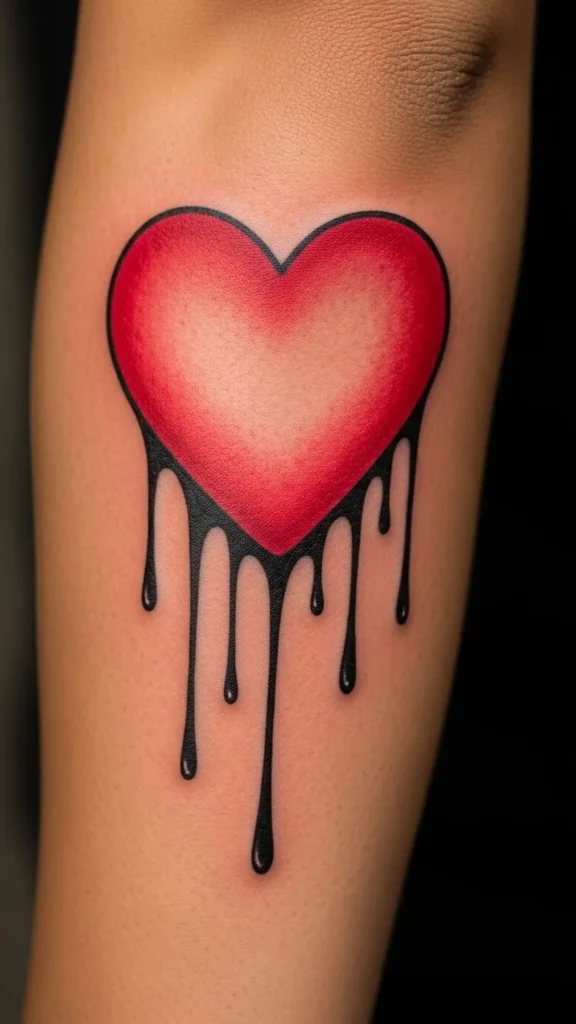
Dripping ink adds motion. It suggests release or pressure.
Keep drips short and controlled. Too many increase cost and clutter.
This style works best on vertical placements like the arm.
It often reflects emotion in motion.
11. Anatomical Heart with Thorns

Thorns suggest boundaries and protection. Use light line work to avoid heaviness.
Limit thorn count to save time. Let them follow natural curves.
This design suits shoulders or upper arms.
It reflects guarded emotion.
12. Half Realistic Half Abstract Heart
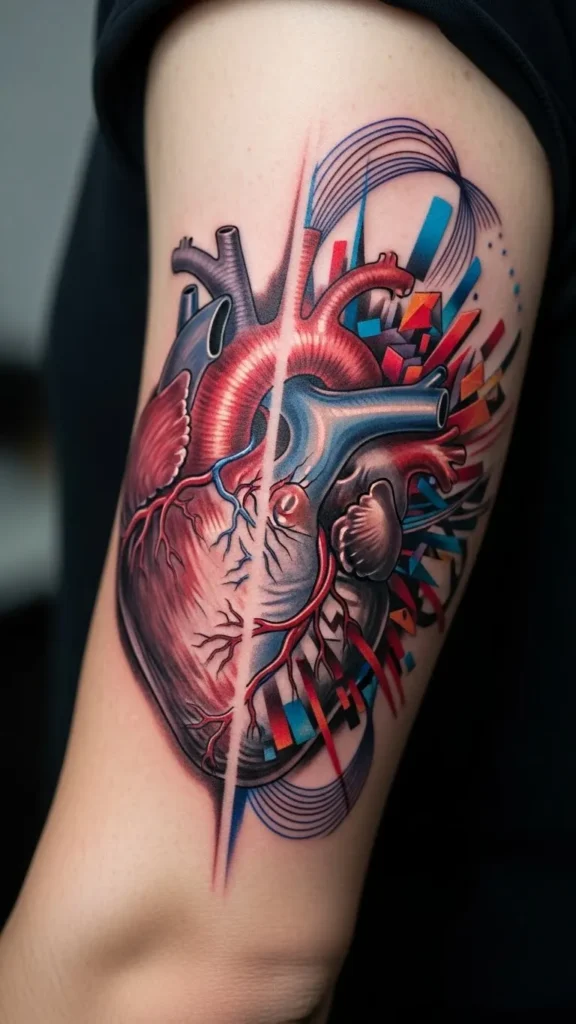
This style splits order and feeling. One side detailed. One side loose.
Keep the abstract side simple to manage cost.
Great for forearm placement.
It shows balance between logic and emotion.
13. Anatomical Heart with Line Shading
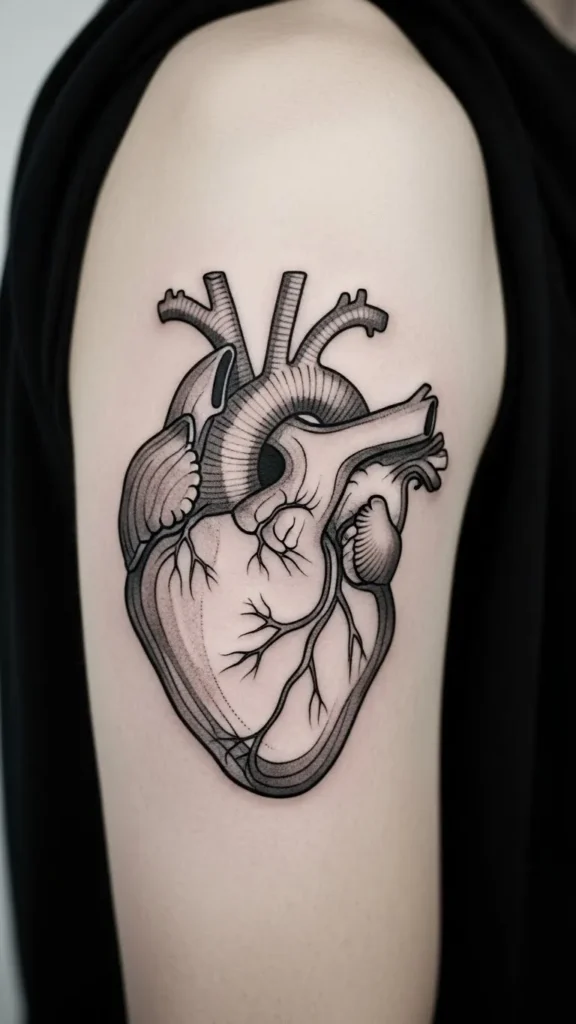
Line shading gives depth without heavy fill. It keeps the tattoo light.
Ask for spaced lines instead of dense shading.
Works well on larger areas.
It reflects layered feeling.
14. Heart with Minimal Color Accents
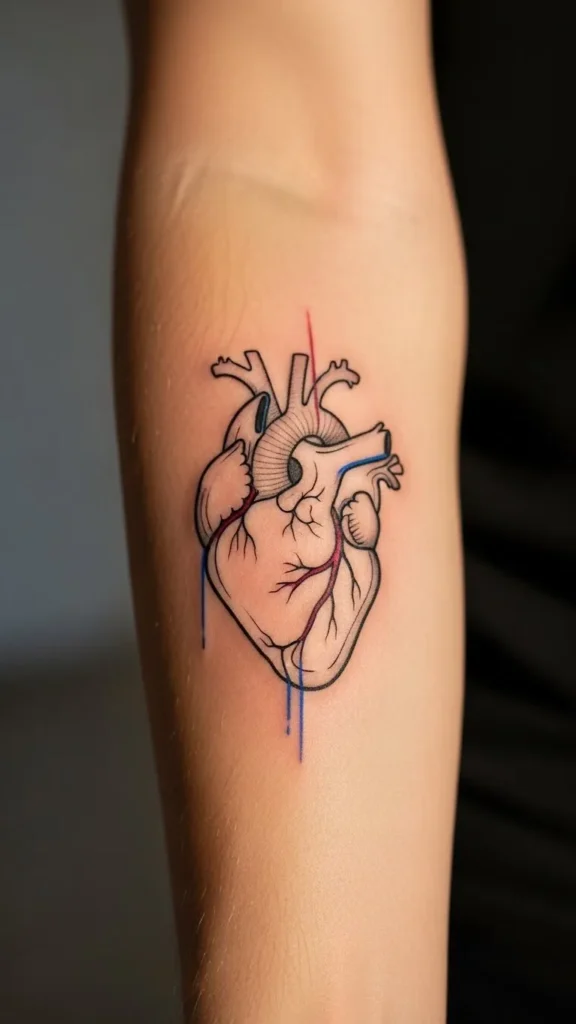
One color accent adds focus. A small red area works well.
Limit color use to control cost.
Best on visible areas.
This design marks specific emotion.
15. Anatomical Heart with Script-Free Design
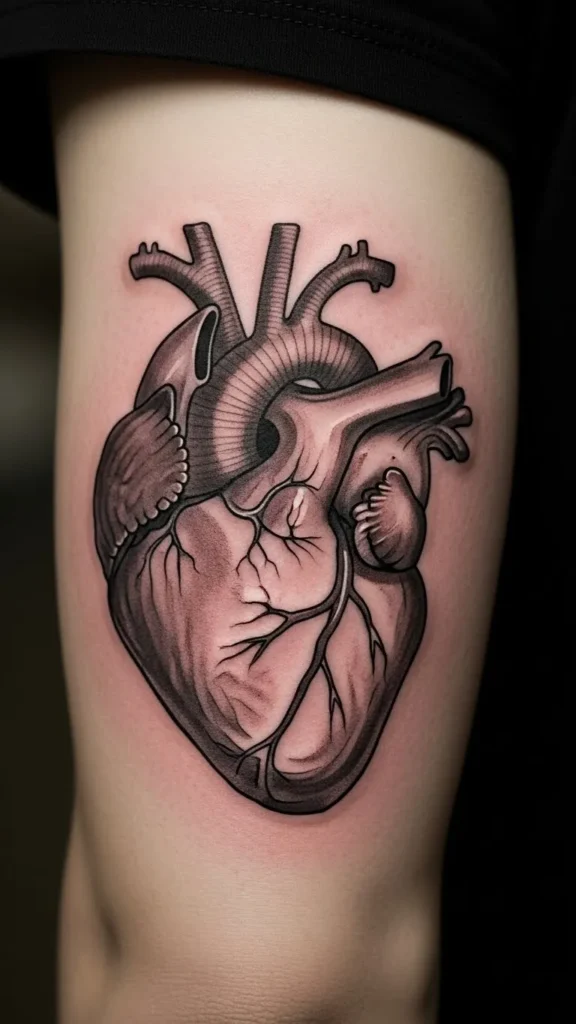
No words keep meaning open. The heart speaks alone.
This saves money and avoids font aging issues.
It fits anywhere.
It reflects personal meaning without labels.
16. Geometric Anatomical Heart
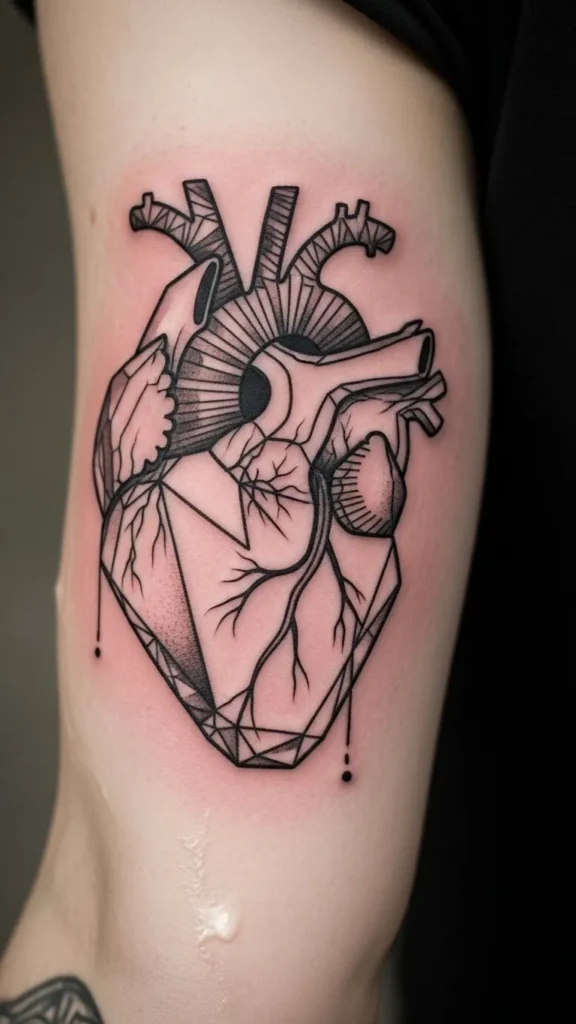
Geometric lines add order. They contrast emotion.
Use clean shapes to reduce session time.
Works well on forearms.
It shows structured emotion.
17. Anatomical Heart with Cracks

Cracks suggest strain without collapse.
Keep cracks thin and minimal.
This design suits calves and arms.
It reflects resilience.
18. Simplified Vintage Heart Sketch
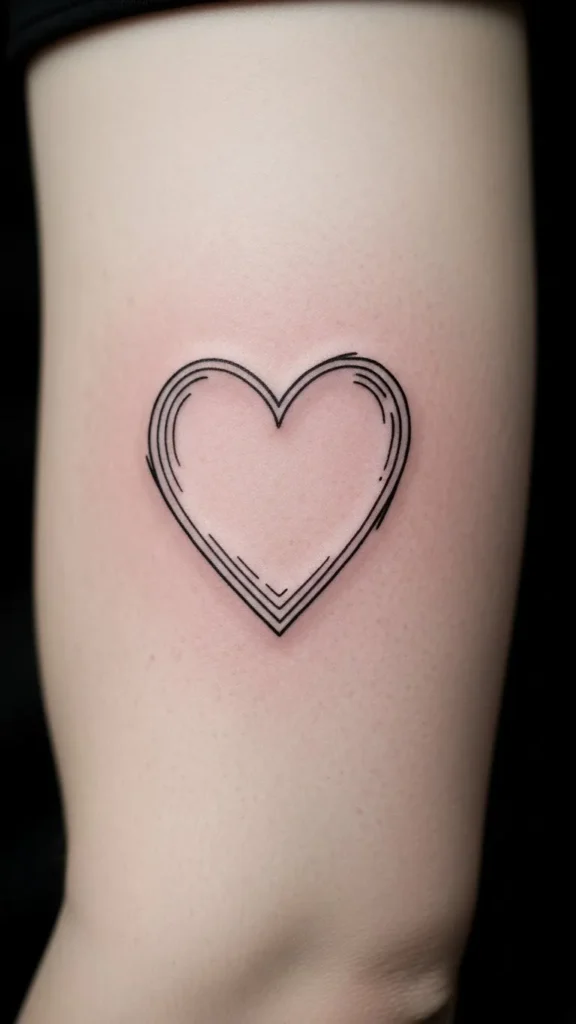
Vintage lines feel timeless. Less detail keeps it readable.
Black ink works best.
This suits chest or upper arm.
It represents long-held feeling.
19. Heart with Open Chambers
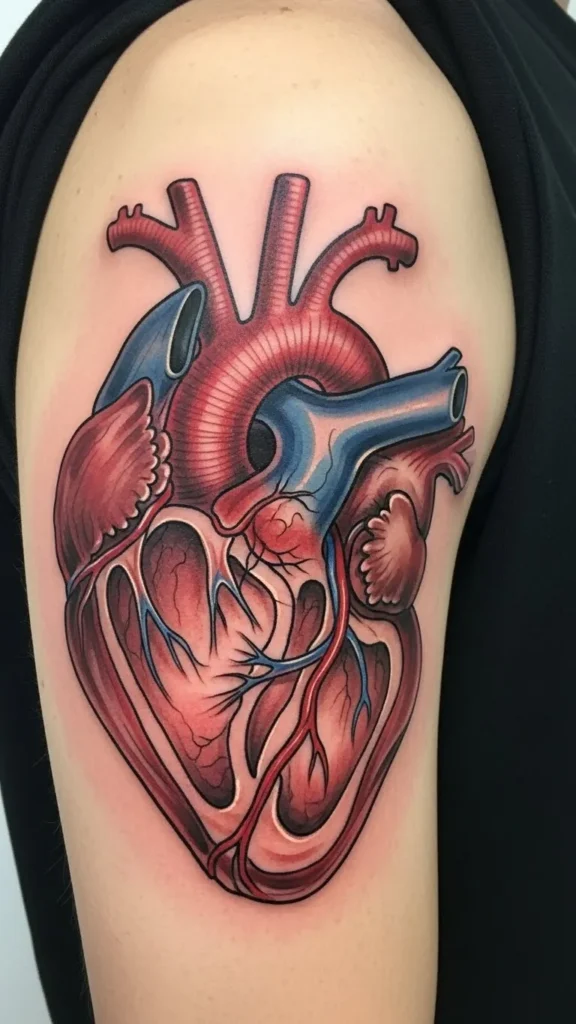
Open chambers suggest honesty.
Limit inner detail to control cost.
Best on larger areas.
It shows emotional openness.
20. Anatomical Heart with Thread Lines
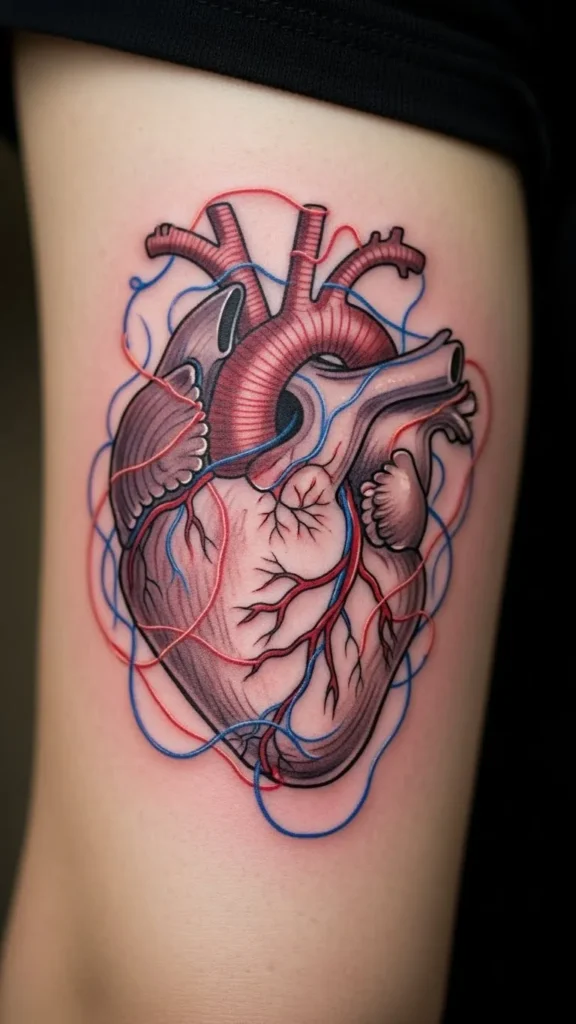
Thread lines imply repair.
Keep stitches minimal.
Works well on arms.
It reflects mended emotion.
21. Abstract Ink Wash Heart
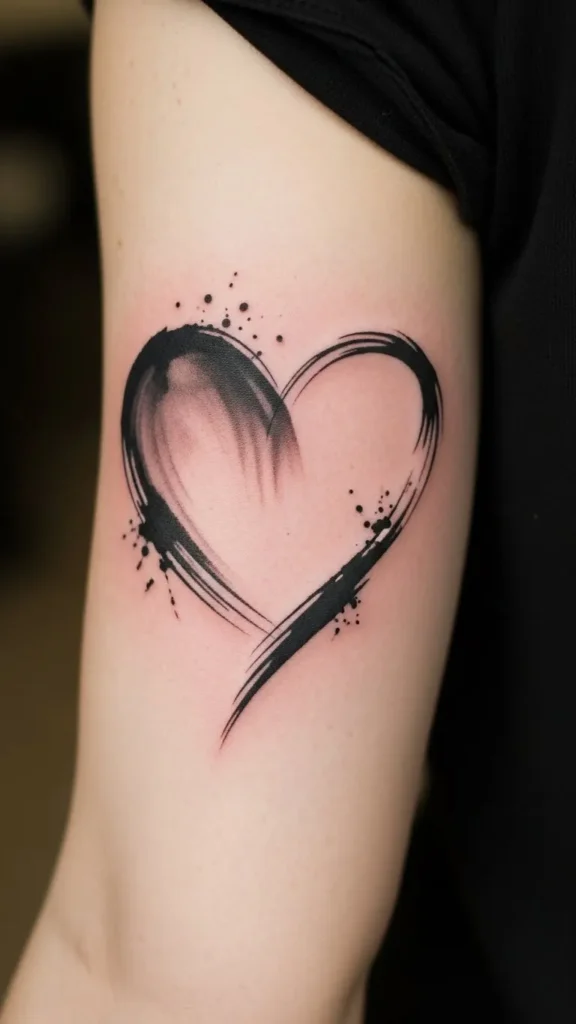
Ink wash adds softness. Use sparingly to save cost.
Pair with outline.
It shows emotional flow.
22. Anatomical Heart with Negative Space
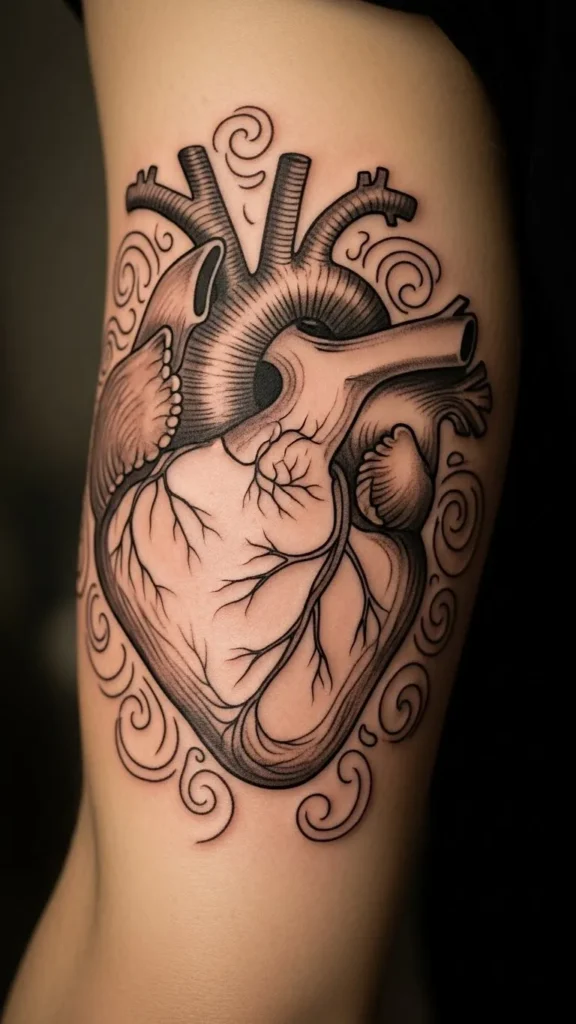
Negative space keeps it clean.
Less ink lowers cost.
Ages well.
It reflects clarity.
23. Heart with Light Dotwork
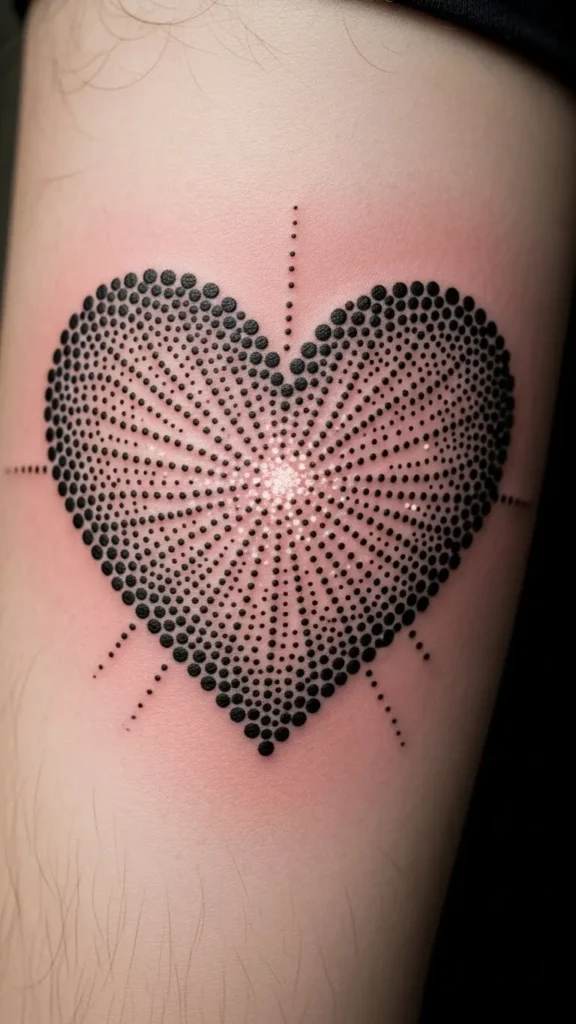
Dotwork adds texture without heaviness.
Ask for spaced dots.
Works on forearms.
It shows emotional depth.
24. Anatomical Heart Silhouette
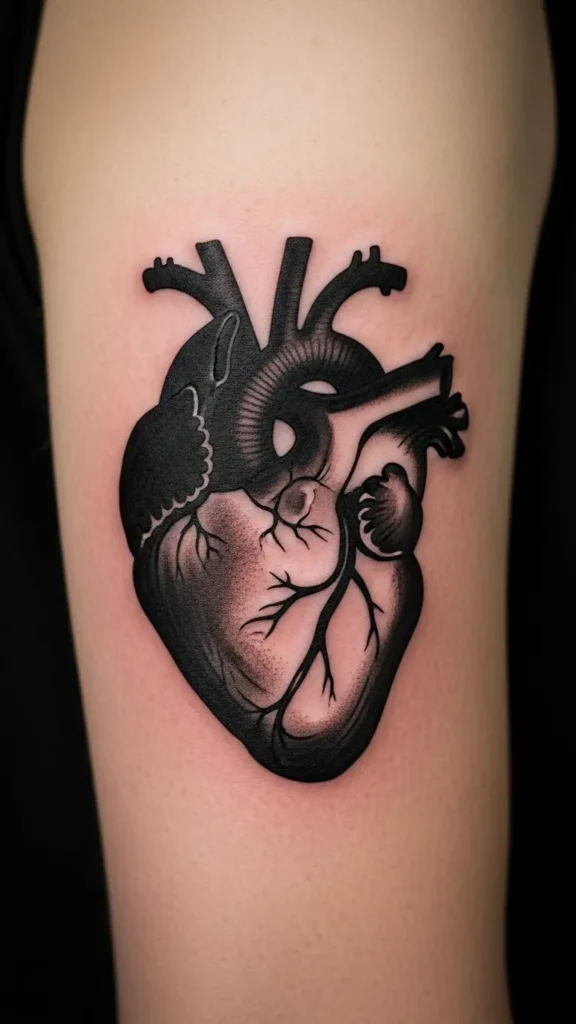
Silhouettes keep things bold yet simple.
Fast sessions save money.
Good for visible spots.
It represents clear feeling.
25. Heart with Asymmetrical Design
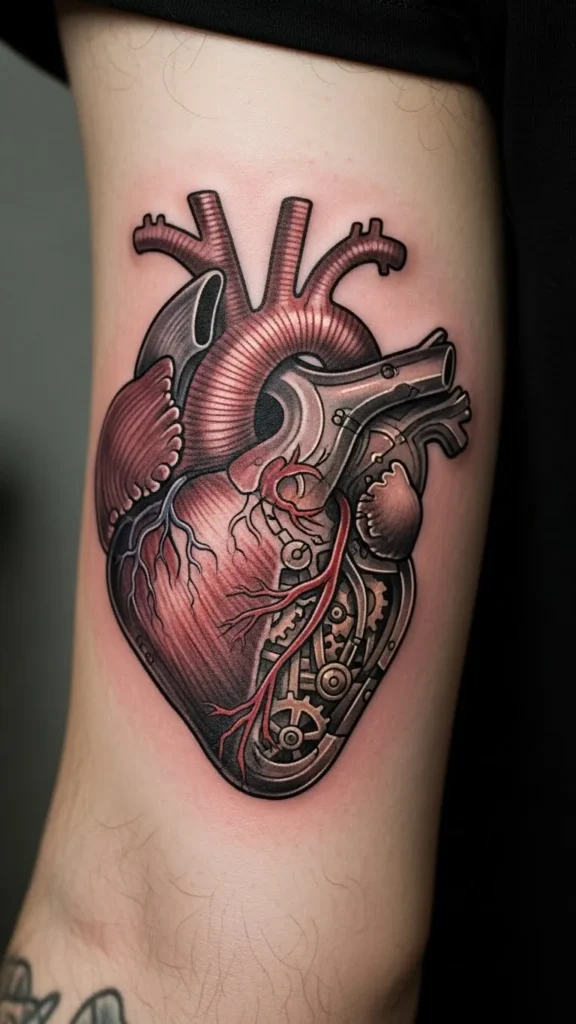
Asymmetry feels human.
Keep imbalance subtle.
This design fits arms.
It shows real emotion.
26. Anatomical Heart with Minimal Shadows
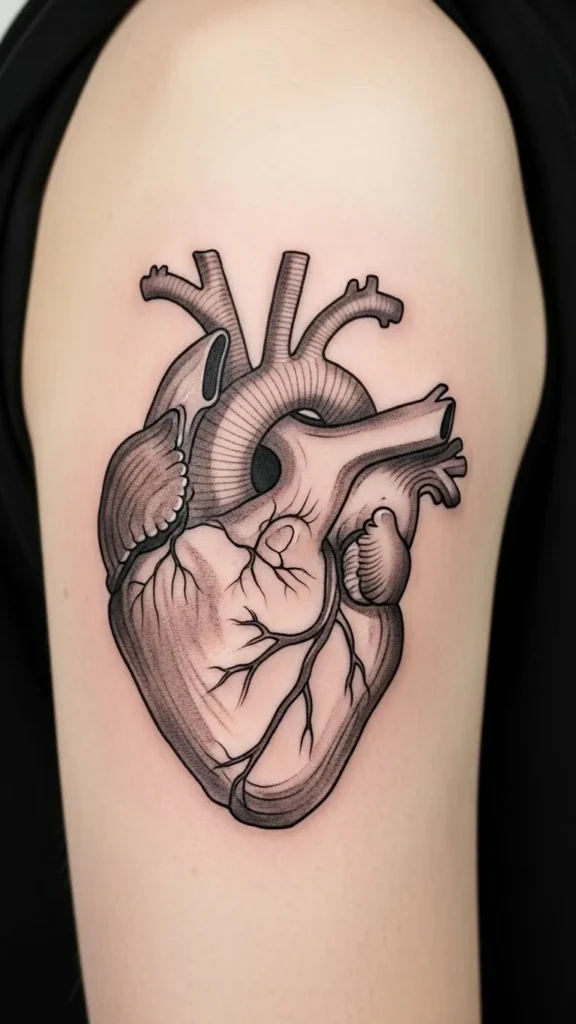
Soft shadows add depth.
Limit shadow areas.
Works on larger skin areas.
It reflects emotional layers.
27. Continuous Outline Heart
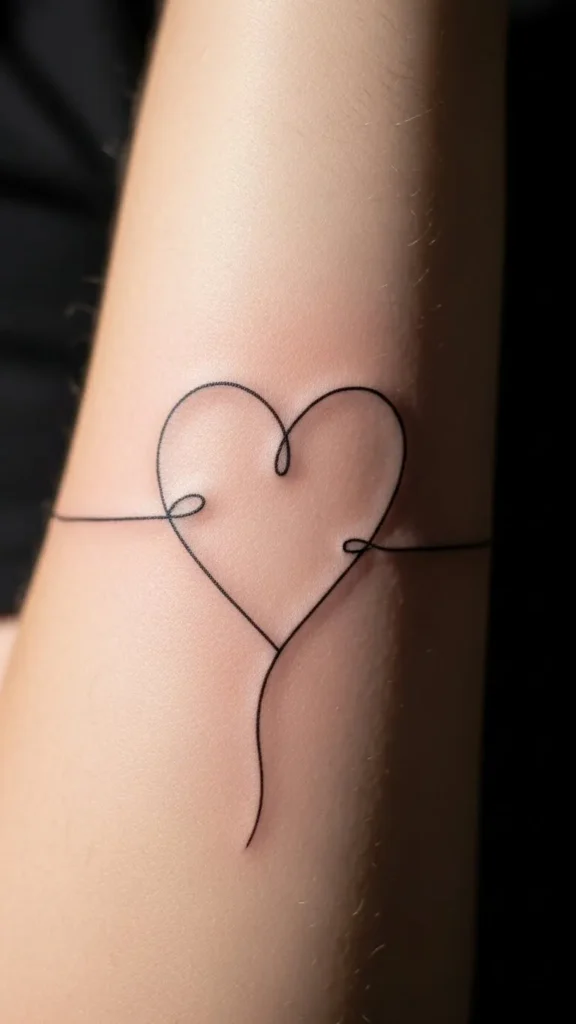
Continuous outlines feel fluid.
Lower cost and fast healing.
Good for wrists.
It shows ongoing feeling.
28. Personal Symbol Integrated Heart
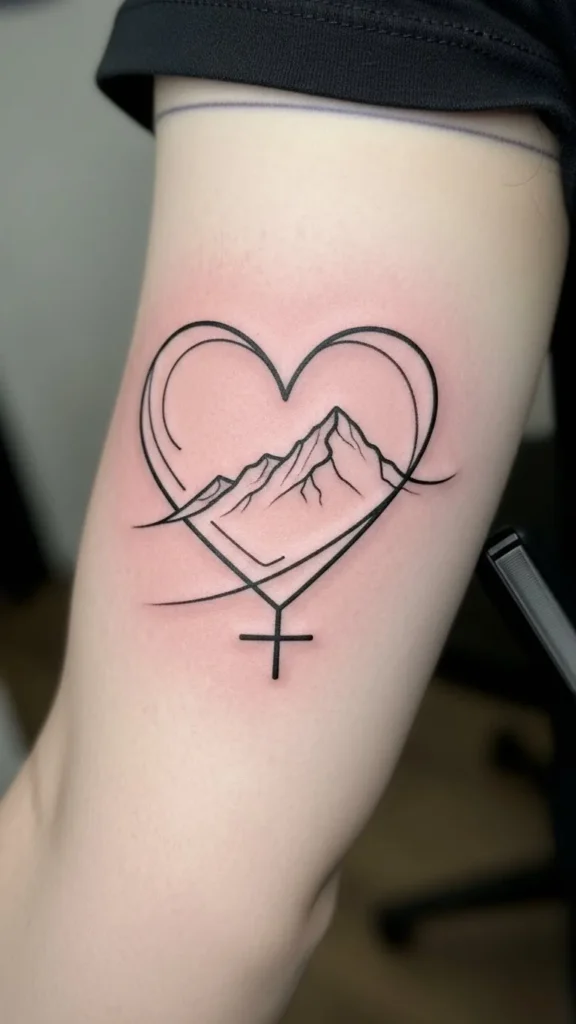
Adding a small symbol keeps it personal. A date mark or shape works well.
Keep it subtle to avoid clutter.
This design fits anywhere.
It reflects individual emotion.
Conclusion
Anatomical heart tattoos offer a way to express emotion without exaggeration. They feel honest, personal, and lasting. By choosing simpler line work, thoughtful placement, and clear structure, you can create a design that fits both your story and your budget. Take your time, bring clear references, and work closely with your artist. The right heart tattoo should feel true every time you see it.

Leave a Reply