

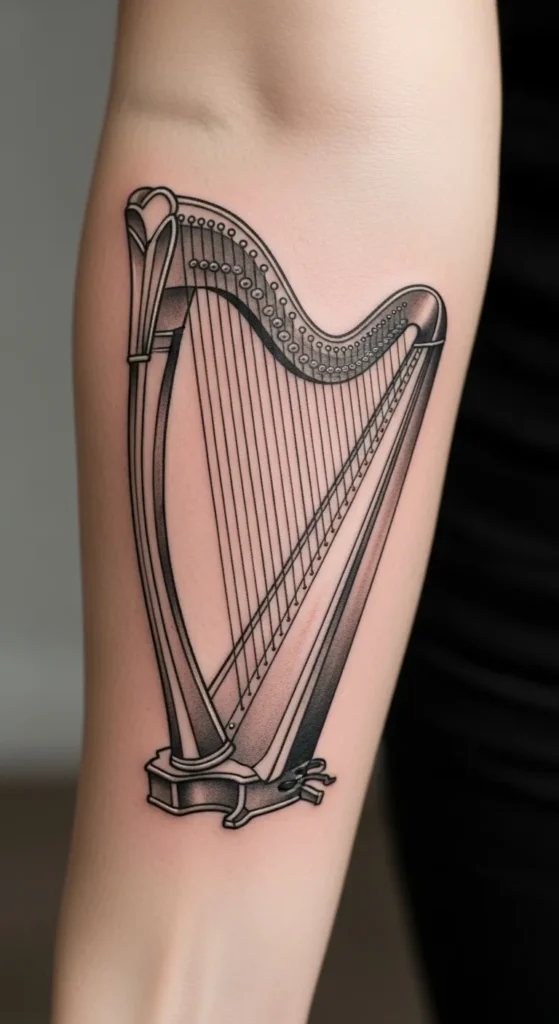
Harp tattoos carry centuries of meaning. They connect music, ancestry, and identity in a single symbol. Many people choose harp designs to honor heritage, storytelling, or a lifelong bond with sound and tradition. These tattoos work beautifully in both bold and subtle styles, making them accessible for first-time ink or meaningful additions to an existing collection. The ideas below focus on classic harp imagery that feels personal, affordable, and realistic to recreate with thoughtful planning.
1. Traditional Celtic Harp Outline
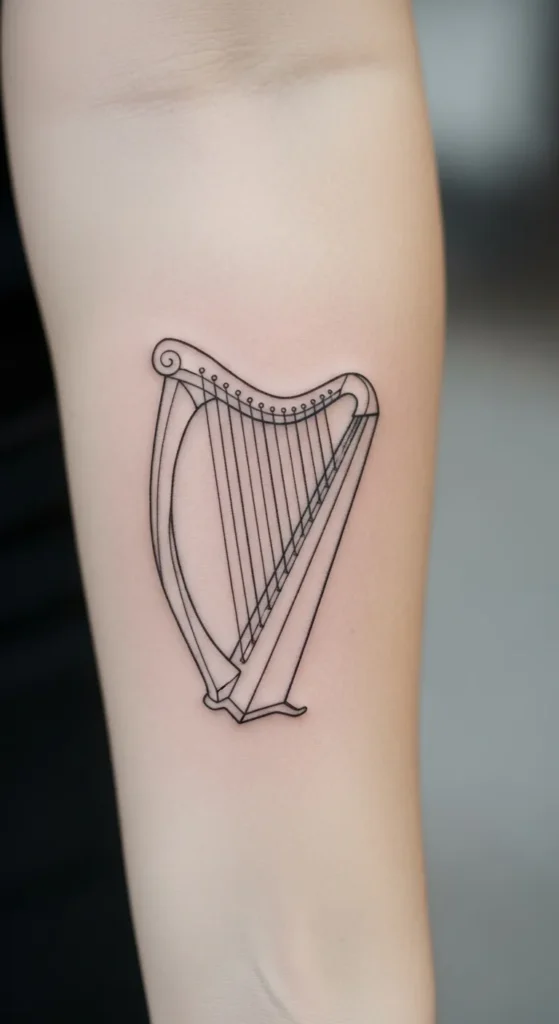
A traditional Celtic harp outline is a clean way to honor Irish roots. The design relies on simple curves and balanced proportions rather than heavy detail. This keeps tattoo time shorter and cost lower. Many people choose a single-needle outline for a soft, timeless look.
Placement matters here. The inner arm, ankle, or shoulder blade works well for narrow harp shapes. If budget is tight, skip shading and stick to linework only. You can always add detail later.
Before booking, sketch the harp using reference images from old manuscripts or museum pieces. This helps your artist keep the design accurate without extra revisions. Some artists will trace a printed reference directly, saving design fees.
For DIY prep, test the size with a temporary tattoo or marker. Live with it for a few days. This avoids resizing costs on appointment day. A classic outline may look simple, but its meaning runs deep and personal.
2. Small Wrist Harp Symbol
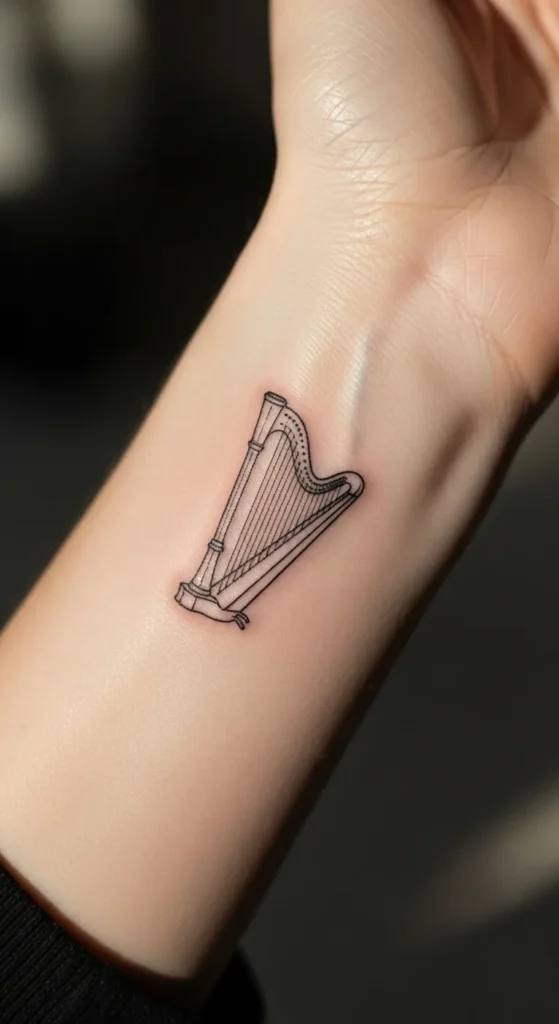
A small wrist harp tattoo suits those who want quiet symbolism. The wrist offers daily visibility without demanding a large design. Compact harps also heal faster, which can reduce touch-up sessions.
Choose a simplified harp shape with fewer strings. This keeps lines readable at a small scale. Fine-line styles cost less time in the chair and feel lighter on the skin.
If you want to save money, bring a clear reference and ask for minor adjustments only. Custom redraws add cost. Many artists already have small harp flash designs that can be adapted quickly.
A wrist harp pairs well with future additions like dots or small knots. Planning ahead prevents awkward spacing later. Even in its smallest form, the harp still carries strong cultural weight.
3. Ancient Gaelic Harp Design
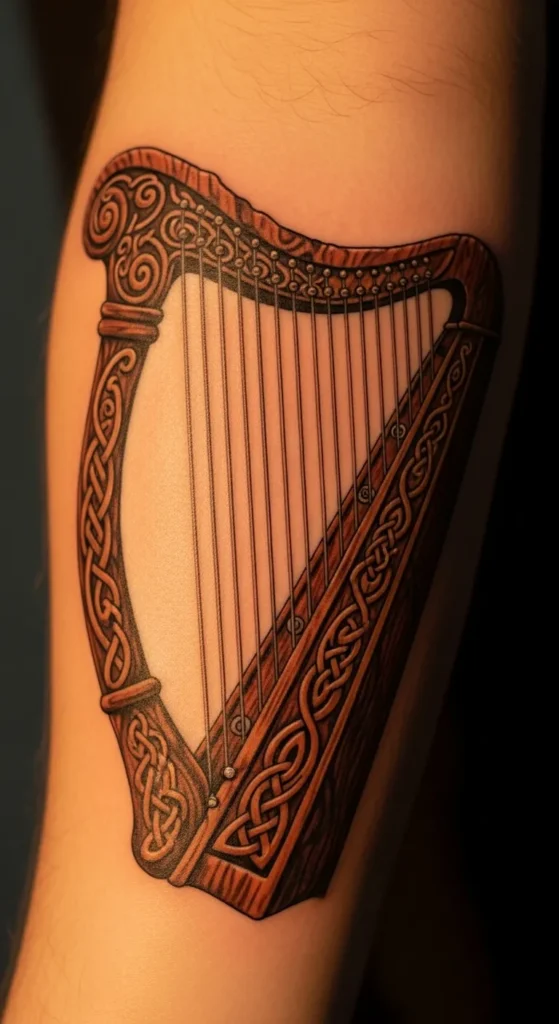
Ancient Gaelic harp designs draw from carved instruments seen in early history. These often feature thicker frames and fewer strings. The shape feels grounded and historic.
To keep this design affordable, ask for selective detail. Focus on the harp body while leaving the strings simple. This keeps the tattoo readable without long sessions.
Study museum references or stone carvings. These sources guide accurate proportions and prevent modern shortcuts. Artists appreciate clear direction, which saves time.
This style works well on calves, upper arms, or ribs. Larger placement allows the shape to breathe without extra filler. A Gaelic harp tattoo speaks quietly but carries generations of meaning.
4. Black Ink Heritage Harp
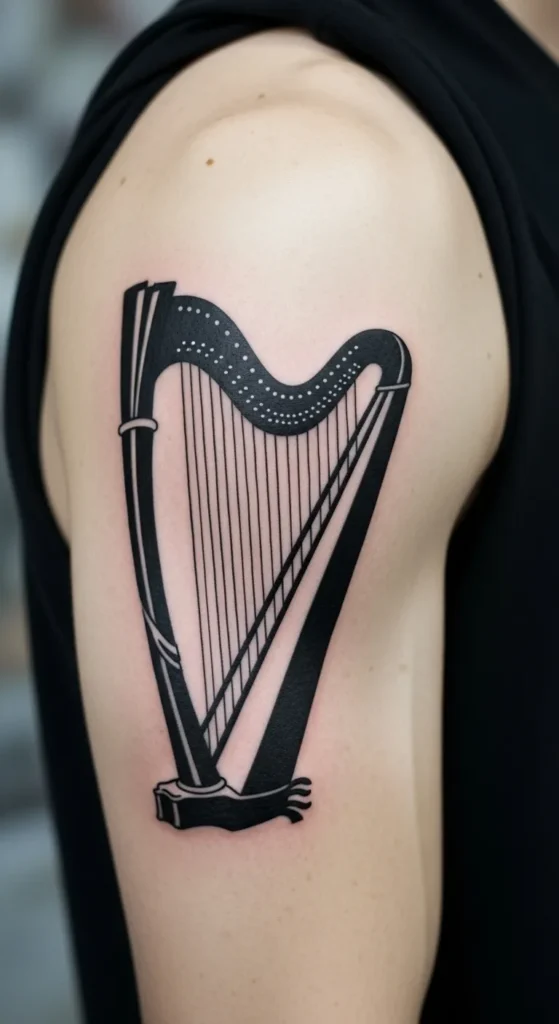
A black ink harp feels bold without extra decoration. Solid fills age well and hold shape over time. This makes it a smart long-term choice.
Solid black tattoos often cost less than shaded pieces because the process is direct. Ask your artist to keep edges sharp and spacing even.
This style suits people who want visual strength without ornament. It also pairs well with other heritage symbols later.
Choose areas with stable skin like the upper arm or thigh. This reduces distortion and helps the harp remain clear as years pass.
5. Minimal Line Harp Tattoo
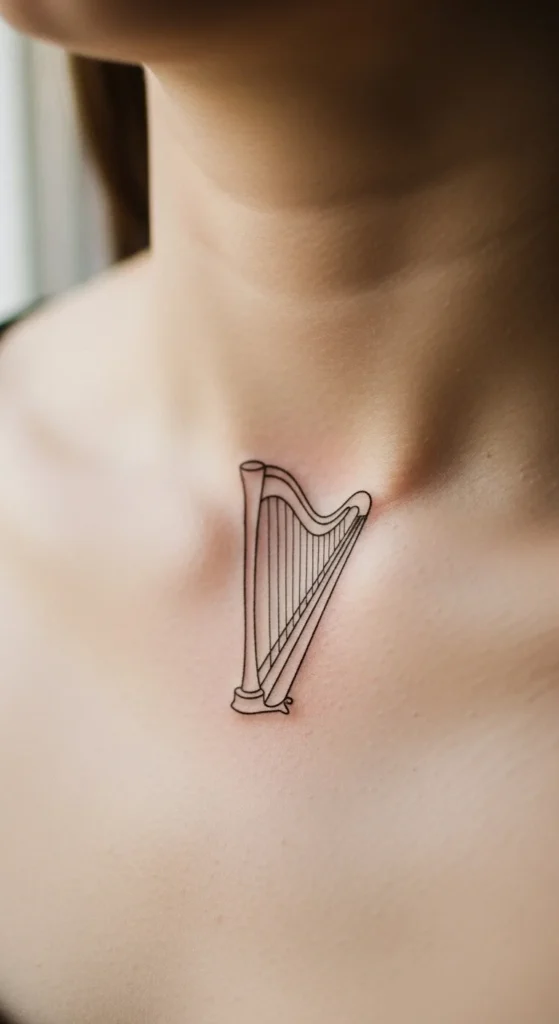
Single-line harp tattoos use one continuous stroke. This style feels modern while respecting classic form. It is also budget-friendly due to shorter sessions.
Keep the design slightly larger than expected. Thin lines can fade if too small. A skilled artist will guide spacing choices.
This style fits collarbones, ankles, or behind the arm. It works well for people who prefer subtle art with meaning.
Simple does not mean shallow. A single line can still hold deep cultural memory.
6. Irish National Harp Motif
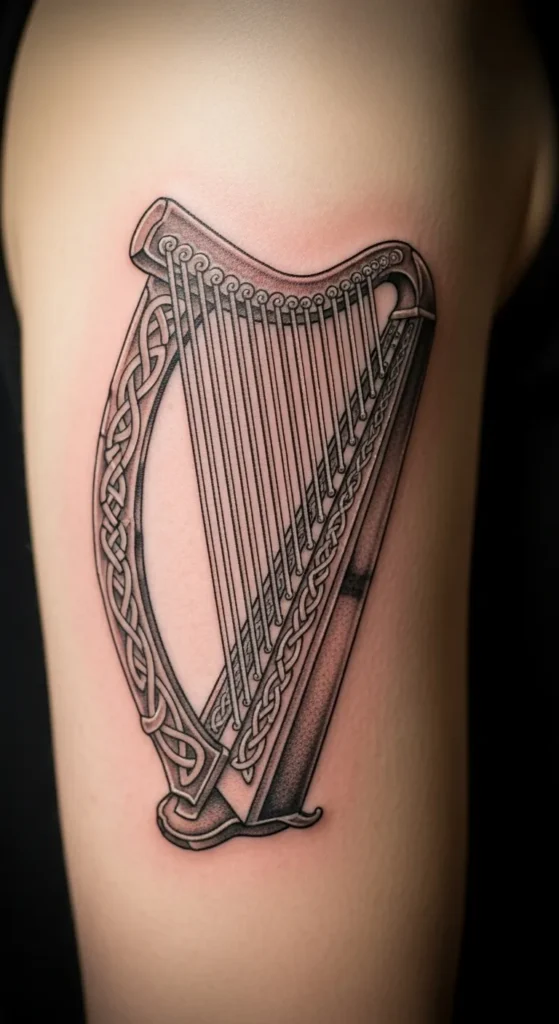
The national harp symbol appears on coins and documents. Tattooing this design connects personal identity with shared history.
Stick to classic proportions. Avoid extra decoration to keep costs low and meaning clear.
This design works well on forearms or shoulders. Ask for clean line spacing to avoid blur over time.
It is a recognizable symbol that still feels personal when sized thoughtfully.
7. Vintage Manuscript Harp
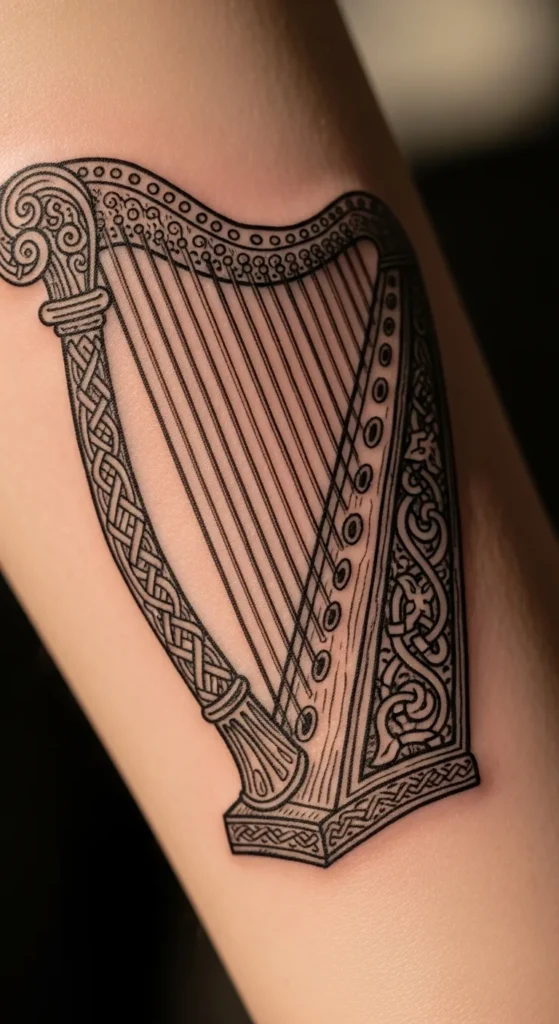
Manuscript-style harps use slightly uneven lines. This gives a hand-drawn feel.
Ask your artist to mimic ink imperfections. This style does not require heavy shading.
Research historical books for reference. This saves design time and keeps accuracy high.
The result feels old, personal, and rooted in tradition.
8. Wooden Frame Harp Illustration
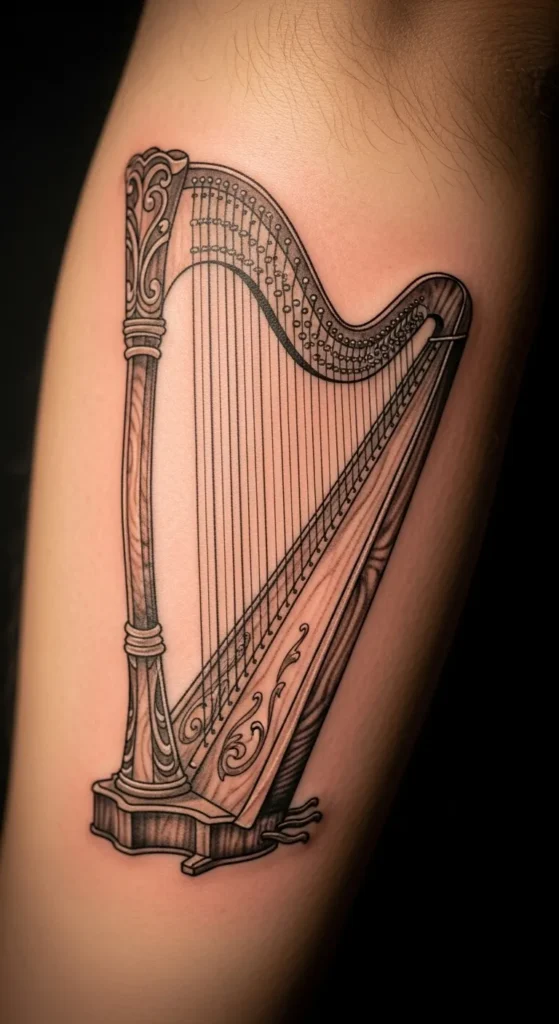
Wood-inspired harp tattoos focus on texture. Selective grain lines add depth without overworking the skin.
Limit detail to the frame. Simple strings keep the piece balanced.
This style suits medium sizes and ages well when not overcrowded.
9. Side Rib Harp Tattoo
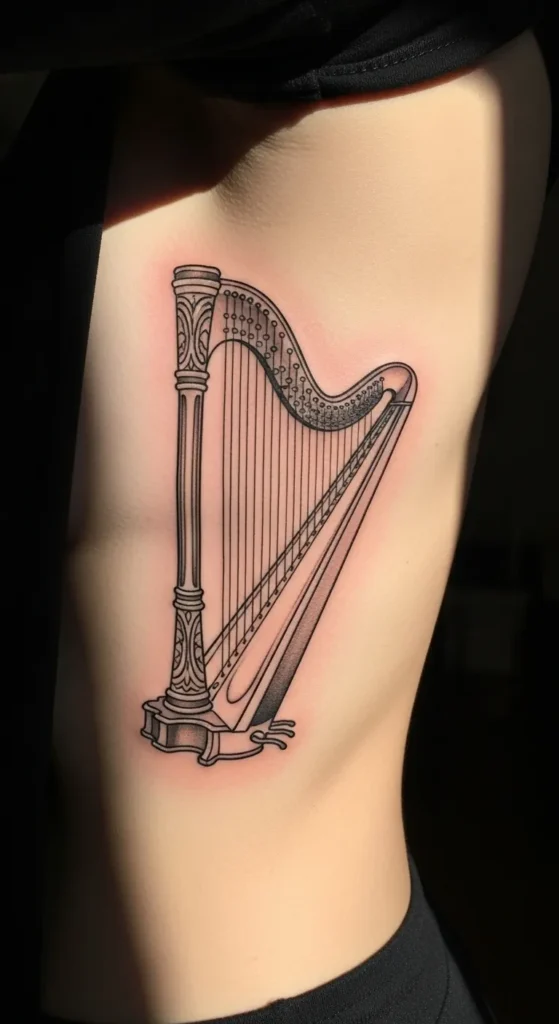
Rib placement offers privacy and space. Vertical harp shapes fit naturally here.
Keep the design slim to reduce session time. Rib tattoos can feel intense, so shorter sessions help.
Test placement with a stencil before committing. Comfort planning saves stress.
10. Shoulder Blade Harp Emblem
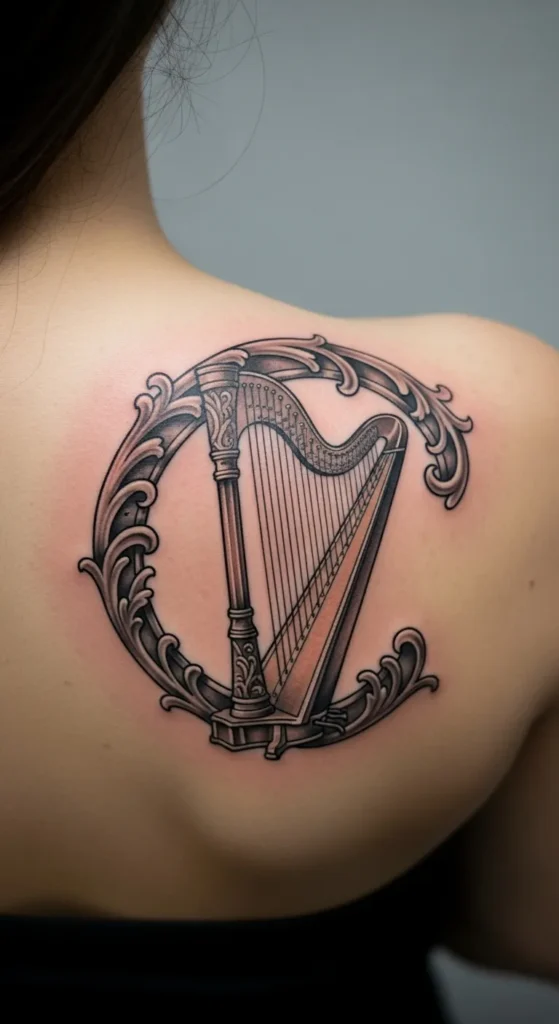
Shoulder blades provide a flat canvas. This keeps lines steady.
Medium-size designs work best here. Avoid tiny details that may blur.
This spot hides easily but feels powerful when shown.
11. Fine Dotwork Harp
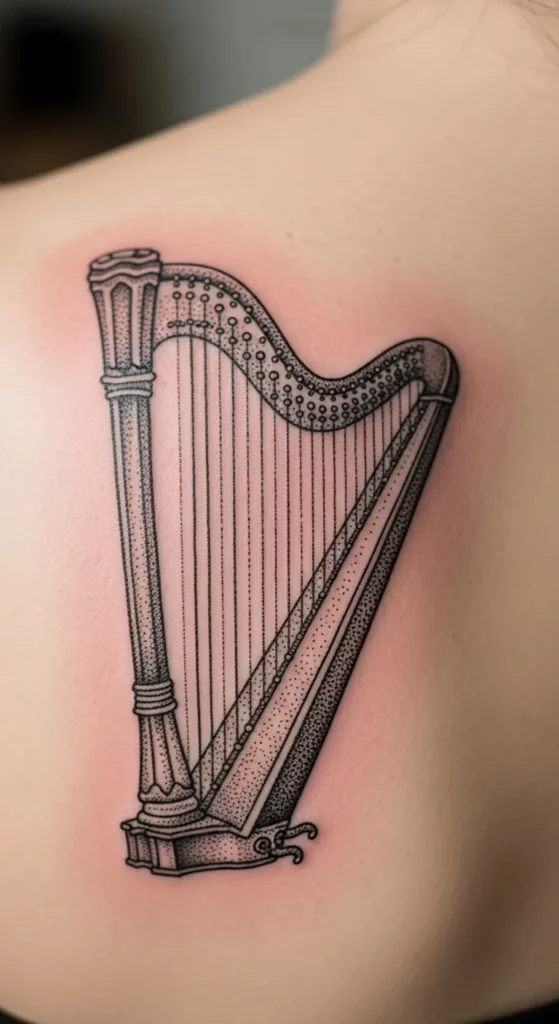
Dotwork adds texture without heavy ink. This can be done in stages to spread cost.
Focus dots on shadows only. Leave open space elsewhere.
Patience pays off with this method.
12. Simple Harp With Knot Base
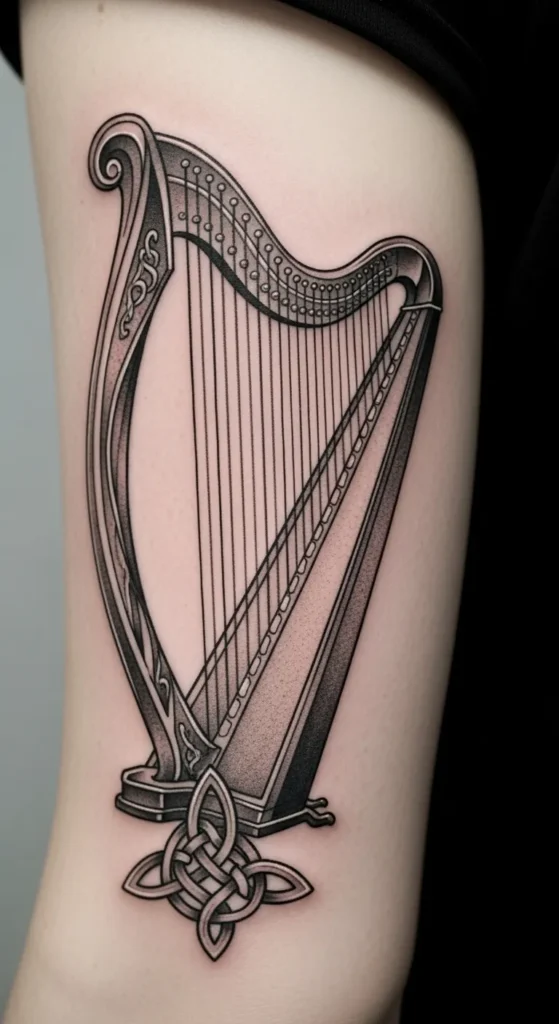
Adding a small knot anchors the harp culturally. Keep the knot simple.
This avoids overcrowding and extra hours.
It blends music and heritage naturally.
13. Ankle Harp Tattoo
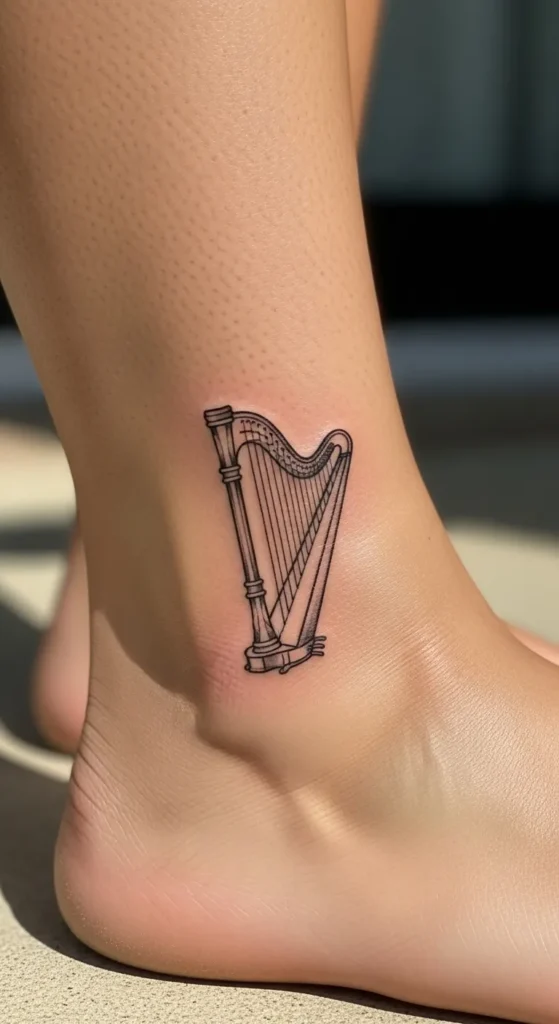
Ankles suit narrow designs. Healing is quick when size stays modest.
Choose thicker lines to handle movement.
This placement feels personal and discreet.
14. Forearm Storytelling Harp
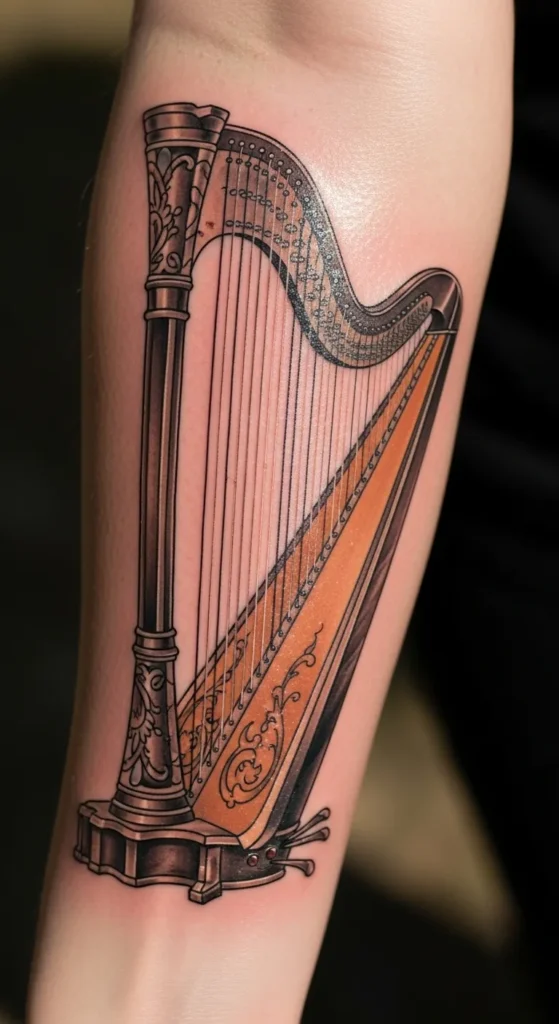
Forearms allow storytelling through size. Keep elements minimal.
Use negative space to reduce ink load.
This placement invites conversation naturally.
15. Classical String-Focused Harp
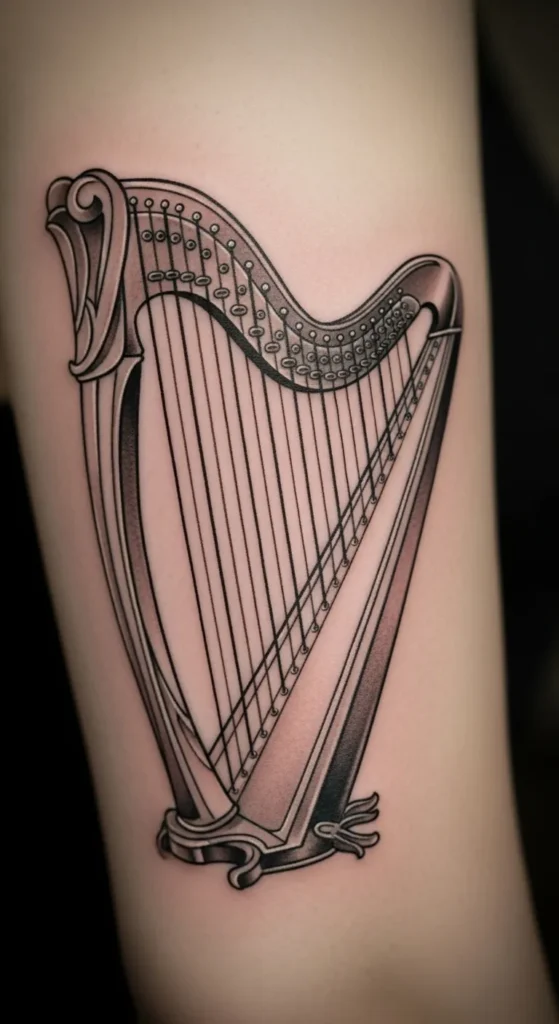
Highlighting strings adds meaning. Limit count to avoid clutter.
Clear spacing helps longevity.
This design feels musical and thoughtful.
16. Small Behind-the-Ear Harp
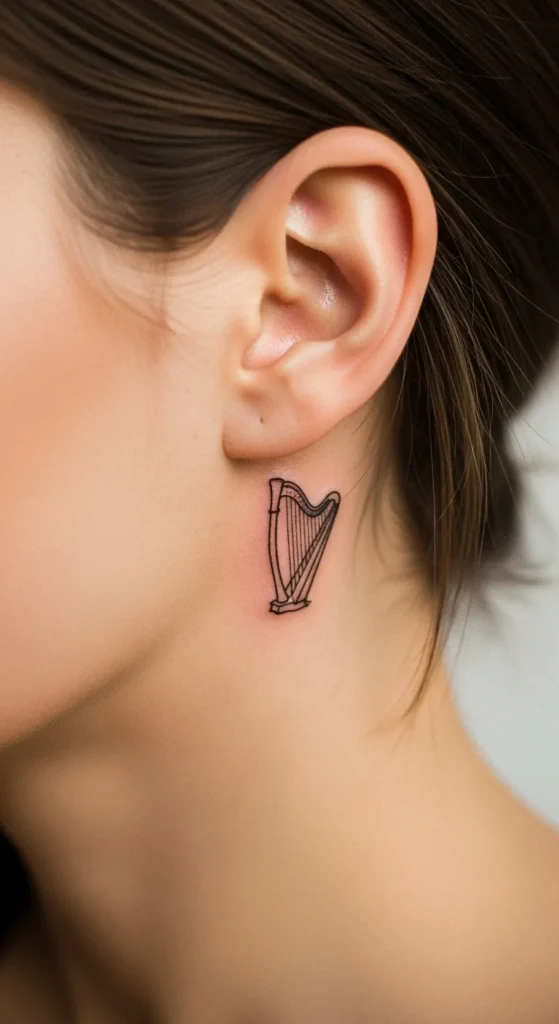
This placement suits ultra-simple designs. Use bold lines.
Tiny tattoos heal fast and cost less.
Keep aftercare gentle due to movement.
17. Vertical Spine Harp
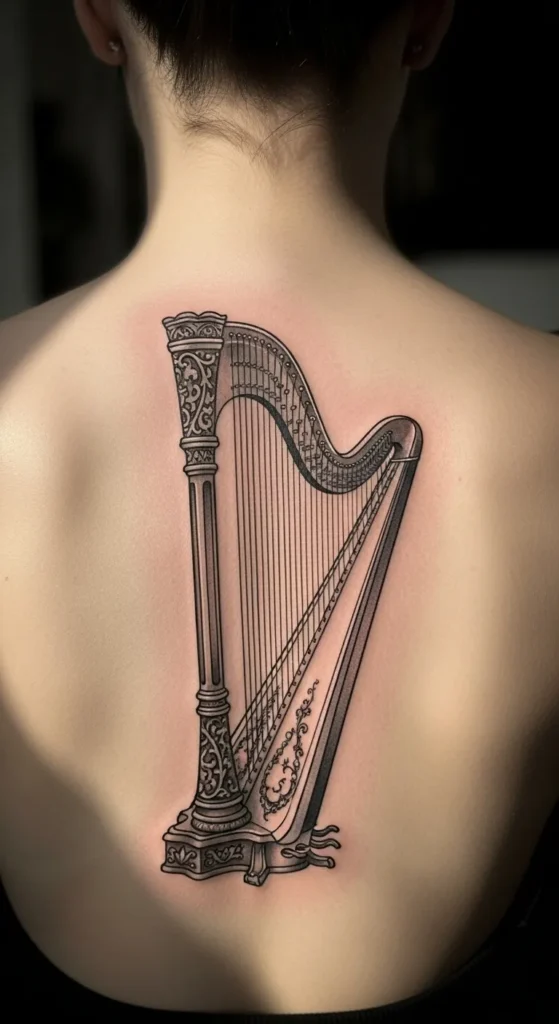
The spine matches harp shape naturally. Keep it symmetrical.
Limit shading for comfort.
This placement feels ceremonial and strong.
18. Outline Harp With Dates
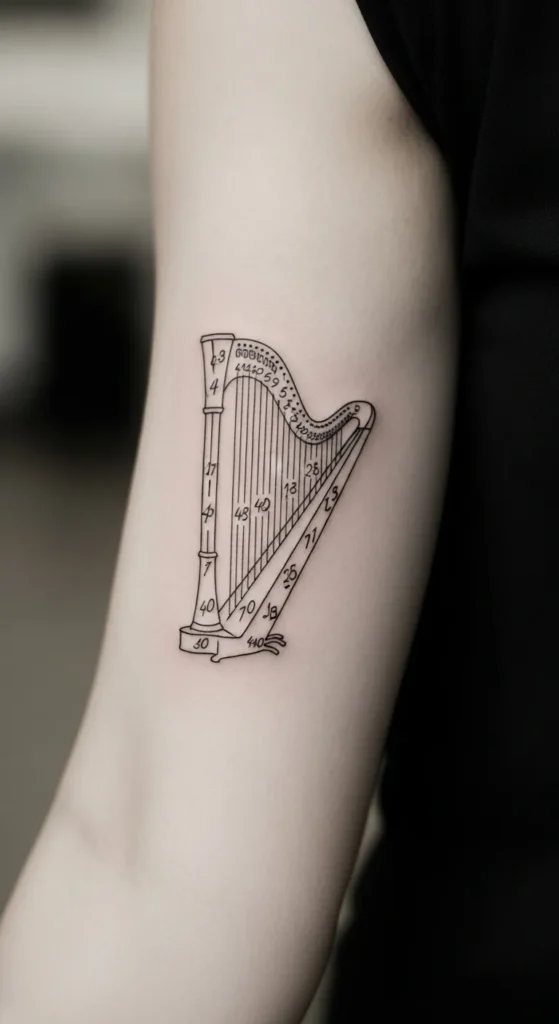
Small dates can mark family history. Keep numbers thin.
This adds meaning without crowding.
Plan spacing carefully.
19. Classic Harp and Laurel
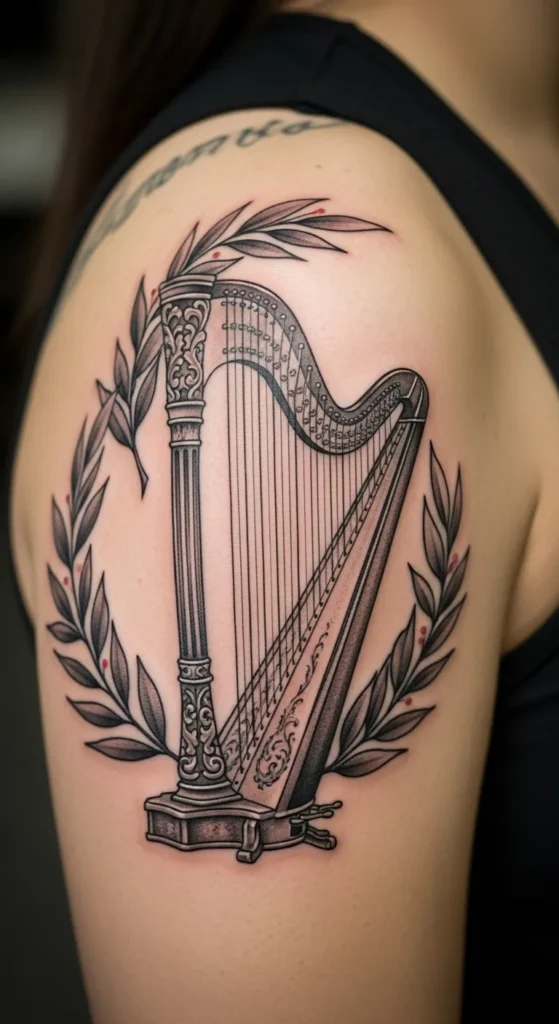
Laurel adds honor symbolism. Use light outlines only.
This keeps costs down.
Balance both elements evenly.
20. Hand-Poked Style Harp
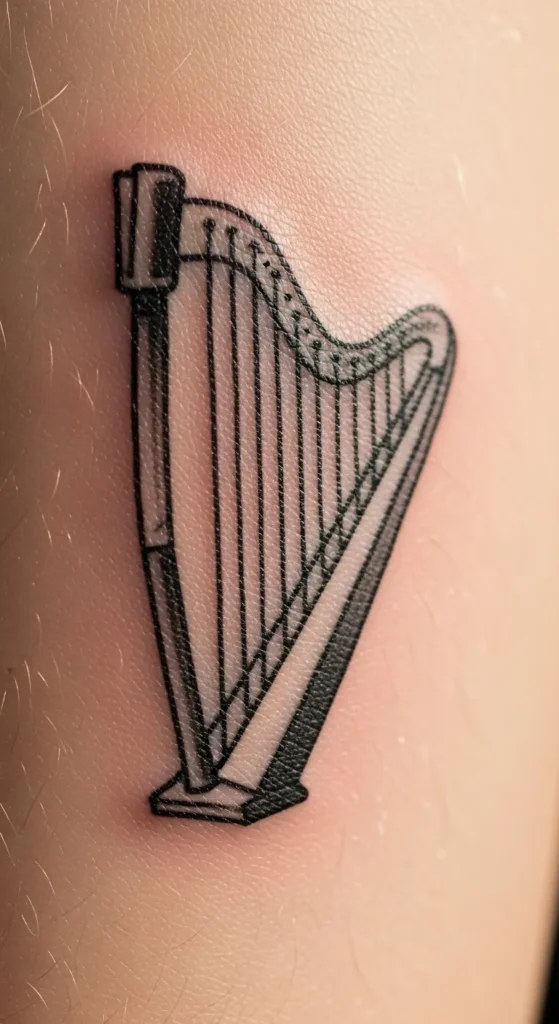
Hand-poked tattoos feel raw and historic. Sessions are often slower but flexible.
Designs stay simple by nature.
This style suits personal heritage pieces.
21. Monochrome Harp Badge
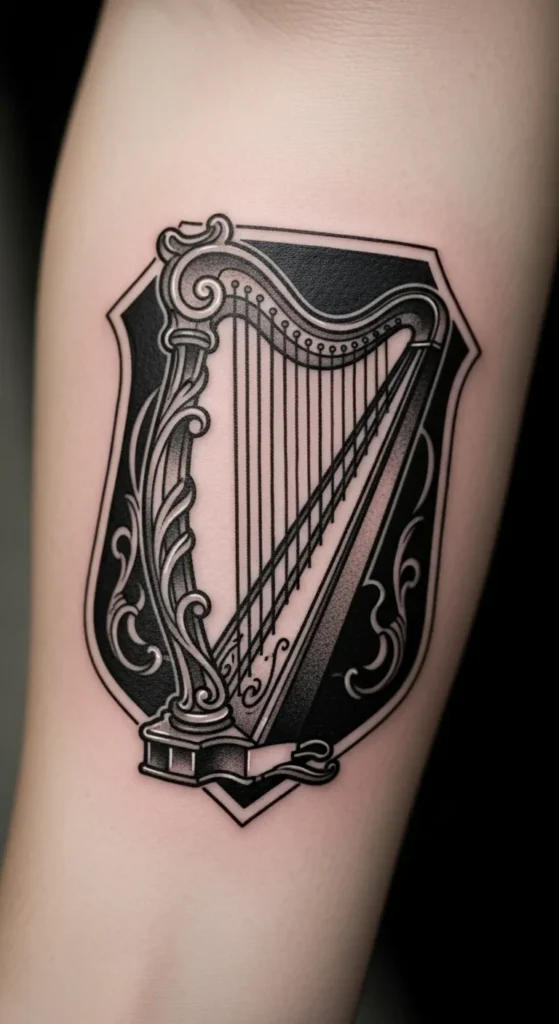
Badge layouts feel contained. Clean borders help aging.
Avoid tiny text.
This style feels structured and timeless.
22. Harp With Floral Accent
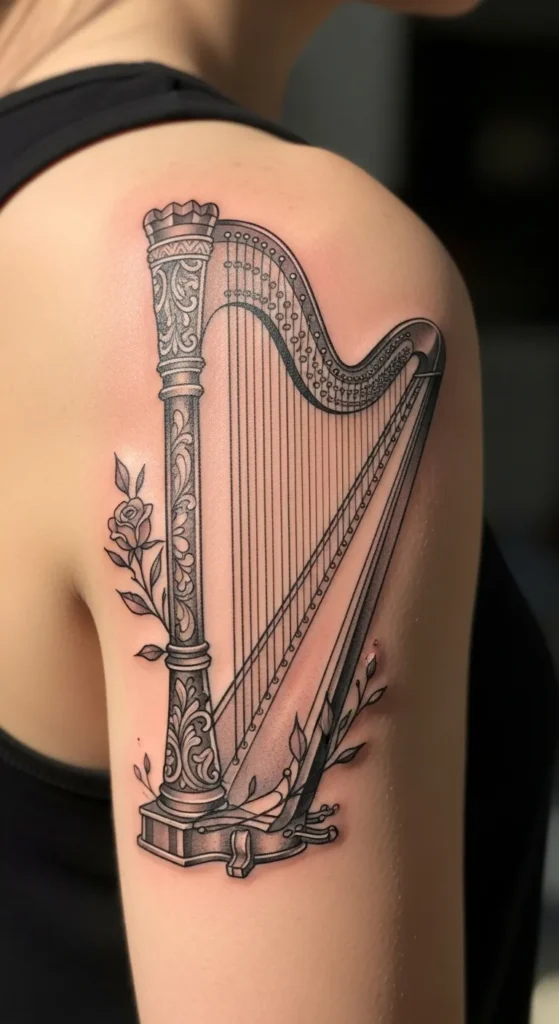
A single flower softens the design. Keep petals minimal.
This adds warmth without cost spikes.
Choose flowers tied to family memory.
23. Negative Space Harp
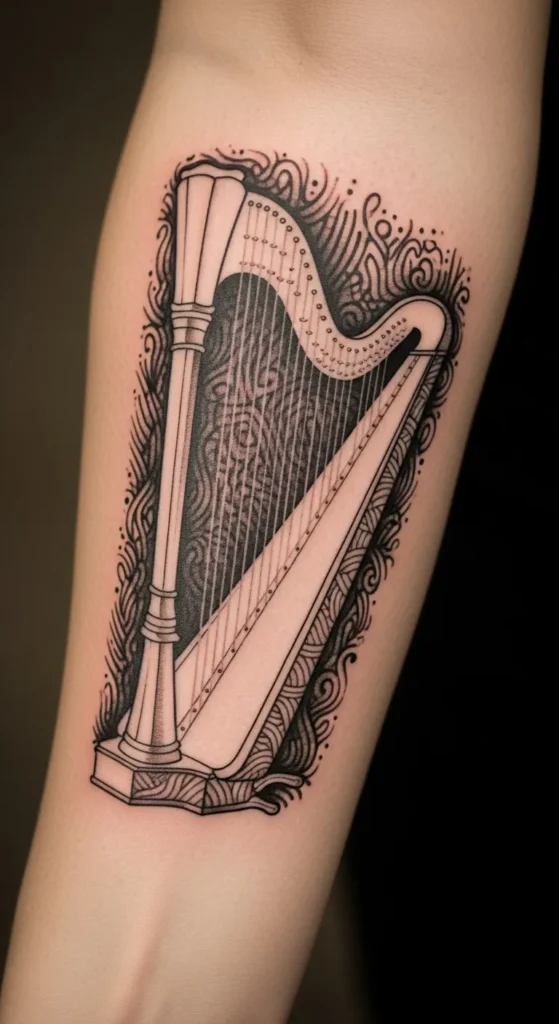
Negative space reduces ink use. It also heals cleanly.
Strong outlines guide the eye.
This approach feels modern yet rooted.
24. Travel-Inspired Harp Mark
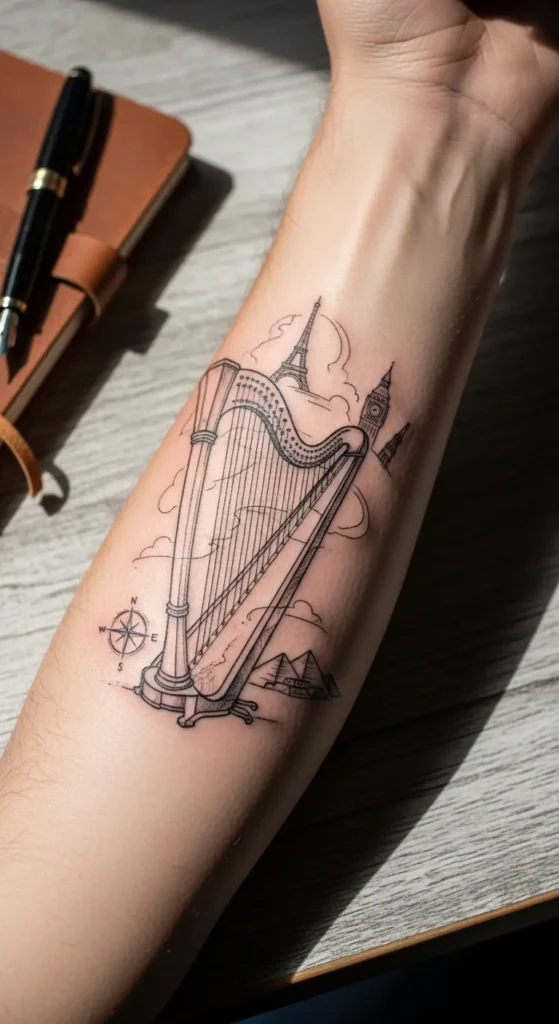
Sketch-style lines feel personal. Imperfection adds charm.
Avoid overplanning.
This design feels lived-in.
25. Family Crest Harp Element
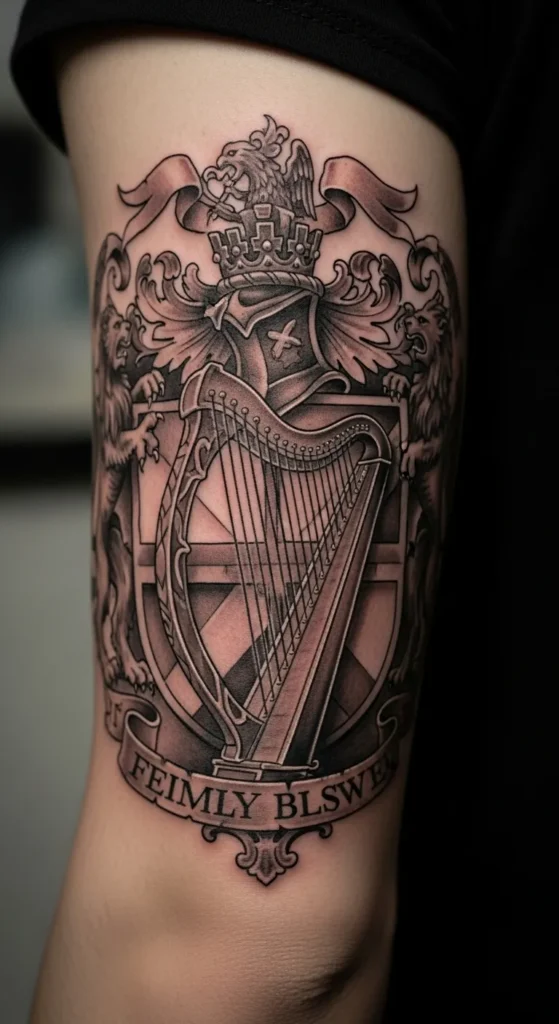
Using part of a crest keeps scale manageable. Focus on the harp only.
This honors lineage without complexity.
Simple choices keep meaning strong.
Conclusion
Classic harp tattoos offer more than visual appeal. They connect sound, memory, and identity in a form that lasts. Whether you choose a tiny outline or a larger heritage piece, thoughtful planning keeps the process affordable and personal. Save your favorite ideas, gather references, and speak openly with your artist. A well-chosen harp tattoo becomes a quiet symbol you carry every day.

Leave a Reply