

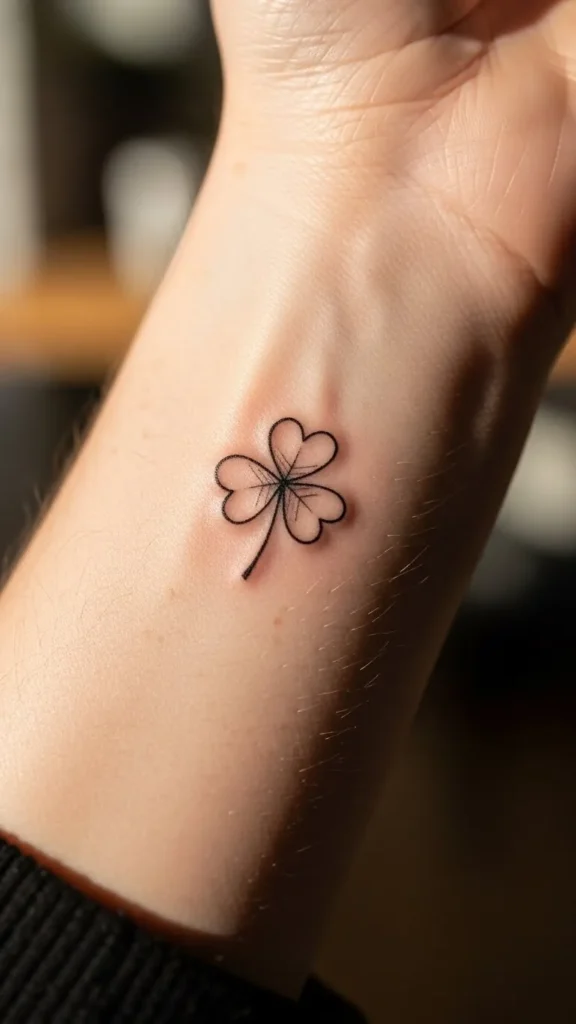
Clover tattoos stay popular because they feel light, meaningful, and easy to wear every day. They work for first-timers and seasoned tattoo fans alike. A simple clover design fits almost anywhere on the body and carries a sense of chance, hope, and personal intention. This list focuses on clean, low-effort clover tattoo ideas that feel realistic, affordable, and easy to personalize without overthinking the process.
1. Tiny Single-Line Clover
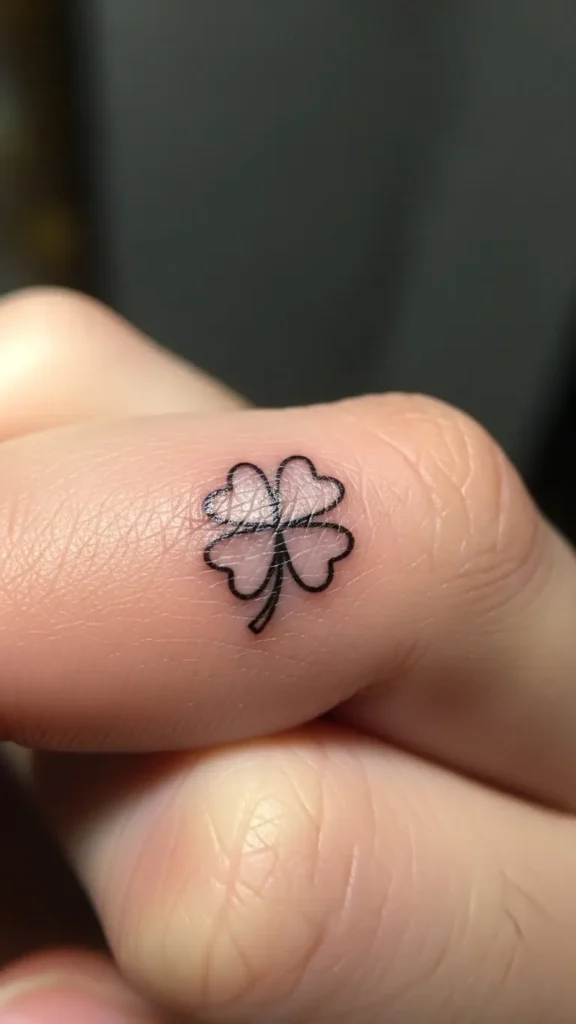
A single-line clover keeps things simple and clean. One continuous stroke forms the entire shape. That makes it fast to tattoo and easier on the budget. This style works well for fingers, wrists, or behind the ear.
Short sessions matter if you want a low-pain experience. Many artists can complete this in minutes. If you are planning carefully, ask your artist to stencil the clover slightly smaller than you think. Fine lines spread over time.
For DIY planning, sketch the clover using one smooth loop instead of four separate leaves. Practice on paper until your hand moves without stopping. This helps the tattoo feel calm rather than shaky.
Black ink holds best, but soft brown or muted green can work for lighter skin tones. Keep aftercare simple. Gentle soap and plain lotion do the job.
2. Micro Four-Leaf Wrist Tattoo
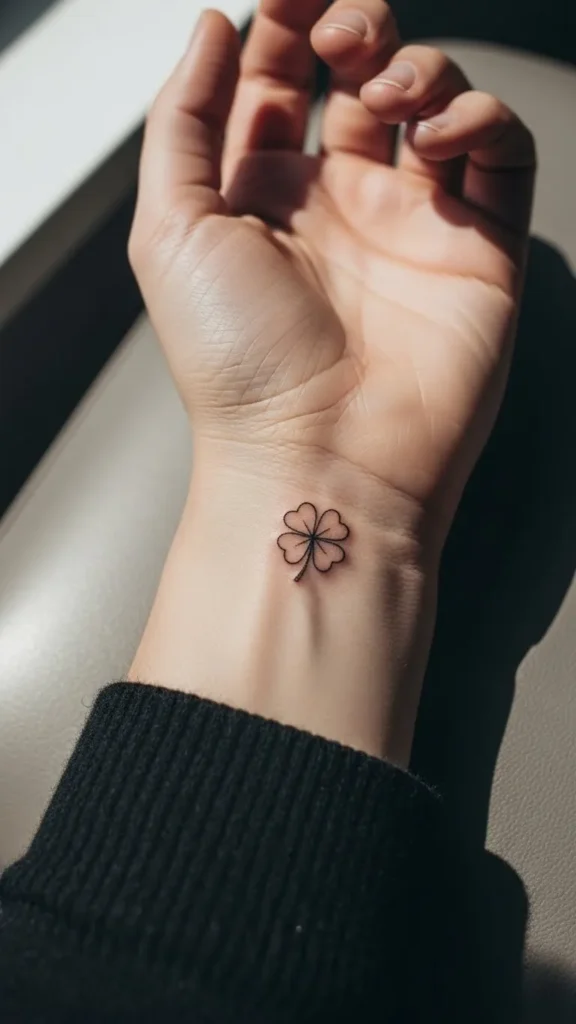
A tiny four-leaf clover on the wrist stays visible without feeling loud. The inner wrist suits small designs and gives you a daily reminder when you move your hand.
This placement allows quick tattoo time and easy healing. It also pairs well with watches or bracelets without clashing. Ask for clean spacing between leaves so the shape stays clear as the ink settles.
If cost matters, skip shading and keep the outline crisp. Many artists price this as a walk-in piece. For planning, trace a coin-sized circle and fit the clover inside.
This tattoo works well alone or as the start of a small collection. Later, you can add dates or dots nearby without crowding the area.
3. Minimal Clover Behind the Ear
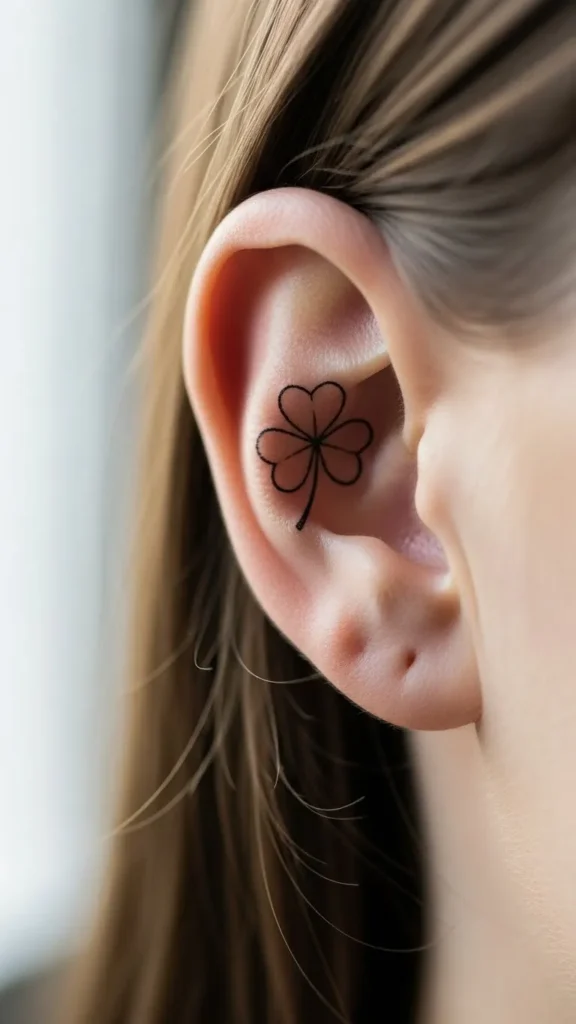
Behind-the-ear clover tattoos feel personal and subtle. They stay hidden unless you pull your hair back. This placement suits people who want meaning without constant display.
Because the skin is thin, line quality matters. Ask for steady pressure and thin strokes. Keep the design small to avoid blur over time.
For budget control, choose a basic outline. No color. No shading. This keeps sessions short and simple. Healing is usually quick if you avoid hair products for a few days.
Practice placement by drawing the clover on with a washable pen. Check it from different angles. Small adjustments make a big difference here.
4. Clover Ankle Outline
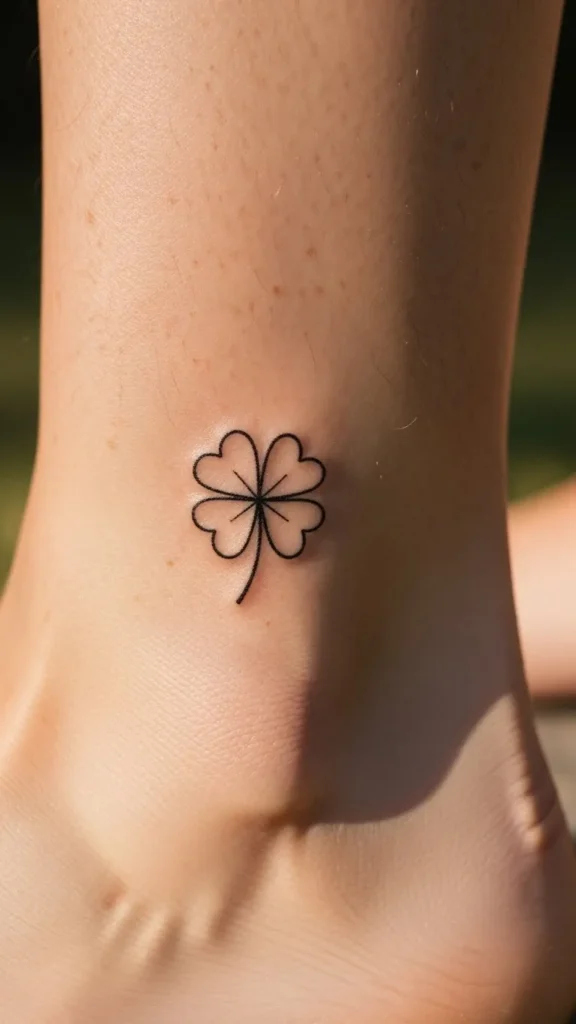
Ankle clover tattoos feel relaxed and balanced. The outer ankle gives enough space for clean lines while staying easy to cover.
Outlines work best here. Solid fills may fade faster due to movement and shoe friction. Choose a slightly thicker line than finger tattoos.
If planning on a budget, ask your artist for a flash-style clover. These are often priced lower and still look polished. Healing takes patience since ankles swell. Keep your foot elevated when possible.
Pairing this tattoo with simple footwear keeps it visible without overpowering your look.
5. Tiny Clover on the Collarbone
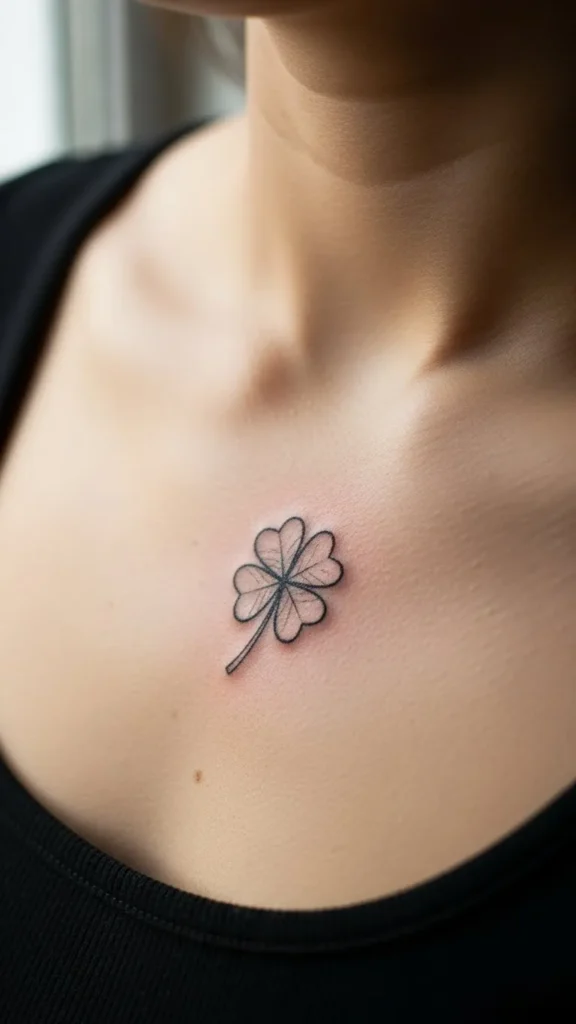
A collarbone clover feels gentle and intentional. This area frames the design naturally and suits minimalist styles.
Keep the clover small and centered just above the bone. This avoids distortion as the body moves. Fine-line ink works well here, but spacing between leaves matters.
To save money, avoid added elements. No dots or extra lines. Simple shapes heal cleaner and age better. Test placement using a temporary tattoo first.
This design pairs nicely with short necklaces or open collars without feeling busy.
6. Simple Clover Finger Tattoo
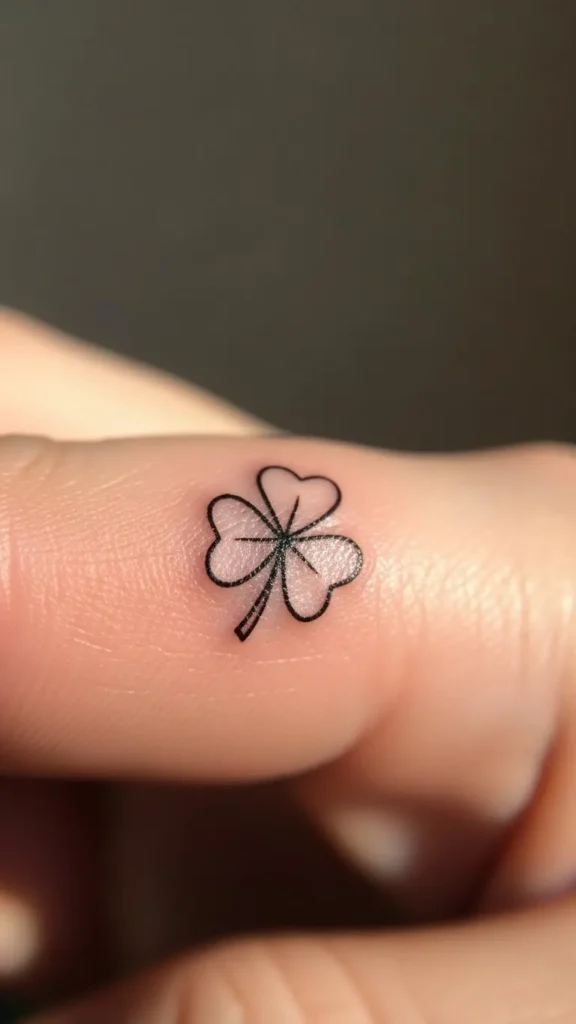
Finger clover tattoos feel playful and personal. They suit people who like visible designs but want something soft.
Side placement lasts longer than the top of the finger. Ask for slightly bolder lines to reduce fading. Expect touch-ups over time.
This tattoo stays affordable due to size. Choose black ink for best results. Keep aftercare strict. Hands wash often.
7. Minimal Clover on the Foot Arch
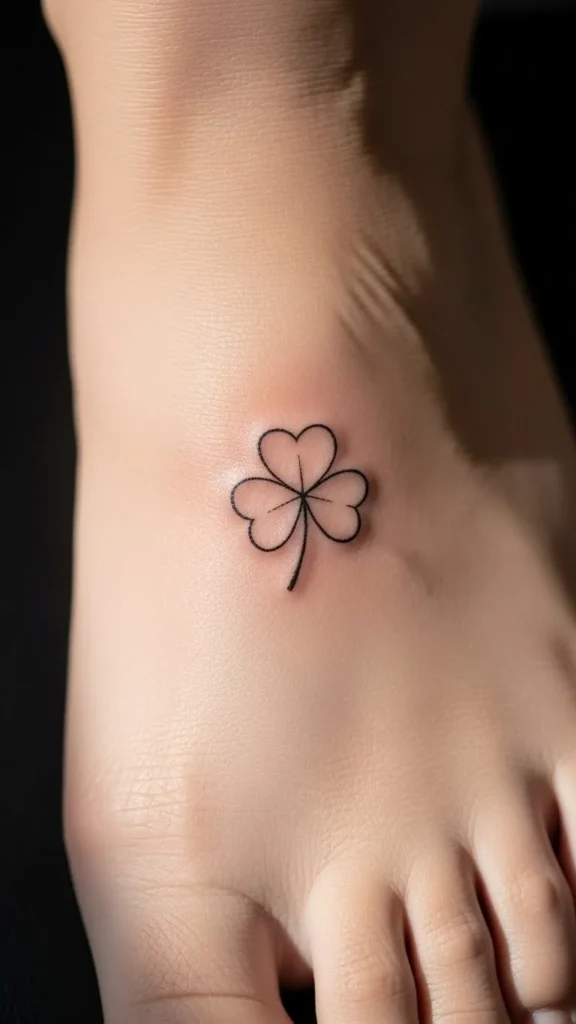
Foot arch clovers feel private and thoughtful. This area hides the tattoo unless you choose to show it.
Simple outlines work best. Avoid heavy detail. Movement can blur fine shapes. Ask your artist to keep leaves rounded and spaced.
Healing takes care. Wear loose footwear. Clean gently. Budget-friendly designs here rely on simplicity.
8. Clover Dotwork Style
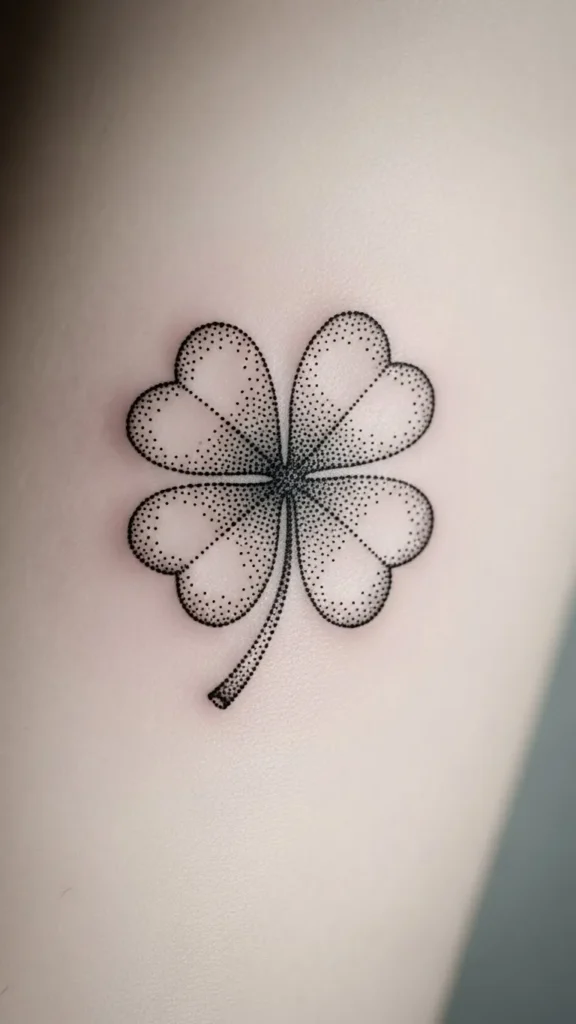
Dotwork clovers use small dots instead of lines. This style feels soft and handmade.
Dotwork suits small areas like wrists or ankles. It takes slightly longer than outlines but still stays affordable. Choose simple dot patterns.
For DIY planning, practice dot spacing with a pen. Consistency matters more than detail.
9. Three-Leaf Clover Outline
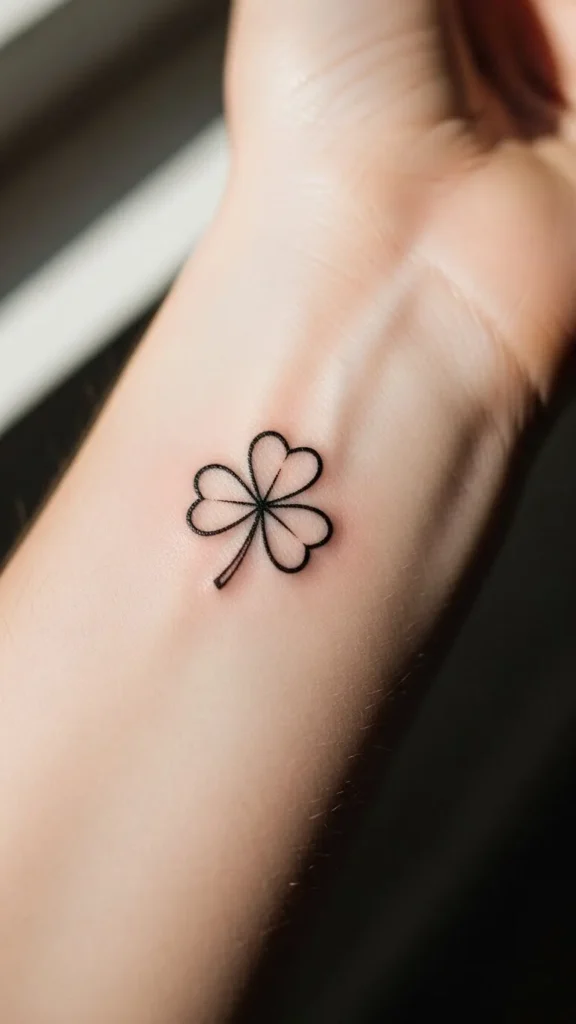
Three-leaf clovers feel classic and calm. They often represent balance or personal roots.
This design works well for first tattoos. Clean outlines heal easily. Ask for rounded leaves.
Budget tip: skip color. Black ink holds longest and costs less.
10. Clover with Tiny Stem
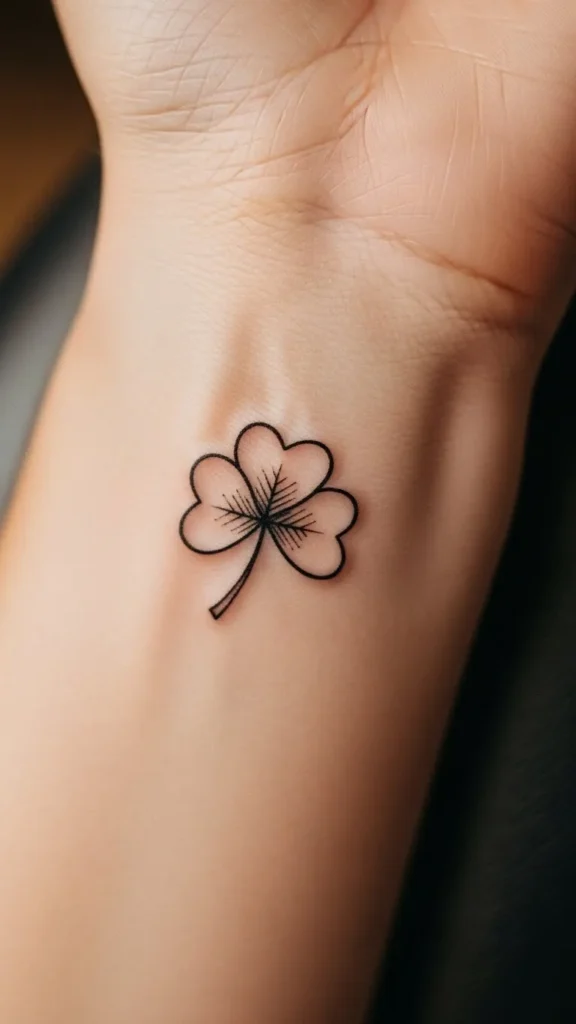
Adding a stem gives the clover a natural look without extra effort. It keeps the design grounded.
Short stems work best. Avoid long lines that may warp with movement.
This style suits forearms and ankles. Simple shapes keep sessions short.
11. Minimal Clover on the Rib Side
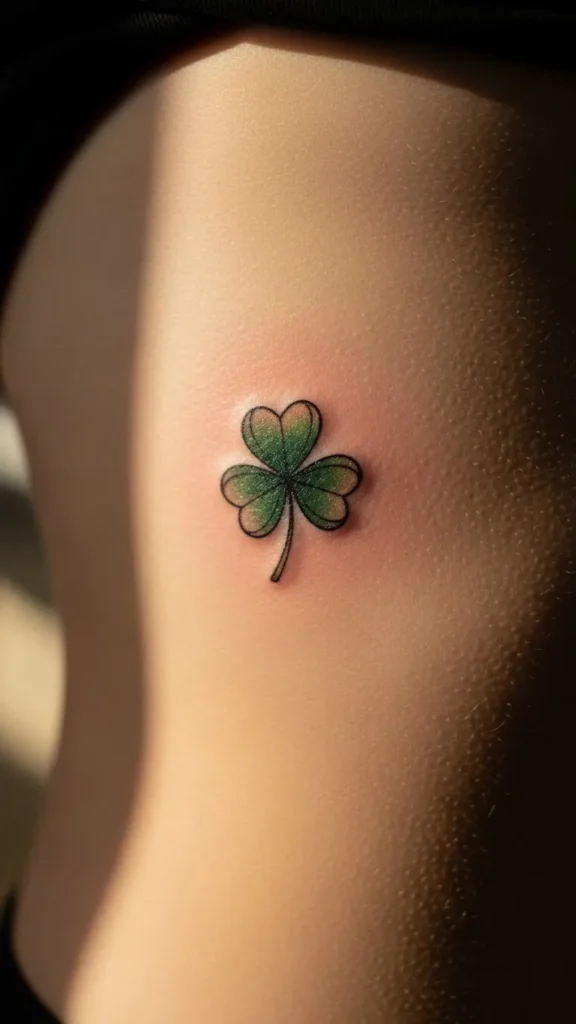
Rib-side clovers feel personal and hidden. Keep the design small for comfort.
Fine lines work well. Ask for slow, steady work. Budget stays low due to size.
12. Clover Outline with Open Space
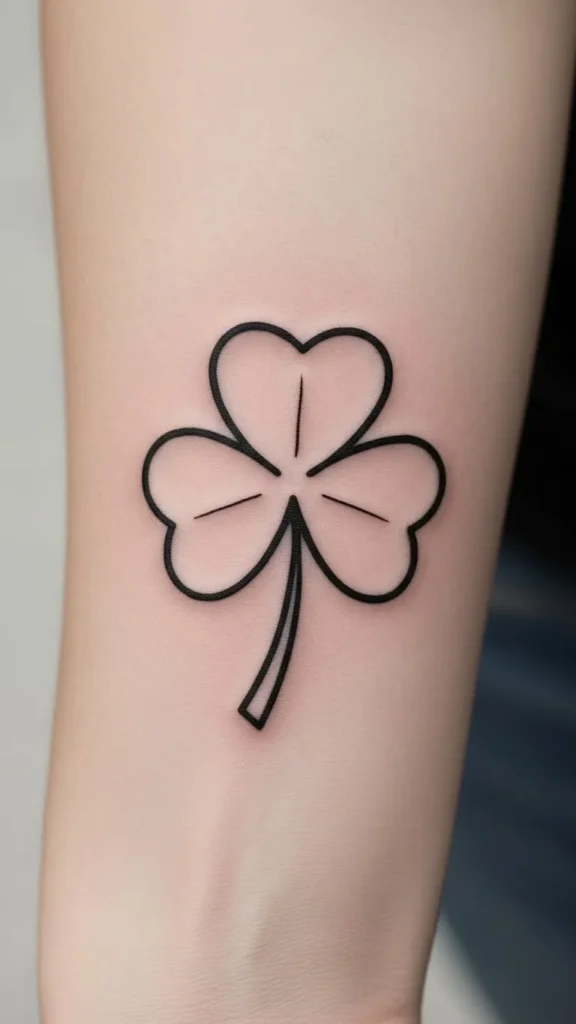
Open-space clovers leave gaps between lines. This keeps the tattoo light.
Negative space ages well and stays readable. Simple designs reduce cost.
13. Clover Thumb Base Tattoo
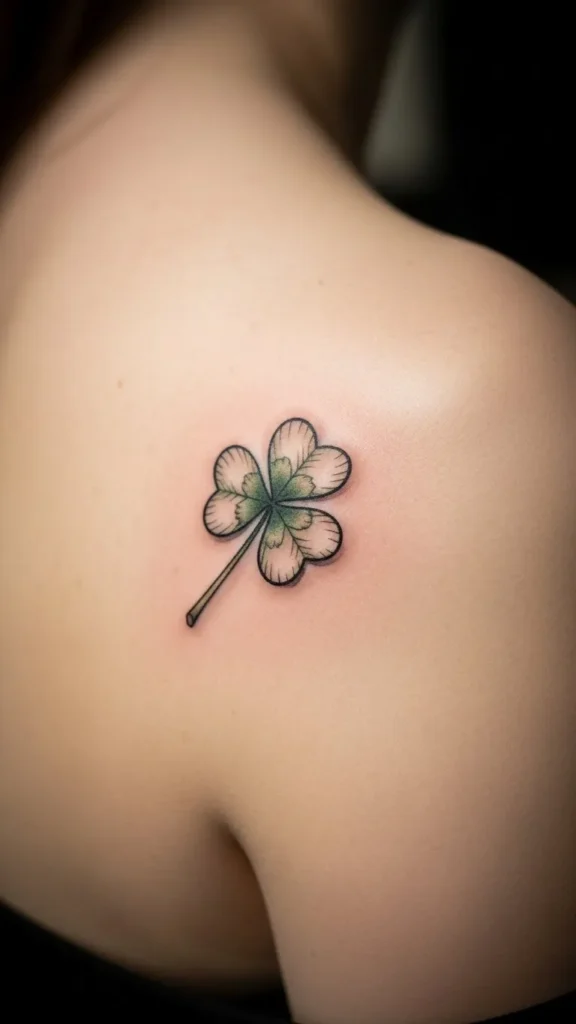
Thumb-base placement stays visible yet subtle. Choose bold outlines.
Expect touch-ups. Keep design small and simple.
14. Minimal Clover Shoulder Blade
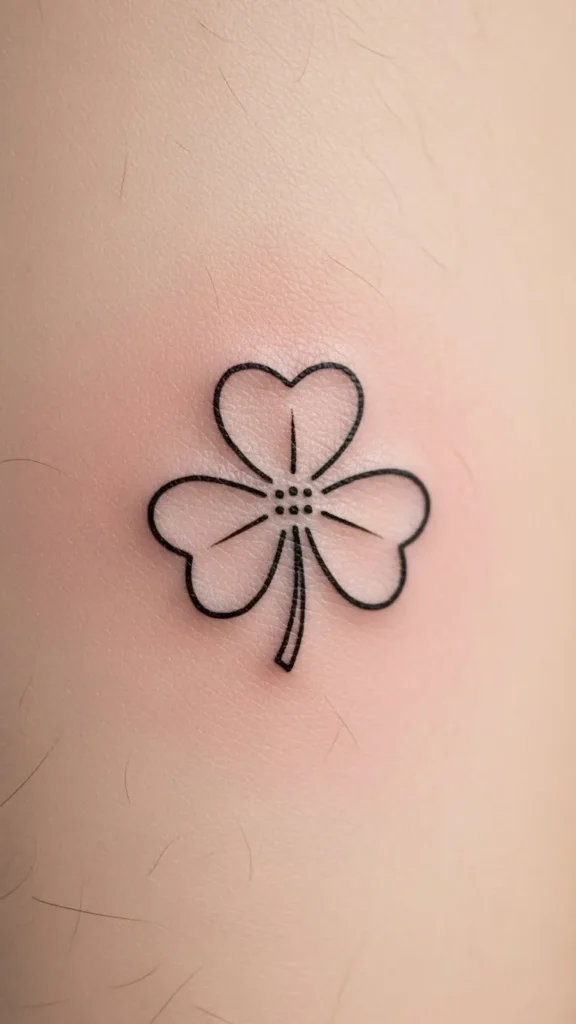
Shoulder blades offer flat space for clean designs. Simple clovers sit well here.
Avoid heavy detail. Healing stays easy.
15. Clover with Dotted Center
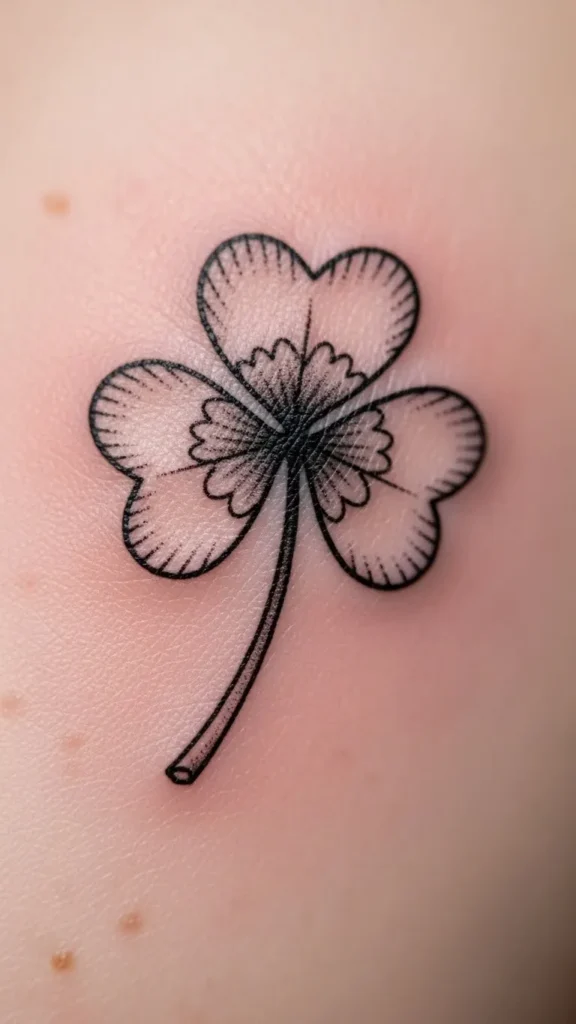
Adding a dotted center adds interest without clutter.
Dots heal well and cost little extra.
16. Single-Needle Clover Tattoo
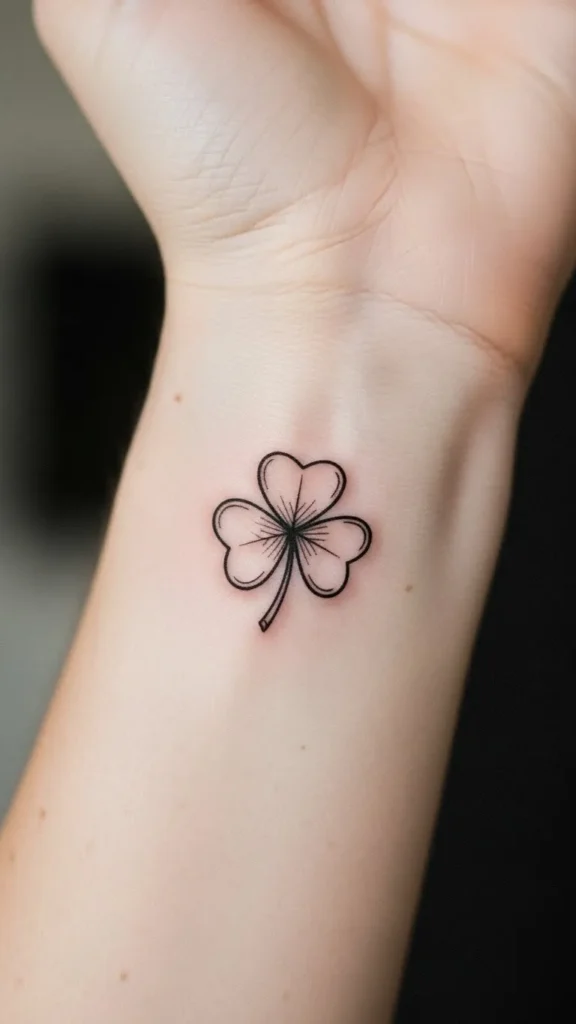
Single-needle clovers feel delicate. Choose experienced artists.
Fine lines cost less ink and time.
17. Clover on the Side of the Hand
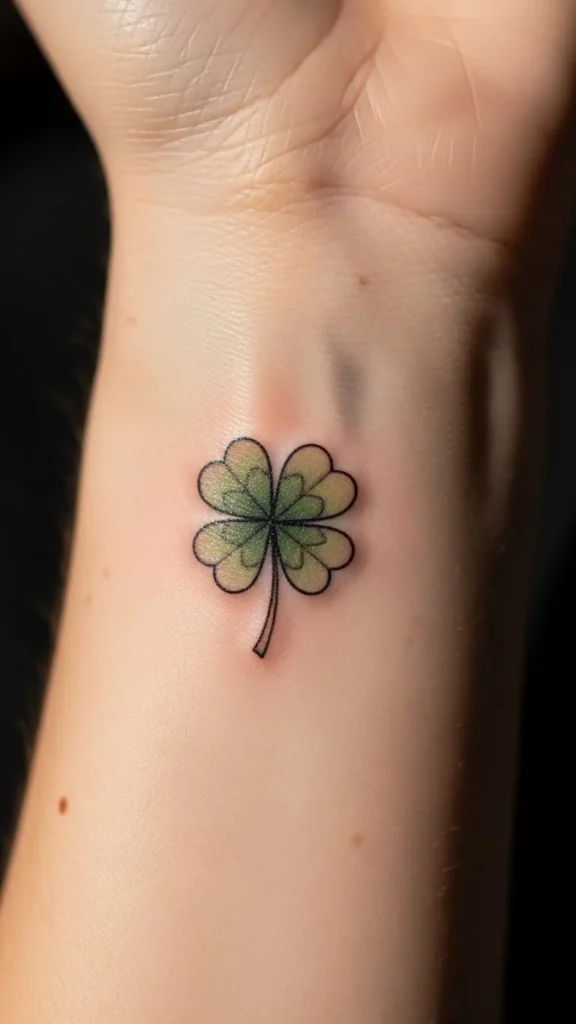
Side-hand placement stays subtle. Lines should be bold.
Expect fading. Keep design simple.
18. Clover with Rounded Leaves
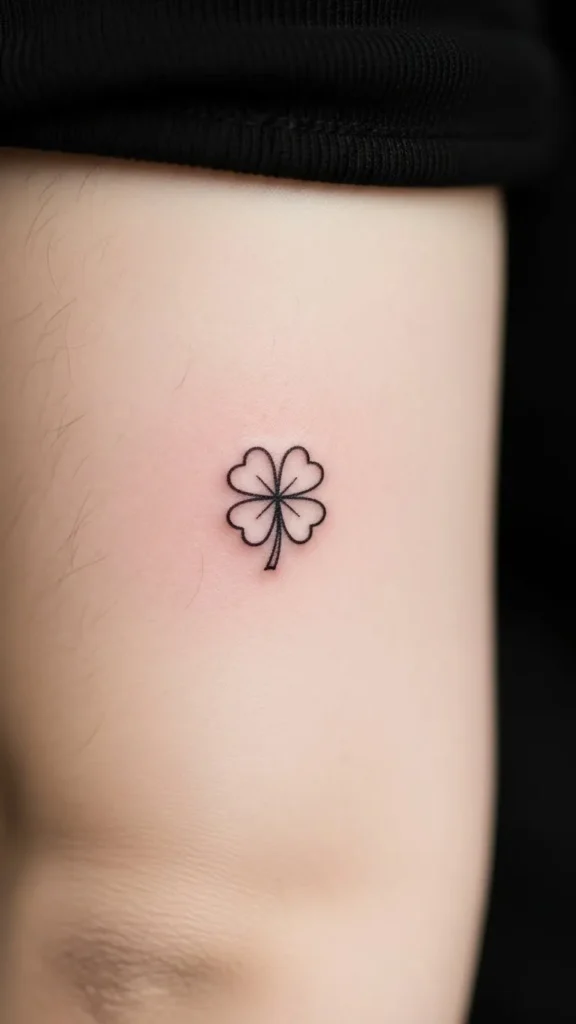
Rounded leaves soften the design. This suits minimalist styles.
Simple curves heal cleanly.
19. Micro Clover Near the Elbow
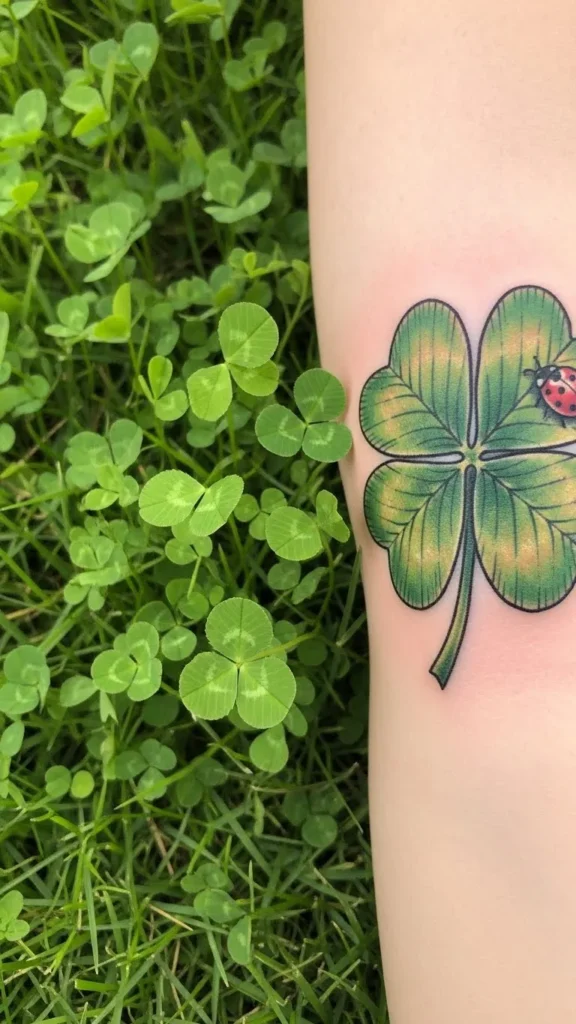
Small elbow-area tattoos stay unique. Keep lines bold.
Simple designs reduce distortion.
20. Clover Outline with Thin Border
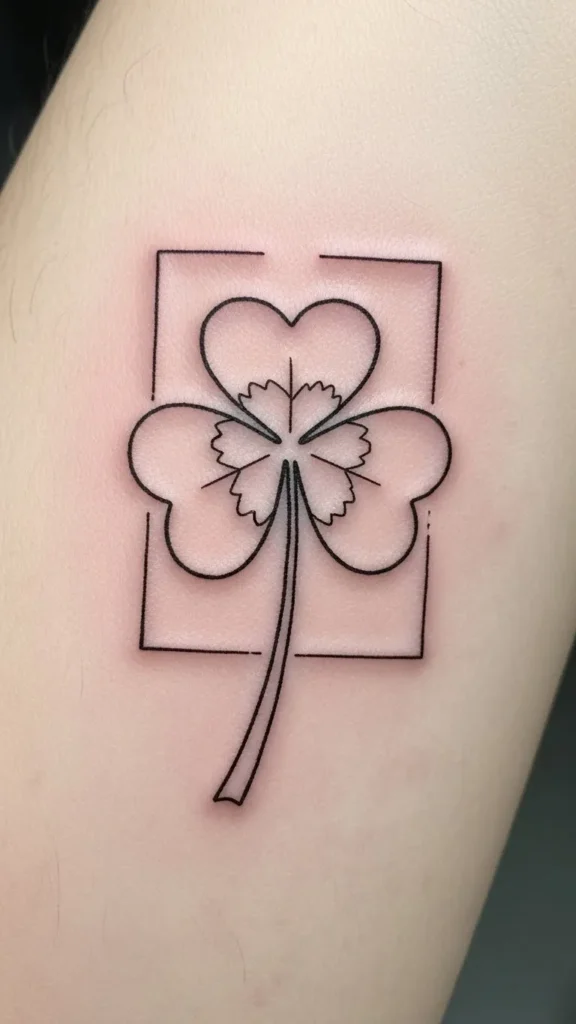
A thin border adds shape without detail. It keeps costs low.
Works well on arms or ankles.
21. Clover Tattoo with Soft Curve Placement
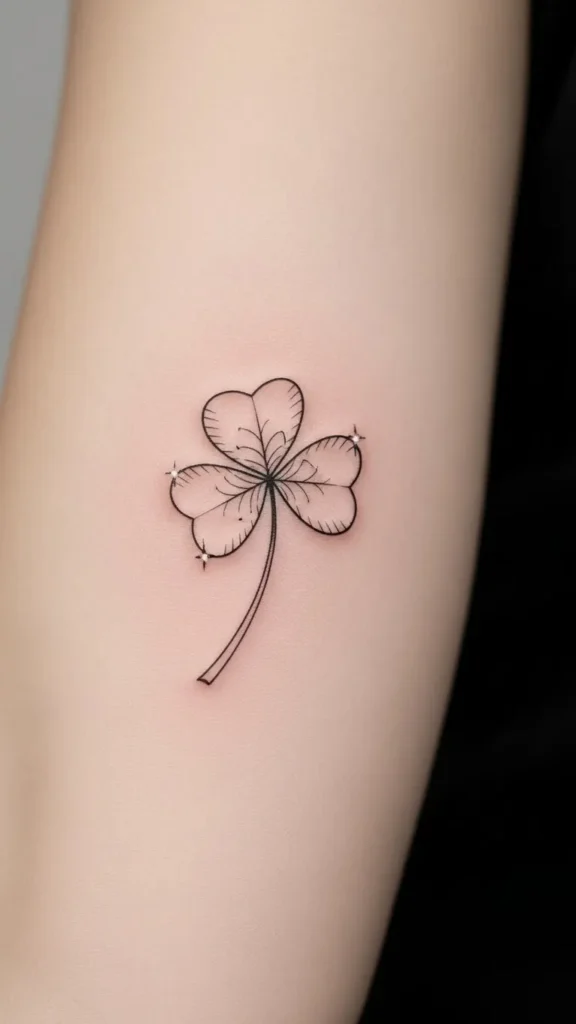
Placing the clover along natural curves helps it age well.
Ask your artist to adjust the stencil to your body shape.
22. Minimal Clover for First Tattoo

First tattoos benefit from simplicity. A small clover feels meaningful without pressure.
Short sessions reduce stress and cost. Simple care keeps healing smooth.
Conclusion
Simple clover tattoos work because they stay flexible, personal, and easy to wear. Clean lines, small sizes, and thoughtful placement keep the process affordable and comfortable. Whether you want something hidden or visible, these ideas show how small clover tattoos can carry meaning without complexity. Save your favorite style, sketch it out, and talk with your artist about keeping it clean and simple.

Leave a Reply