

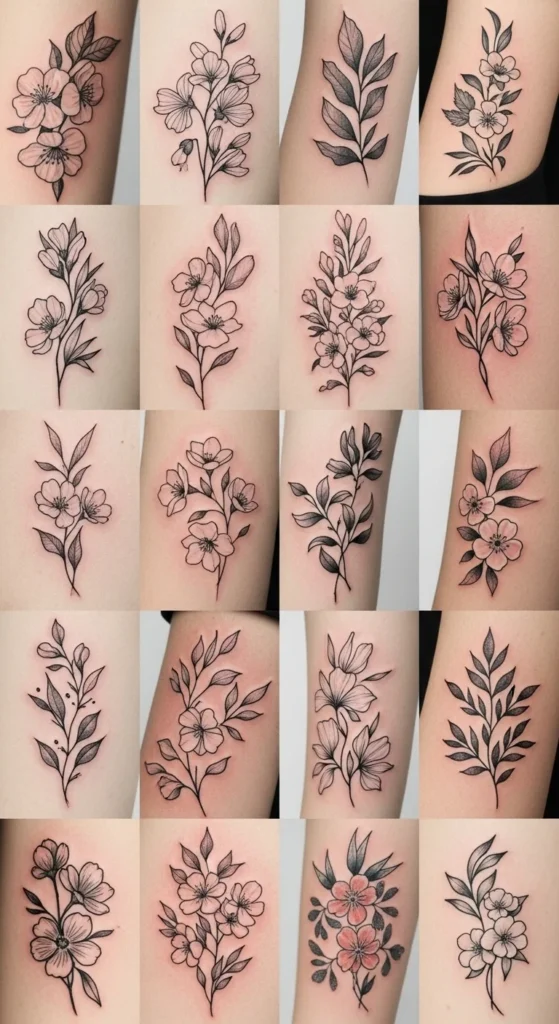
Spring botanical tattoos feel personal, graceful, and expressive without feeling heavy. Many people search for these designs when they want something meaningful yet soft, detailed but not loud. Botanical tattoos work well for first tattoos and additions alike. They age well. They fit many styles. They can be scaled up or kept small. This list focuses on artistic spring-inspired botanical tattoos that feel thoughtful and wearable. Each idea is practical, budget-aware, and easy to adapt with a tattoo artist. Whether you prefer fine line work or gentle shading, these ideas give you clear starting points without overthinking the process.
1. Fine Line Wildflower Stem
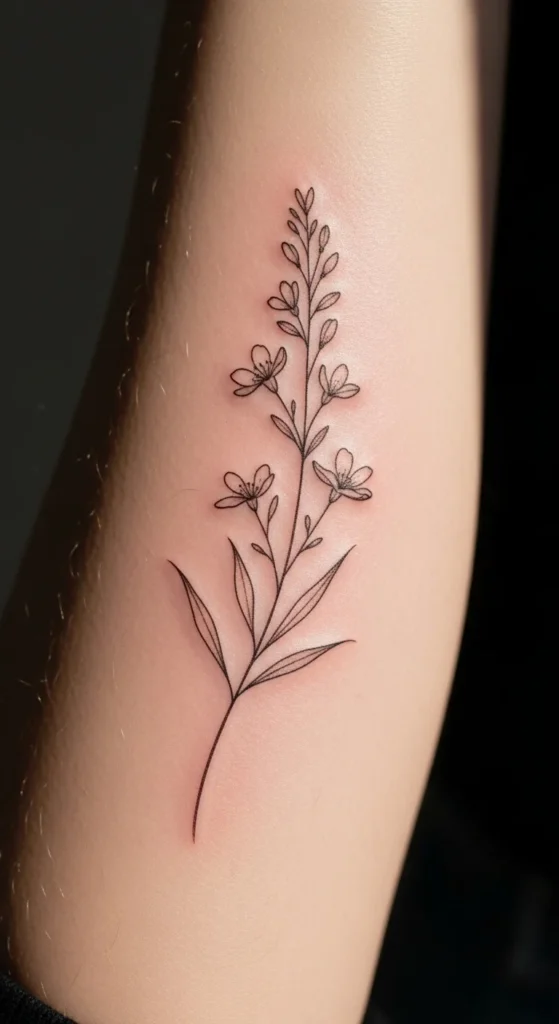
A fine line wildflower stem is a classic spring tattoo choice. It works well on the forearm, ankle, or collarbone. The thin lines keep the design light and artistic. This style also keeps sessions short, which helps with cost. Ask for a single-stem layout rather than a bouquet. It keeps the look calm and uncluttered. You can choose a flower that has meaning or simply one with a shape you like. Many artists can sketch this quickly, saving design time. For budget-friendly planning, bring reference photos and ask for minimal shading. Black ink holds up well and avoids color touch-ups later. This tattoo pairs nicely with future additions if you want to build a collection over time. Keep spacing in mind so it never feels cramped. Simple stems age gracefully and still look intentional years later.
2. Soft Peony Outline
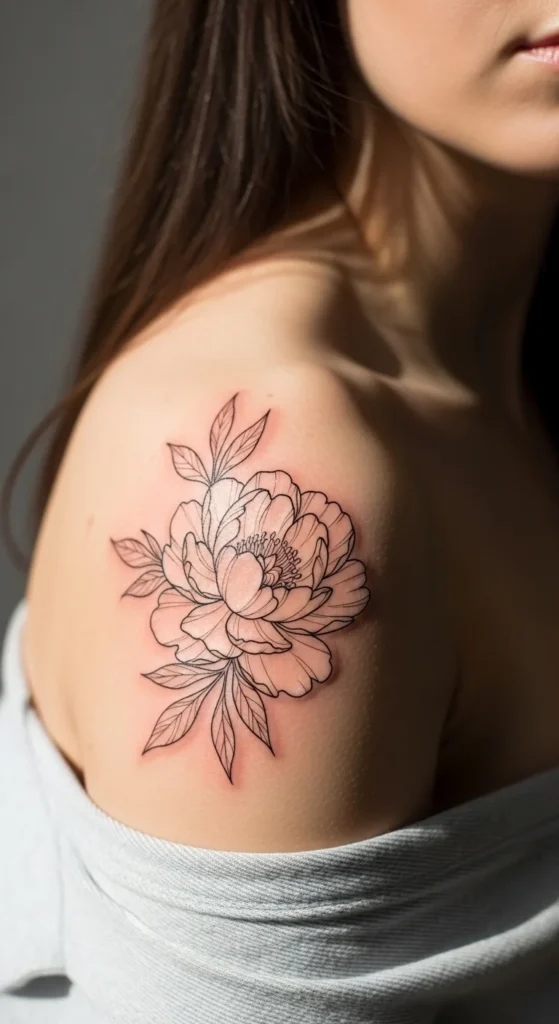
Peonies are popular for their layered petals and romantic shape. An outline-only peony keeps the design airy instead of heavy. This approach works well on the upper arm or shoulder blade. Ask your artist to avoid dense line stacking. Space between petals helps clarity over time. Outline tattoos often cost less since they take less time. You can request a medium size to preserve detail without inflating price. If color feels tempting, consider muted tones instead of full saturation. Many people stick with black to reduce future maintenance. Bring a reference that shows open petals rather than tightly packed ones. This helps the tattoo stay readable as skin changes. Peonies also pair well with subtle script later if you plan ahead.
3. Minimal Cherry Blossom Branch
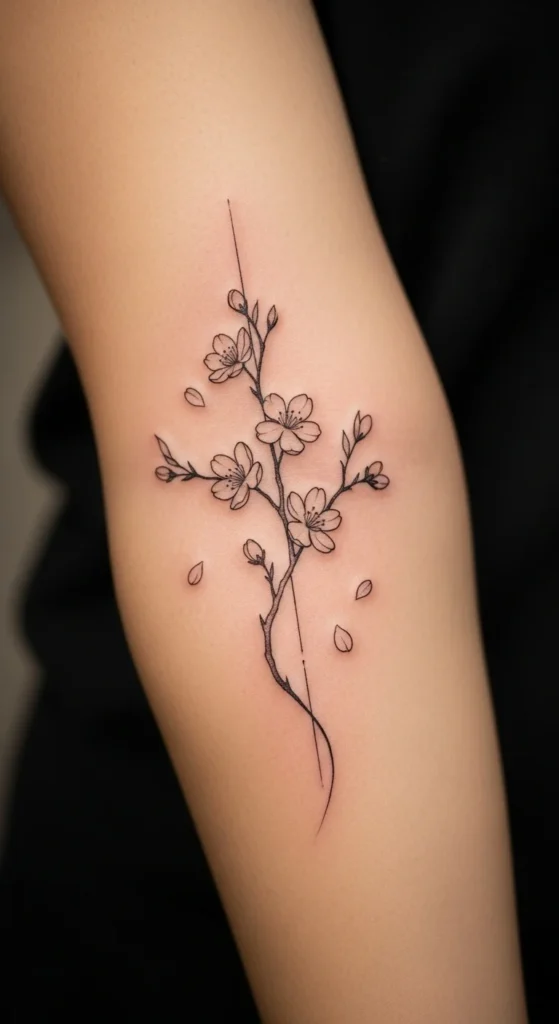
Cherry blossom branches feel light and poetic. A minimal branch keeps the tattoo from feeling crowded. This design flows well along the wrist, ribcage, or shoulder. Ask for small blossoms spaced apart. It creates movement without clutter. You can skip heavy shading to keep the price lower. A skilled artist can suggest placement that follows your natural body lines. That makes the tattoo look intentional even when small. If you like soft color, request a limited palette. Two tones are usually enough. Black-only versions also hold detail well. Bring a few branch shape references so the artist understands your vision quickly. That saves design time and keeps sessions shorter.
4. Botanical Linework Bouquet
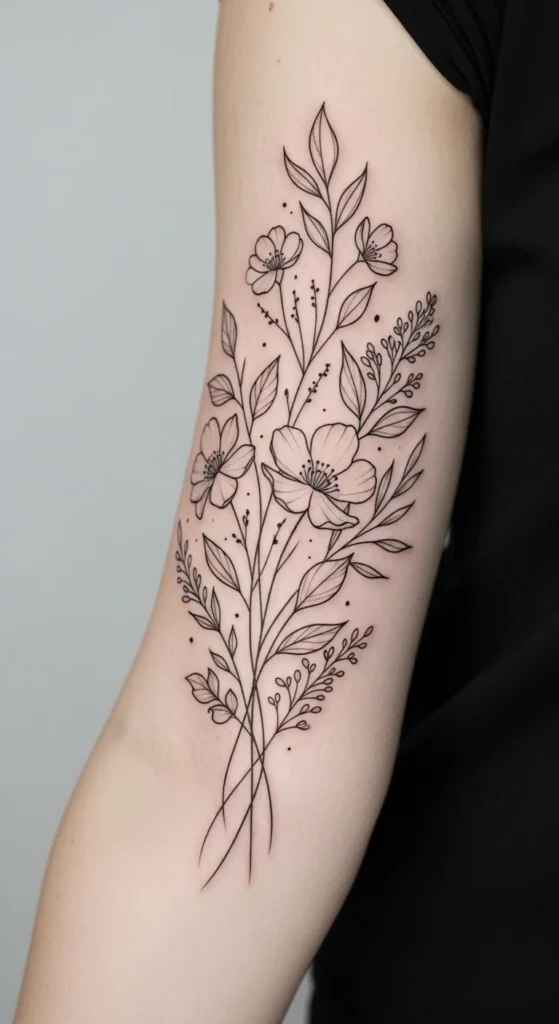
A linework bouquet gives variety without overwhelming the skin. Choose three to five simple flowers. Avoid tiny details that blur over time. Linework keeps the tattoo clean and easier to maintain. This style works well on the calf or outer forearm. Ask the artist to keep negative space between elements. That keeps the bouquet readable. Budget-wise, fewer flowers mean fewer hours. You can always add more later. Stick to one line weight for consistency. This makes the tattoo look cohesive even as it ages. Bring inspiration photos but stay open to adjustments. Artists often know how to simplify designs for better longevity.
5. Dainty Lavender Sprig
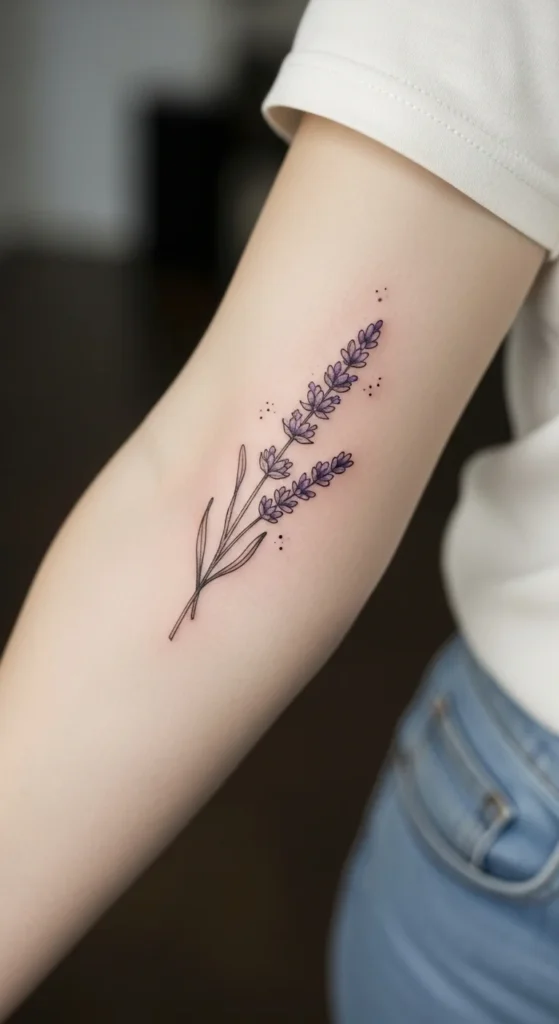
Lavender sprigs are subtle and calming. They work well for small placements like behind the ear or along the ankle. Keep the sprig slender to avoid ink spreading. Fine line styles suit lavender best. This keeps costs manageable and sessions quick. Ask for minimal shading and clear spacing between buds. That helps clarity over time. Lavender also pairs nicely with other herbs if you expand later. Black ink keeps it timeless and easy to touch up. Bring simple references rather than detailed botanical drawings. Simpler designs translate better onto skin.
6. Single Tulip Silhouette
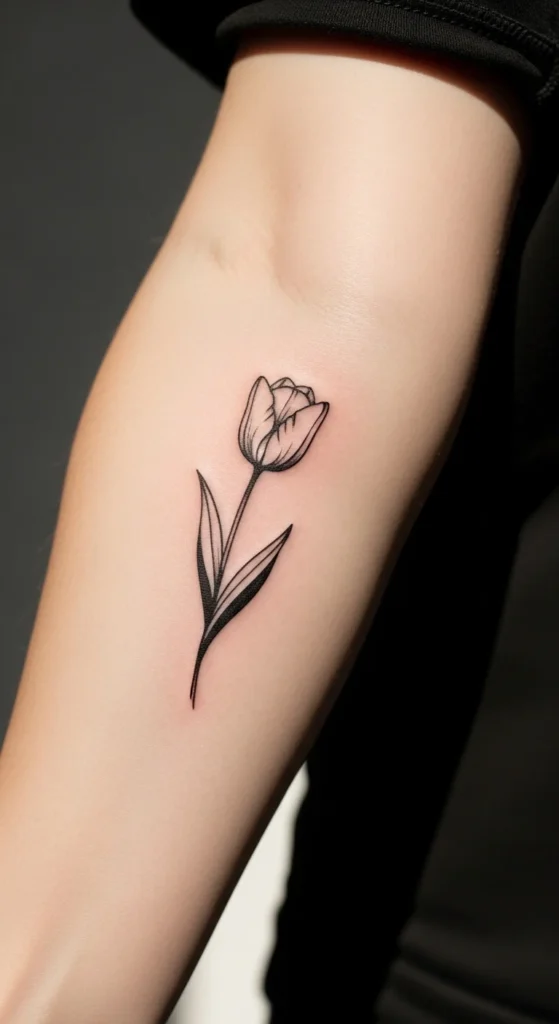
A tulip silhouette feels clean and graphic. It suits people who like quiet designs. This style works well on the inner arm or side of the foot. A single tulip keeps the focus clear. Ask for a gentle curve in the stem for movement. Silhouettes often cost less since they require less detail. Keep size moderate so the shape stays sharp. Black ink holds the form best. You can request a slightly thicker line weight for longevity. This design also layers well with future floral pieces.
7. Botanical Wrist Band
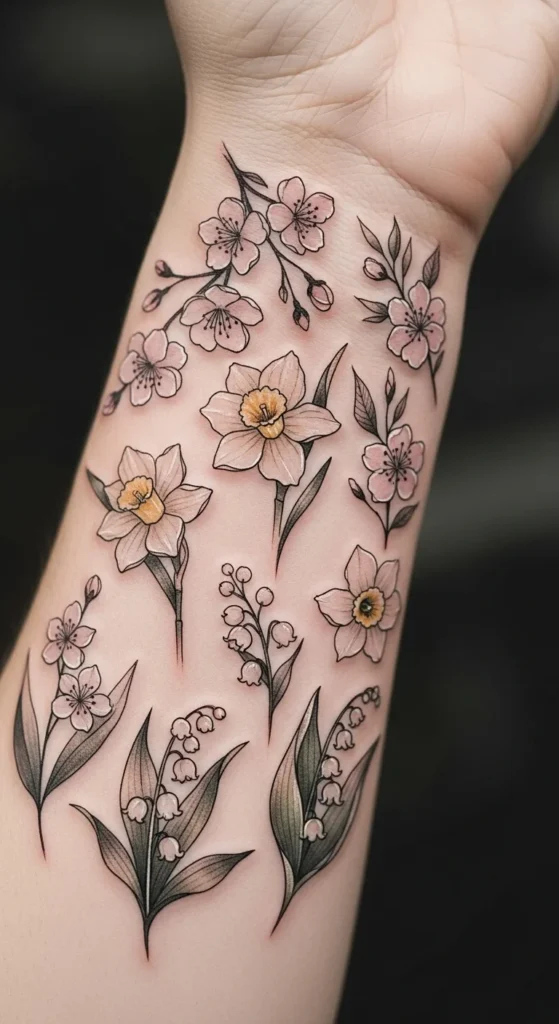
A botanical wrist band wraps gently without feeling harsh. Choose vines or leaves instead of flowers for simplicity. Thin lines help the band stay subtle. Ask for breaks in the design so it does not feel like a solid bracelet. This reduces ink density and cost. Wrist bands should not be too tight. Slight looseness looks more natural. Bring examples that show spacing. That helps the artist plan placement quickly. Black ink works best for longevity in this area.
8. Wild Herb Cluster
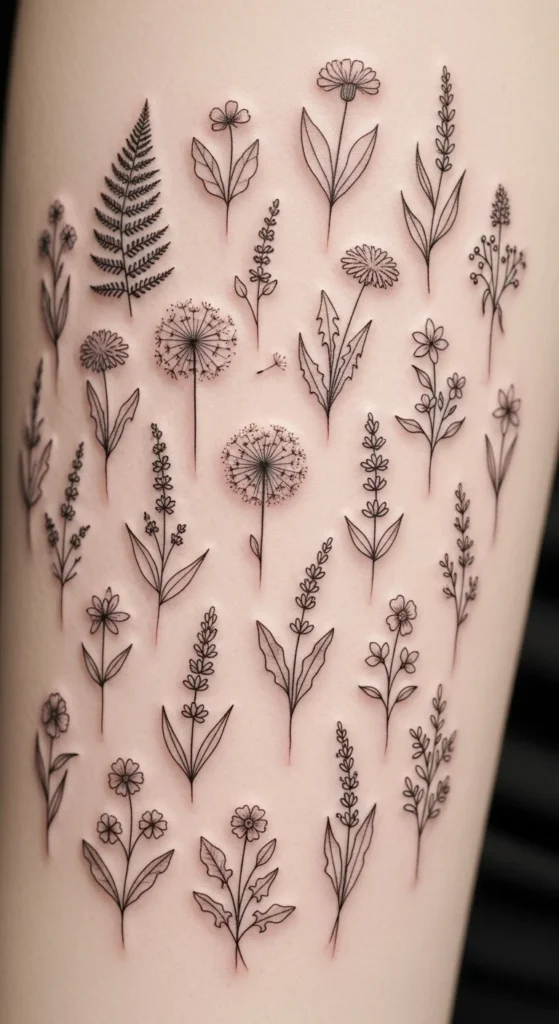
Herb clusters feel earthy and personal. Choose two or three herbs with distinct shapes. This keeps the tattoo readable. Place it on the forearm or shoulder. Ask for linework with light dot shading if desired. That keeps costs down. Avoid overly detailed leaves. Simple shapes age better. Herb tattoos also allow for easy expansion later. Black ink keeps maintenance simple. Bring references with clear outlines rather than watercolor styles.
9. Pressed Flower Style Tattoo
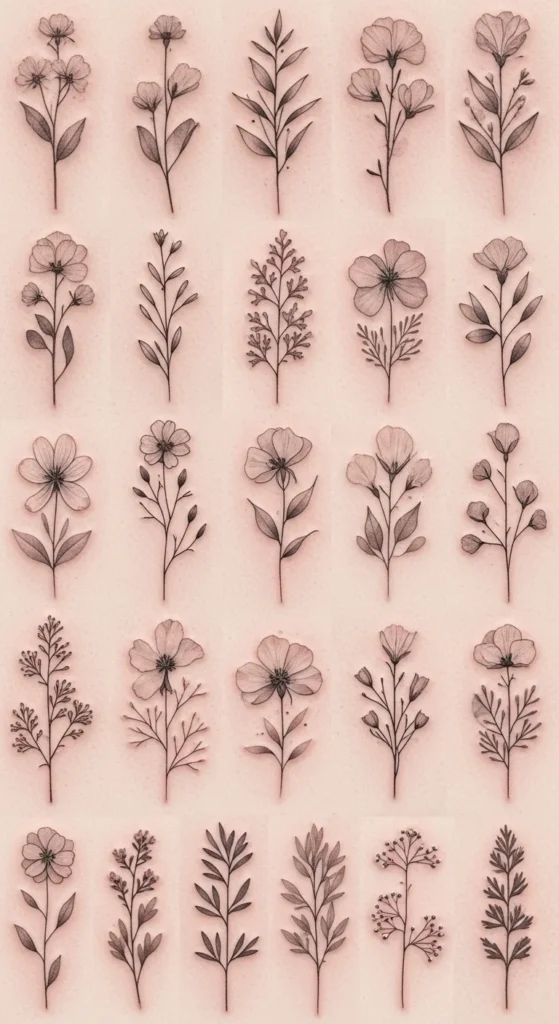
Pressed flower styles look flat and artistic. They feel calm and intentional. This works well on the upper arm or thigh. Ask the artist to keep outlines soft. Avoid heavy shadows. Pressed styles often use muted color or black ink. Muted tones reduce future touch-ups. Choose one flower to keep sessions shorter. Bring pressed flower photos for reference. Artists can adapt the shape easily.
10. Elegant Leaf Spine Tattoo
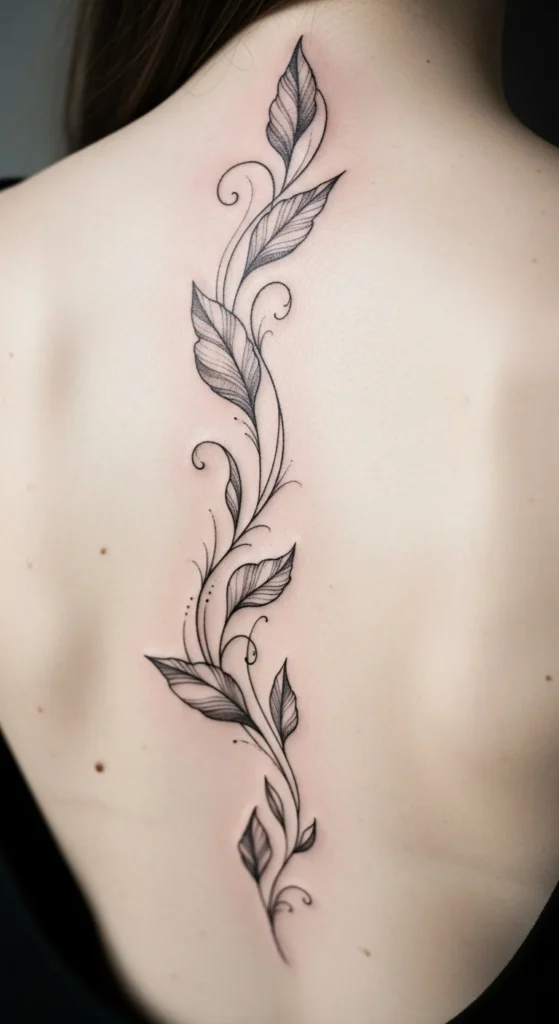
A leaf spine tattoo runs vertically and flatters posture. Choose a single leaf type. This keeps the design focused. Fine line work suits this placement best. Ask for even spacing between leaves. Avoid tiny veins that blur. This style is budget-friendly due to its simplicity. Black ink holds up well on the spine. Discuss placement carefully to avoid discomfort. Short sessions help keep costs manageable.
11. Garden Sketch Floral
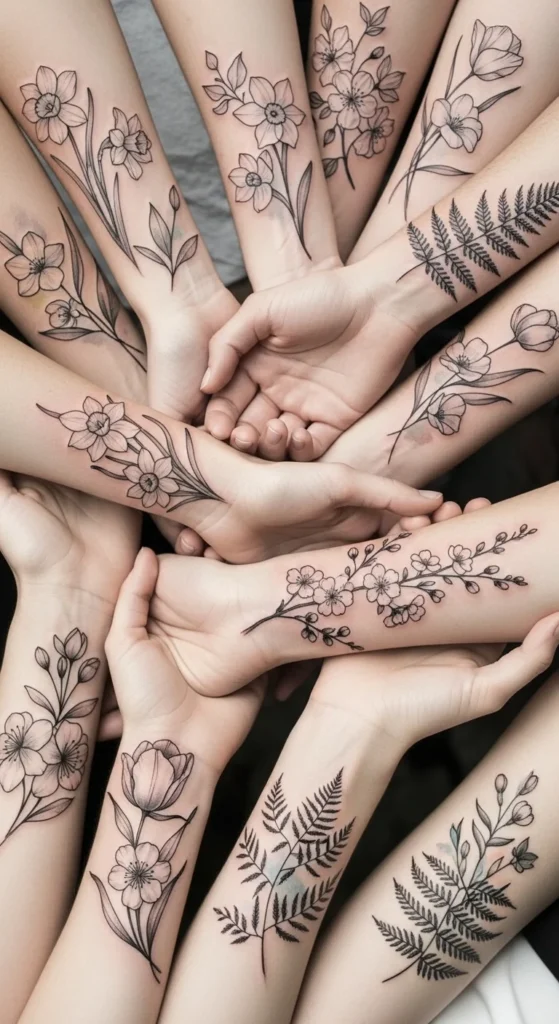
Sketch-style florals feel loose and creative. They mimic pencil drawings. This style avoids heavy shading. Ask for uneven lines for a hand-drawn look. This reduces precision time and cost. Place it on the arm or calf for visibility. Keep the size moderate so details stay clear. Black ink works best. Bring sketch references rather than polished art.
12. Magnolia Branch Detail
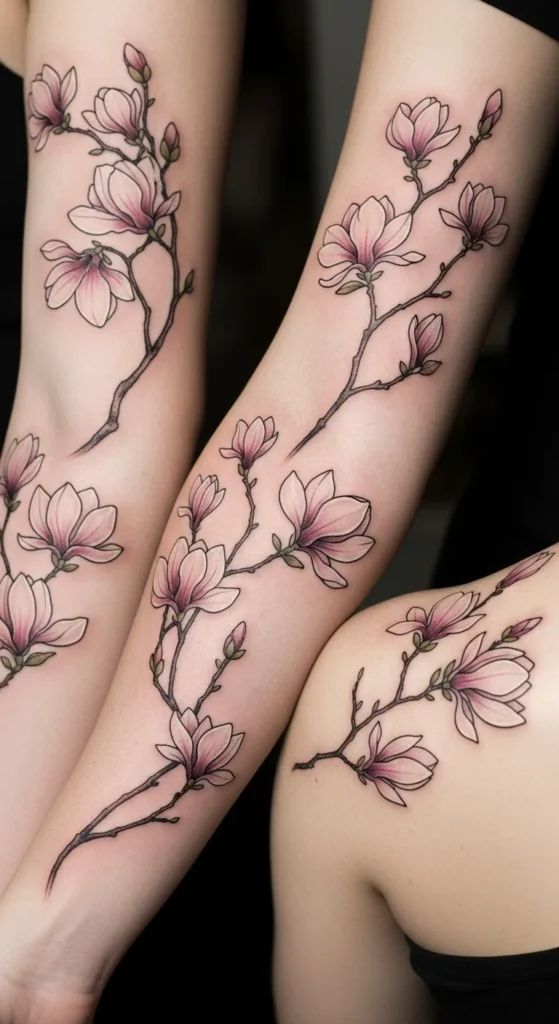
Magnolia branches feel graceful and balanced. Choose open blooms for clarity. Ask for line-focused petals with minimal fill. This keeps the tattoo light. Magnolia designs work well on the shoulder or arm. Avoid overcrowding buds. Fewer flowers mean lower cost. Black ink or soft gray shading ages well.
13. Minimal Ivy Trail
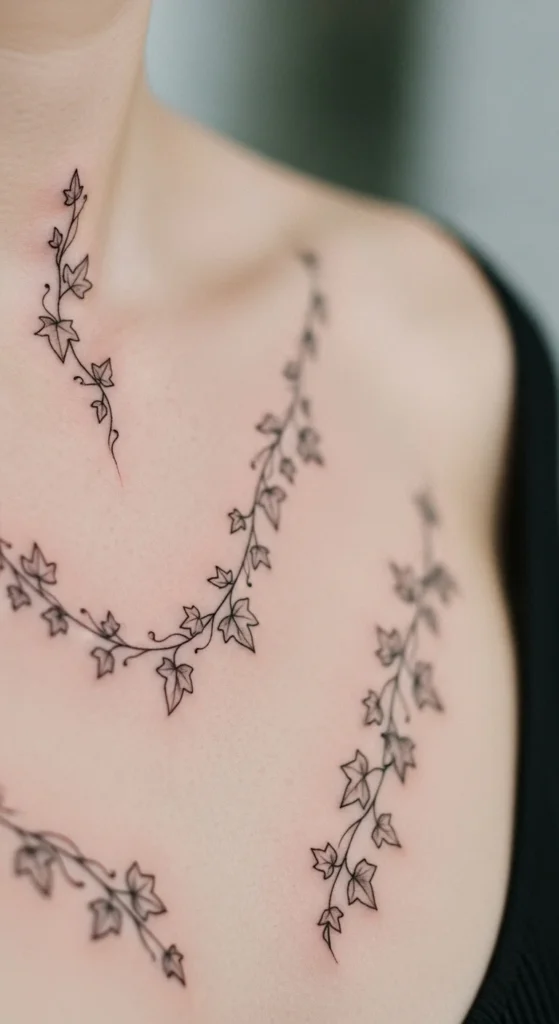
Ivy trails follow body lines naturally. They work well along ribs or ankles. Keep leaves evenly spaced. Thin lines help longevity. Ask for a loose flow rather than tight curls. This keeps the tattoo readable. Ivy designs often take less time. That helps with budget planning.
14. Botanical Ankle Accent
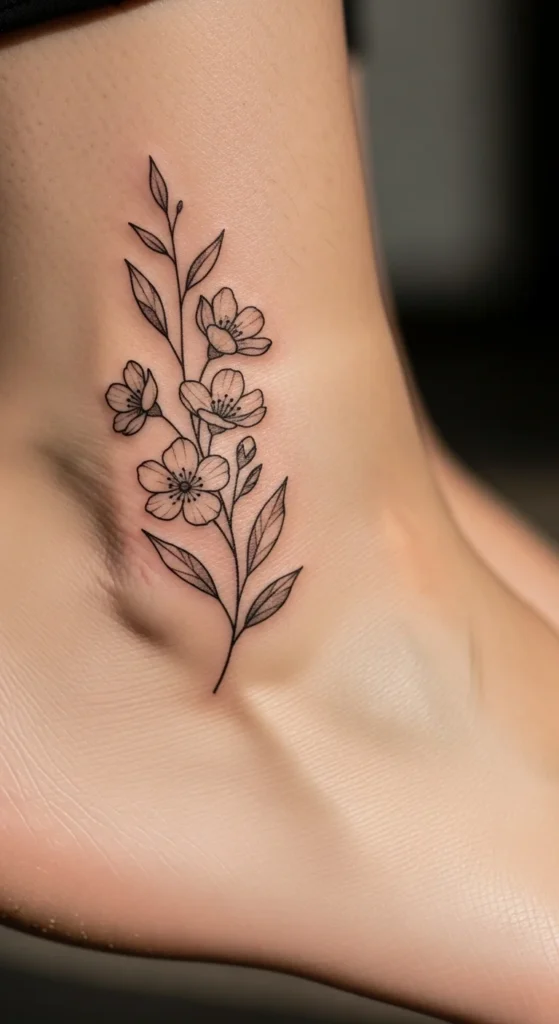
Ankle accents are subtle and stylish. Choose small florals or leaves. Avoid heavy shading. Fine lines keep it soft. This area works well for short sessions. Black ink reduces maintenance. Discuss placement to avoid rubbing from shoes.
15. Floral Collarbone Curve
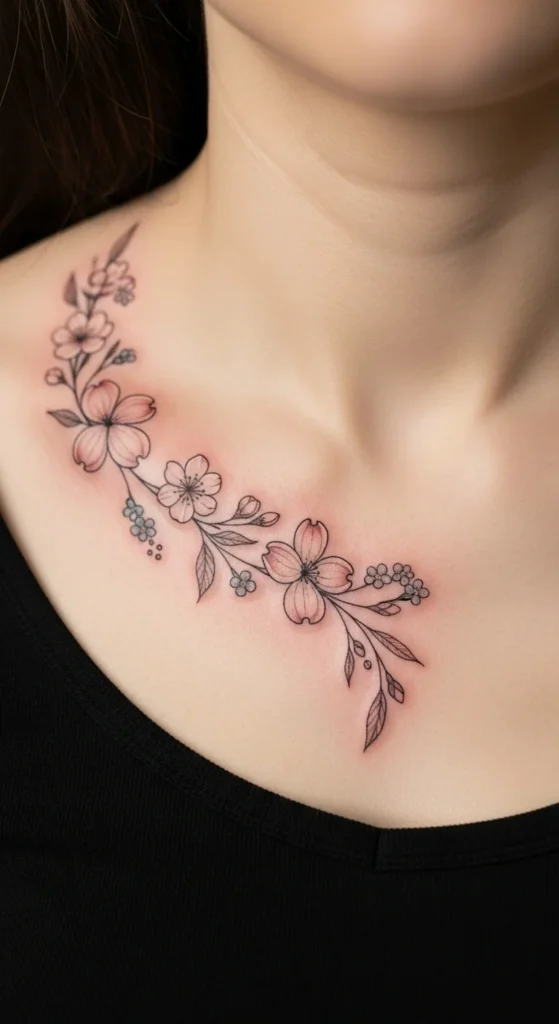
Collarbone florals frame the body nicely. Choose flowers with open shapes. Ask for gentle curves that follow bone lines. Keep size moderate. This reduces cost and discomfort. Linework works best here. Avoid dense color.
16. Line Art Daisy Chain
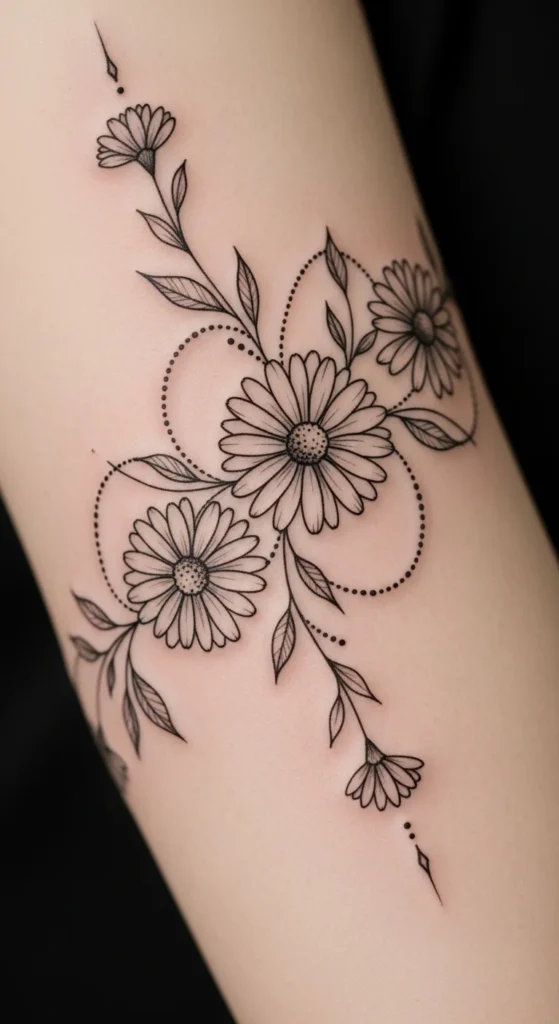
Daisy chains feel light and cheerful. Line art keeps it simple. Space daisies evenly. This prevents clutter. Chains work well on wrists or ankles. Ask for consistent line weight. Black ink ages well.
17. Botanical Shoulder Cap
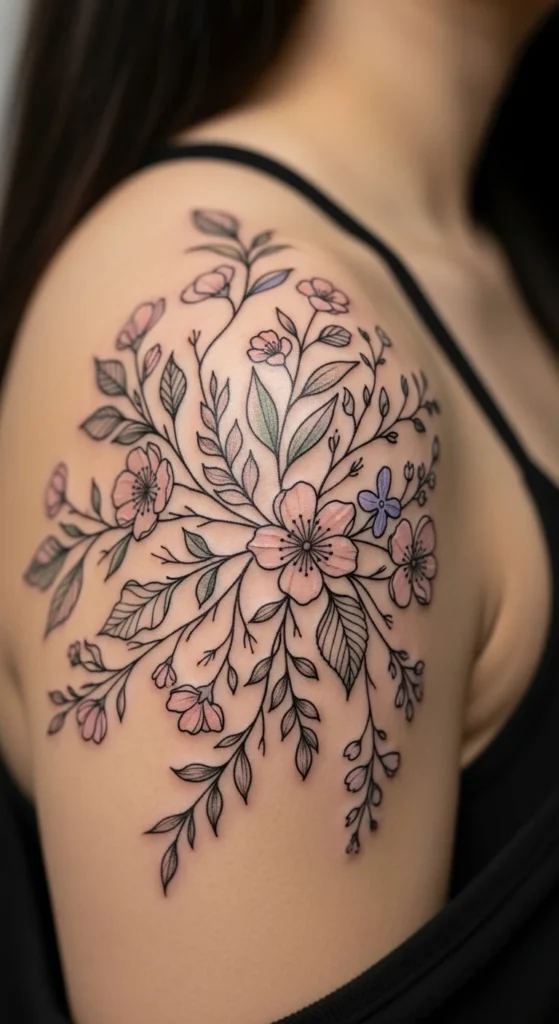
Shoulder cap tattoos frame the arm nicely. Choose leaves or light florals. Keep the design open. Avoid heavy fill. This placement allows easy expansion later. Budget stays flexible with line-focused work.
18. Simple Fern Frond
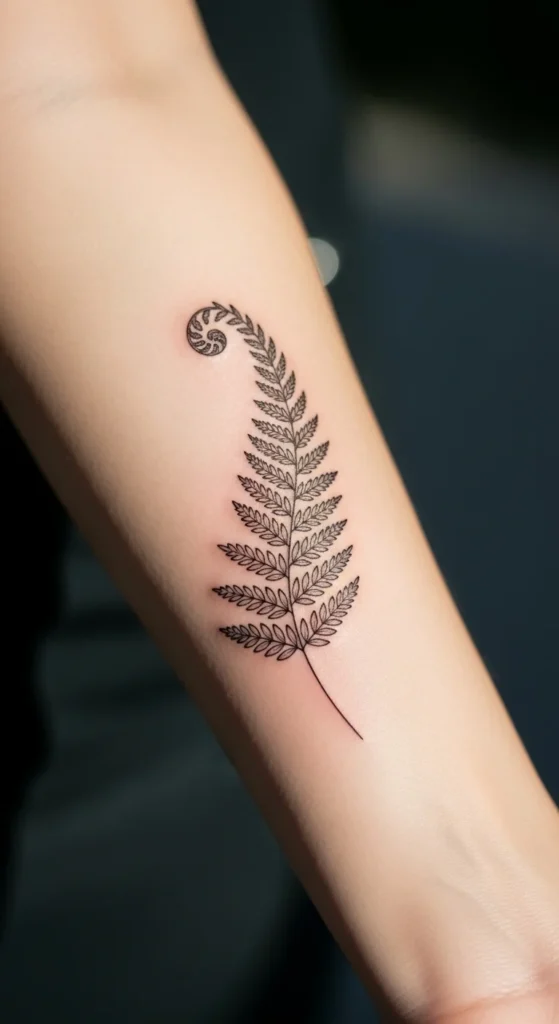
Fern fronds feel natural and calm. Their shape works well vertically. Ask for simplified leaflets. This keeps clarity. Fine line style suits ferns. Black ink holds detail. Short sessions help with affordability.
19. Botanical Back of Arm Accent
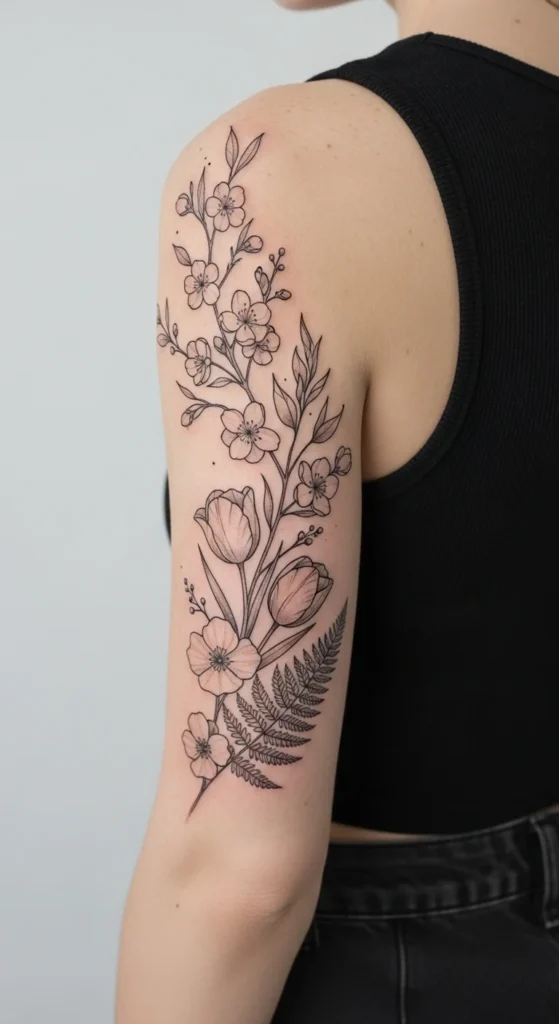
Back of arm tattoos feel personal. Choose a single plant element. Keep it vertical. Avoid heavy shading. This area heals well. Linework designs keep costs lower.
20. Floral Rib Line Tattoo
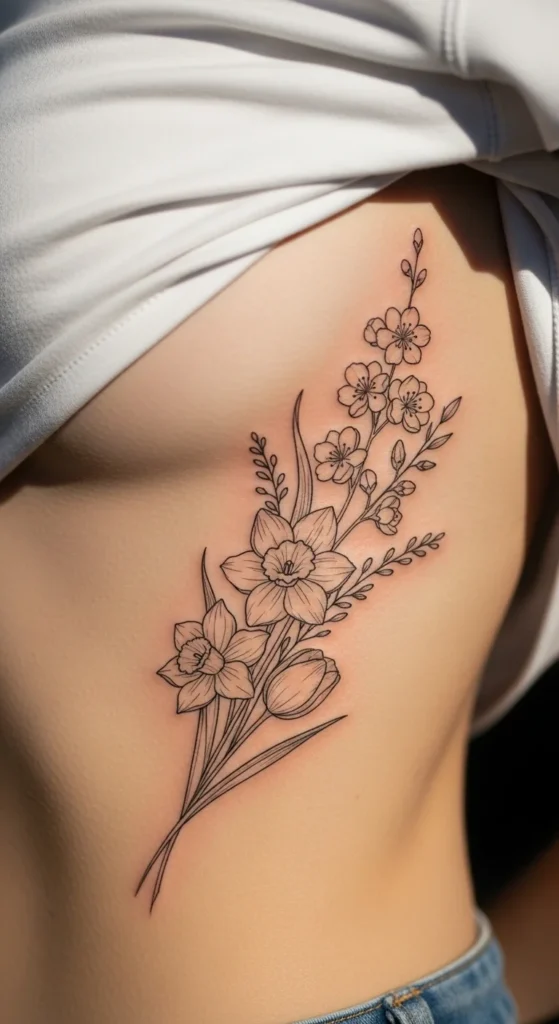
Rib tattoos look graceful when kept simple. Choose thin stems and open flowers. Avoid dense clusters. Linework reduces session length. Discuss breathing placement with your artist.
21. Botanical Upper Thigh Piece
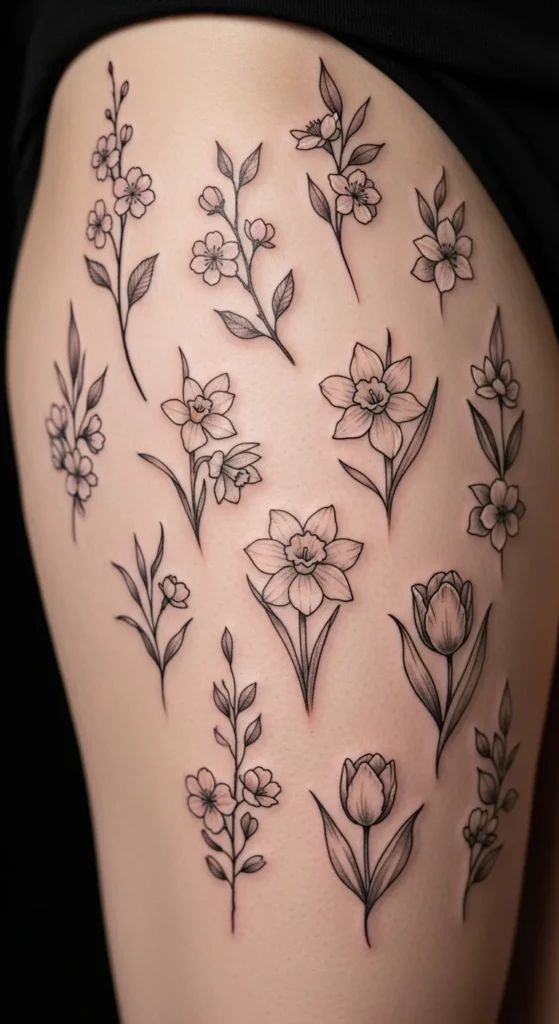
Upper thigh tattoos allow room for detail. Choose a simple floral layout. Avoid tiny details. This area handles shading well, but linework keeps costs down.
22. Leafy Forearm Wrap
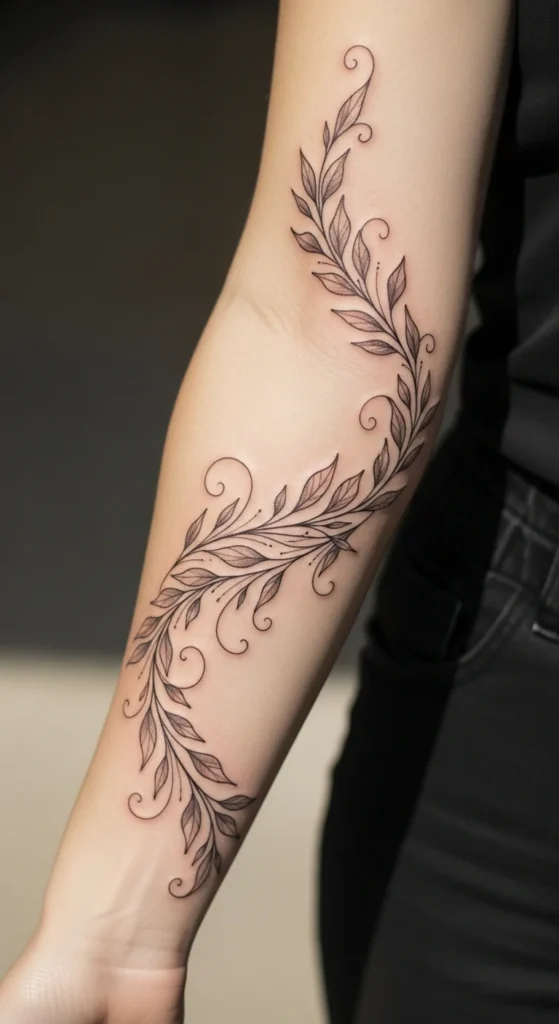
Forearm wraps show well. Keep leaves spaced. Ask for flow that follows arm shape. Line-focused designs heal evenly.
23. Floral Side of Foot Tattoo
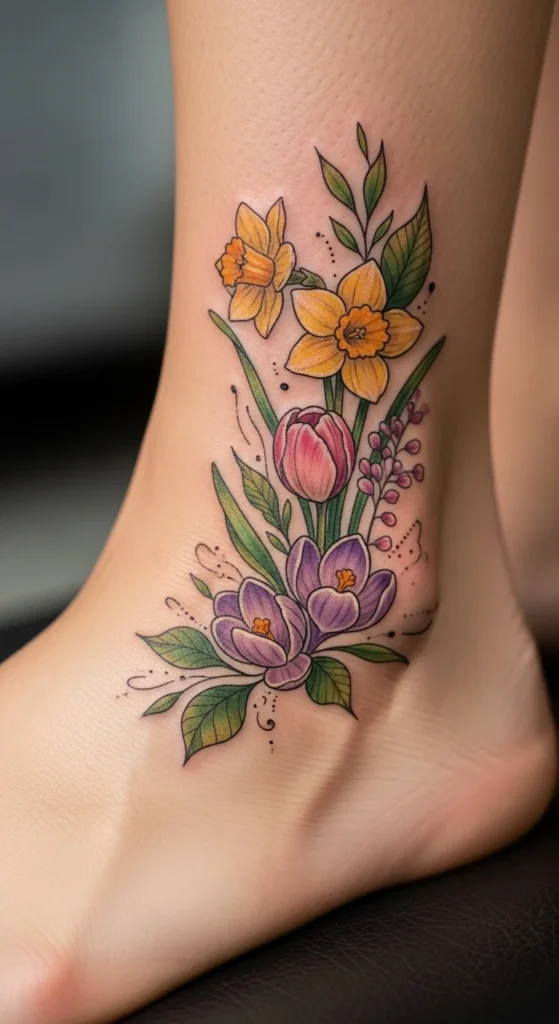
Side foot tattoos feel delicate. Choose minimal designs. Fine lines help longevity. Keep size small to avoid fading issues.
24. Botanical Inner Arm Detail
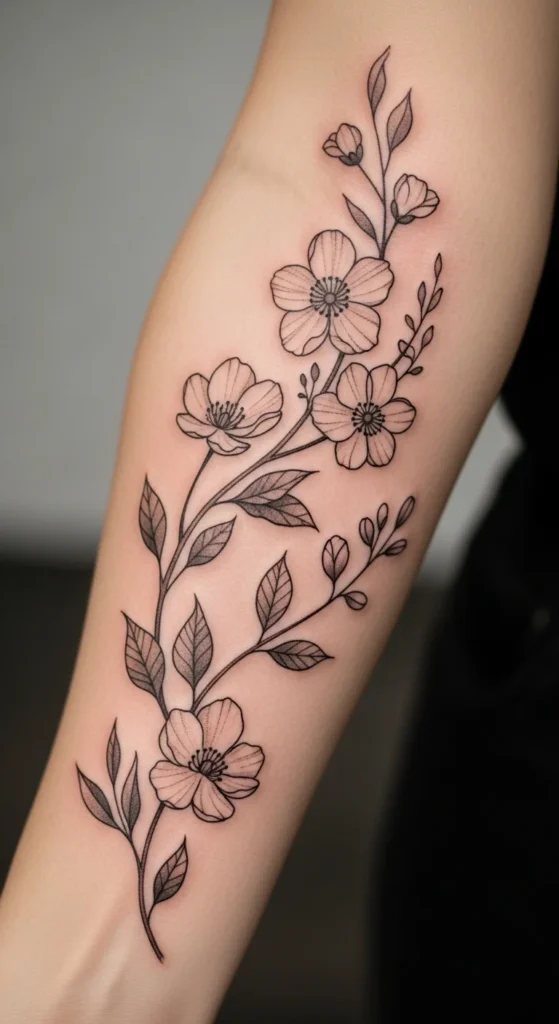
Inner arm tattoos feel personal. Choose light florals or leaves. Avoid heavy shading. Linework keeps sessions short and affordable.
25. Single Stem Floral Script-Free Design
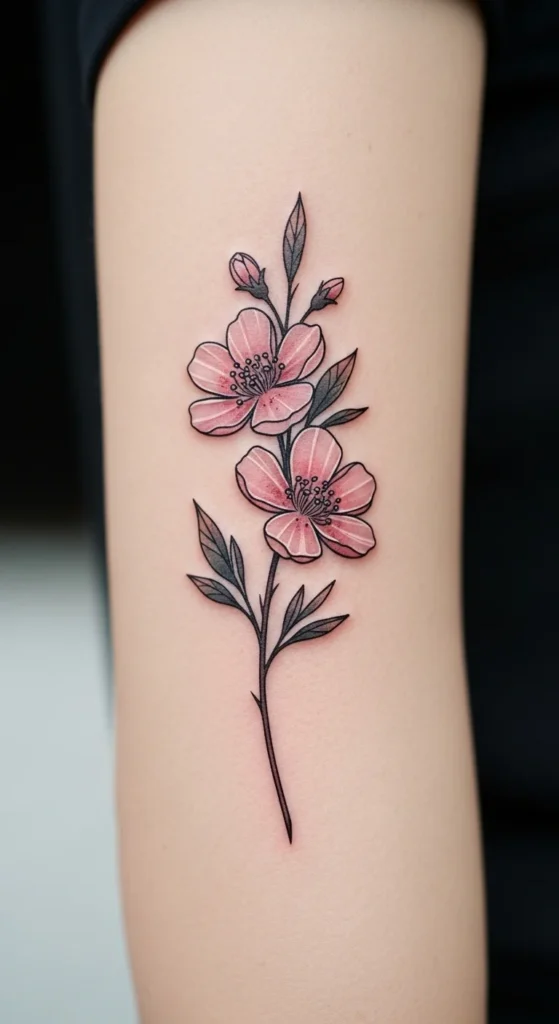
Single stem florals without text stay timeless. They age well. Choose a stem with a gentle curve. Keep petals simple. Black ink holds clarity. This design allows future additions if desired.
Conclusion
Elegant spring botanical tattoos offer beauty without excess. They suit many styles, budgets, and placements. Each idea in this list focuses on simplicity, clarity, and long-term wear. By choosing clean lines, thoughtful spacing, and intentional placement, you can create a tattoo that feels personal and artistic. Save the designs that speak to you, bring clear references to your artist, and plan with care. A calm approach often leads to the best results.
Leave a Reply